There was a morning not long ago when my daughter watched me standing in the kitchen, sipping a protein shake like it contained the secret to adulthood, while the dog stared at me with the intensity of someone trying to telepathically communicate that it was time for a walk. She squinted at me and said, “Dad, why are you breathing like that?”
Kids notice everything. Especially when you are trying very hard to appear like a person who has it all together.
Calm Is a Skill
What she did not know was that I was trying to practice the same thing she and I had been working on together. She is eight, which means some days she is the embodiment of joy and other days she is a Category Three emotional hurricane that touches down without warning. So we have been practicing a little mantra: she cannot control how others act, but she can control how she reacts. Paired with a few deep breaths and a moment of pause, the world stops feeling like it is crashing on top of you. Standing there, breathing like a man who had just discovered self-help, I was trying to model the very thing she was learning.
Advertisement — Continue Reading Below
Standing there in the kitchen, trying to slow myself down, I realized something. Most adults are not actually calm. We are simply very good at pretending.
Being calm is not a personality trait. It is not something only monks or people who listen to whale noises can master. It is a learned behavior. Calm is a skill. And like anything practiced, it gets sharper the more you use it.
Think about the people you consider steady. They are not running around with perfect childhoods or a mystical tolerance for chaos. They are practiced. They have reps. They have moments behind the scenes when they breathe, pause, and choose their response rather than letting the moment choose for them.
Advertisement — Continue Reading Below
If you want to be the steadiest person in the room, the one people instinctively turn to when things wobble, the good news is simple. Calm is not something you are born with. It is something you build.
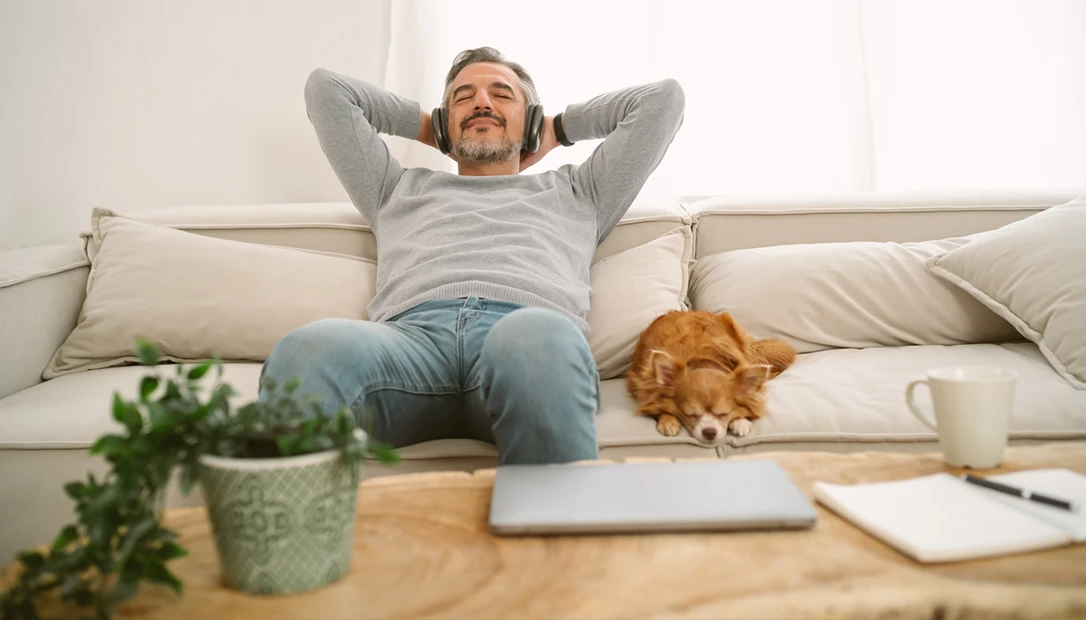
Why Calm Matters More Than You Think
Calm is not just a mood. It is a signal.
Advertisement — Continue Reading Below
When you are steady, people assume you know what you are doing, even if internally you are Googling how to be an adult like the rest of us. Calm communicates confidence, safety, and control. It slows down other people’s panic. It gives structure to moments that feel shaky.
And calm is contagious. Neuroscience has fancy names for it, co-regulation, mirror neurons, and limbic syncing, but in plain English:
If you are calm, I am more likely to become calm too.
Advertisement — Continue Reading Below
We all know what happens when the opposite walks into the room. Someone arrives looking like they were chased here by debt collectors, family drama, and a malfunctioning smoke detector. Suddenly, everyone feels it. Their chaos becomes your chaos.
But when someone walks in carrying calm, the whole room shifts. People breathe. They collect themselves. They feel anchored.
This is why calm people become leaders even when leadership is not their job title. They create an emotional foundation that the rest of the group can stand on. And here is the real win. Calm gives you time. Time to think. Time to choose your response. Time to be intentional instead of reactive.
Advertisement — Continue Reading Below
In a world that moves faster than our brains can process, time is power.
Where We Tend to Get It Wrong
Most adults react to chaos the same way toddlers react to bedtime, with some combination of denial, whispers of despair, and frantic bargaining.
Here are three common traps.
Advertisement — Continue Reading Below
1. We try to look calm instead of being calm.
Acting calm is exhausting. Real calm is effortless because it comes from inside, not from performance. People can smell fake calm like they can smell expired milk.
2. We wait for calm conditions to practice calm behavior.
That is like trying to learn how to swim by waiting for the ocean to stop having waves.
Calm is trained in small, ordinary moments, traffic lights, waiting rooms, and Monday mornings, so you have it when it actually counts.
3. We believe calm means emotionless.
It does not. Calm is not the absence of emotion. It is the mastery of response. You can care deeply. You can feel everything. You just do not let your feelings drive the car while your logic is tied up in the trunk.
So, How Do You Build Calm?
Good news. Calm is physical, not philosophical. You do not need a mountain retreat, a robe, or a spiritual awakening. You need practice. Short, simple reps.
1. Train your breath, not your thoughts
You cannot wrestle your brain into serenity. But you can hack the nervous system from the neck down.
Slow, steady exhale-driven breathing tells your body, We are safe. Stand down.
Once your body believes you are safe, your mind starts acting as if you are.
2. Build a pause gap before you respond
Most people treat reactions like reflexes, stimuli, responses, or regrets.
Calm people insert a beat of awareness in the middle. A mental micro buffer.
Someone snaps at you.
Pause.
A problem pops up.
Pause.
Your kid spills a gallon of something the color of regret across the carpet.
Pause.
It sounds small, but that pause is everything. It is the space where better choices live.

Making Better Choices
3. Create an internal home base phrase
This is a quiet sentence you say to yourself that anchors you. Something like:
I choose how I show up.
One thing at a time.
Respond, do not react.
This is not a fire.
It is amazing how often we talk ourselves into panic. A home base phrase talks you out of it.
4. Practice not being the main character
A sneaky truth, a huge percentage of stress comes from assuming everything is about us. The calmest person in the room knows most moments are not personal; they are situational.
Let people be messy without taking it on.
Let problems be problems without assuming you caused them.
Let life unfold without narrating doom.
It is shockingly liberating.
5. Build systems that make calm easier than chaos
Calm is easier when your life has some structure. Not perfection, just enough order to make room for your brain to function.
Systems turn decisions into defaults. Defaults lower stress. Lower stress builds calm. Rinse and repeat.
A Quick 60 Second Drill to Build Instant Calm
Here is a simple exercise you can do anywhere, your car, your desk, or the kitchen, while your kid asks why you look like you are auditioning for a meditation video.
Exhale fully.
Long and slow, like you are blowing out birthday candles at a party you did not want to attend.
Relax your shoulders.
Drop them an inch. They have been auditioning for a role as stress luggage anyway.
Count four things in the room that are not asking anything of you.
A chair. A lamp. A window. A mug. Simply notice them.
Say this quietly to yourself:
I can choose calm right now.
That is it. Sixty seconds. You reset your nervous system, re-centered your awareness, and told your brain who is in charge.

The Steadiest Person in the Room Is the Most Practiced
Here is the secret people rarely talk about. Calm will not make life easier. It will make it easier for you to live with. And not just for others, but for yourself.
The steadiest person in the room is not the one with all the answers. They are the ones who have practiced staying grounded while the rest of the world forgets where the floor is.
And when you become that person, even a little, you notice the shift. People trust you more. You make better decisions. You feel more like the version of yourself you actually like instead of the scrambled version that shows up when life gets loud.
Calm is not silence. Calm is a choice. It is the quiet strength of responding instead of reacting. It is showing your eight-year-old how to breathe, pause, and choose a better way, all while learning it yourself in real time.
And the next time someone walks in and sees you breathing like you just remembered how to be a human again, you can smile. Not because you are pretending to be calm, but because you are practicing what you hope your children will learn.
The world does not decide who you are. You do.