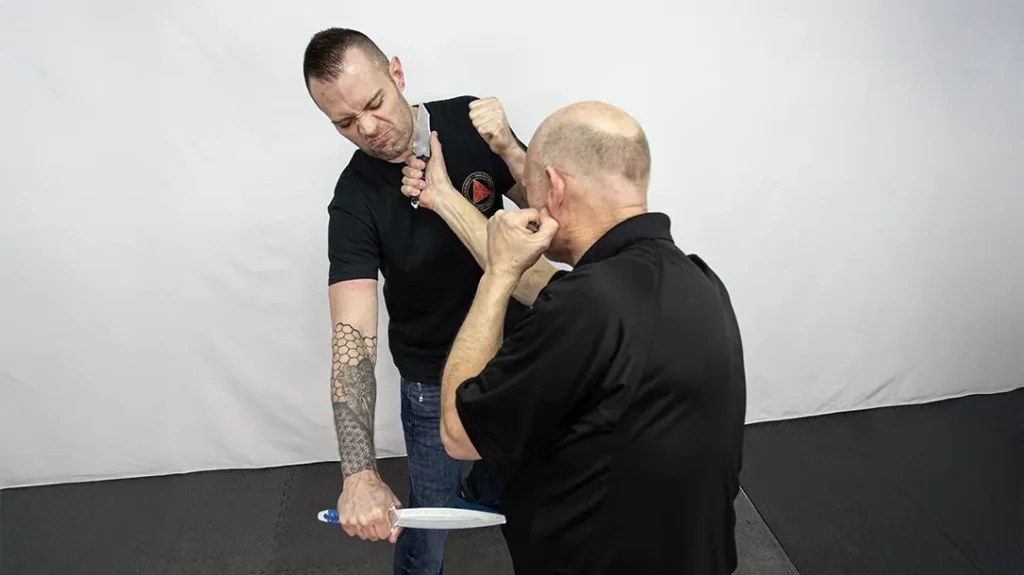
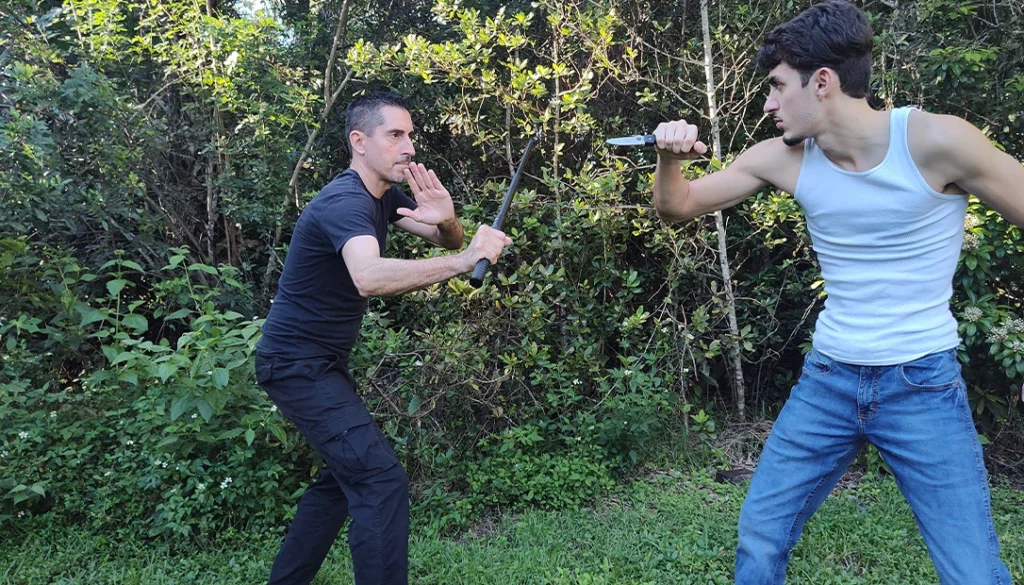
One of the longstanding debates regarding knife tactics has to do with the relative effectiveness of cuts vs thrusts. While there are strong arguments on both sides of the issue, ultimately, it’s not as black and white as you might think. In my opinion, it really boils down to four critical factors: your goal, the type of knife you’re using, the targets you’re trying to access, and the dynamics of the situation.
When to Use Cuts vs Thrusts
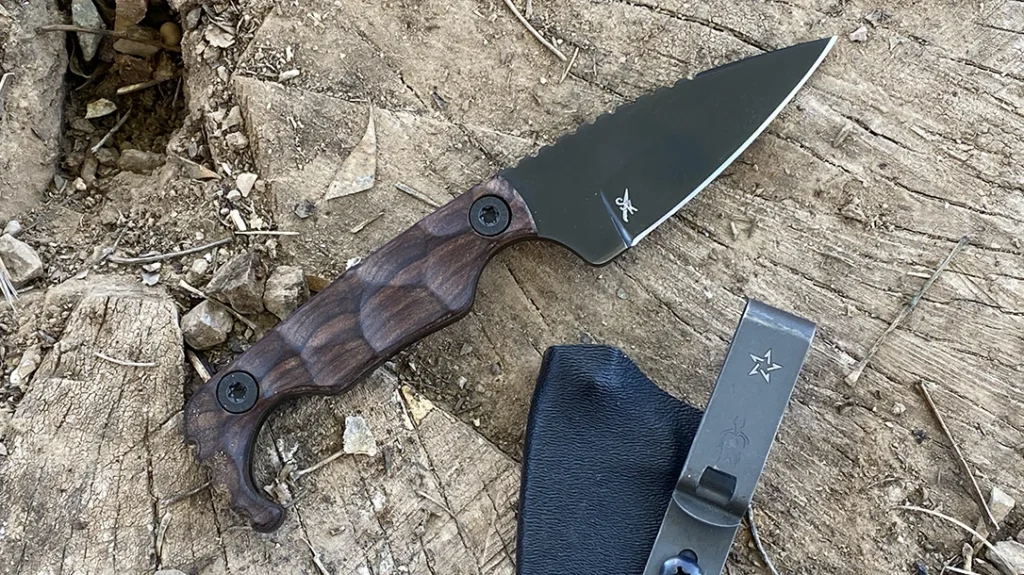
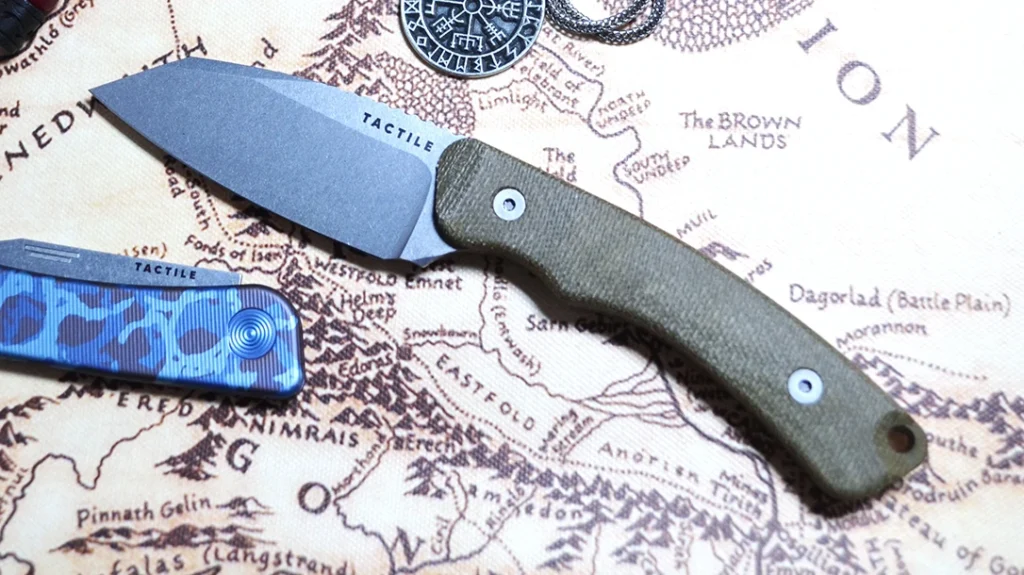
For most people, the goal of using a knife as a weapon will be civilian self-defense. Unless you are duty-bound and using a knife against an enemy combatant, your objective will be to stop an attacker from killing or seriously injuring you. Most likely, you will be doing that with a relatively small, legal-to-carry blade, not a full-sized combat knife.
Those two realities have a tremendous influence on the third element: the anatomical targets you should attack. Stopping an attacker is more easily accomplished by disabling him and preventing him from wielding his weapon effectively.
Advertisement — Continue Reading Below
With the exception of the central nervous system—the brain and spinal cord—most anatomical targets will not shut down an attacker instantly or even rapidly. Those that might—like the aorta and heart—are located deep below the skin’s surface and difficult to reach with a small knife. They also require considerable accuracy, which is difficult to achieve in a dynamic struggle.
For these reasons—and the fact that the wound channel of a thrust is narrow—stopping an attacker with a thrust is challenging. Cuts, conversely, can sever key tendons, nerves, and arteries and immediately disable a weapon-wielding limb. Heavy clothing, however, can mitigate their effect.
So, what’s the answer? For best results, use both to your advantage. Thrust to penetrate heavy clothing and reach underlying tissue. Then, cut to sever critical anatomical structures.
Advertisement — Continue Reading Below