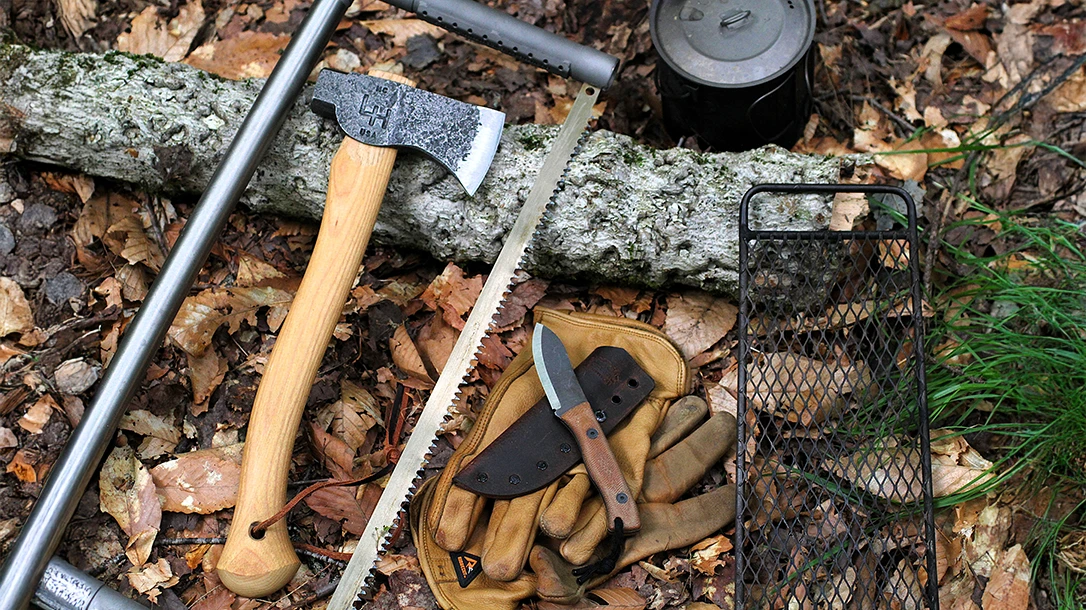
Soaring the sky for an epic camping trip with three unforgettable bush tools—the Nessmuk Trio. In late June of 2025, I embarked on a floatplane trip with three fellow adventurers. We had gear and tools to camp and even survive the Adirondacks, if need be. However, we were only camping and having fun in the record-breaking heat, wind, and bug capital city, all in New York—the Adirondacks to be precise!
Nessmuk Trio Impact
This Modern Nessmuk Trio has a Knives By Nuge Cub-Muk fixed-blade, Liam Hoffman Trappers Hatchet, and a Brautigam Expedition Works Titanium saw. All made in the USA.
George Washington “Nessmuk” Sears’ original gear—a fixed-blade knife, pocketknife, and hatchet—was a deliberate, versatile system designed for lightweight travel. This trio has influenced modern outdoor gear, promoting the idea that thoughtful simplicity outperforms redundancy. Today, campers and gear designers often adapt this philosophy with multitools and compact axes, sometimes adding folding saws.
Advertisement — Continue Reading Below
This impact is evident in minimalist packing strategies and modular tool systems. The Nessmuk-inspired loadout remains a gold standard for maximizing functionality while maintaining style.
A Titanium Saw?
Obviously, the original classic trio doesn’t include a saw. Instead, it contains a slipjoint pocket knife. This choice doesn’t mean there weren’t saws back in the late 1800s—they just weren’t compact. If they were, you better believe Nessmuk would have toted one, especially if Brautigam Expedition Works (BEW) made it.
Brautigam Expedition Works creates high-performance, ultralight tools designed for serious backcountry adventurers. Focusing on durability and simplicity, their hand-crafted gear uses premium materials like titanium and Cordura.
Advertisement — Continue Reading Below
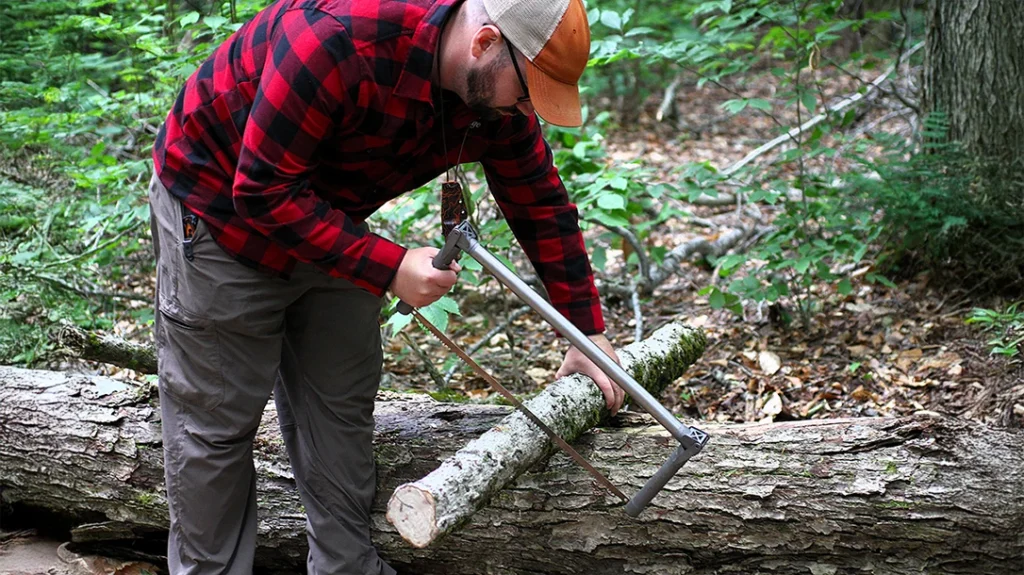
From folding saws to pack shovels, each item is designed for real-world functionality and tested in the field, ensuring they can withstand harsh conditions without adding unnecessary weight. When BEW introduces a new tool, they design it to last.
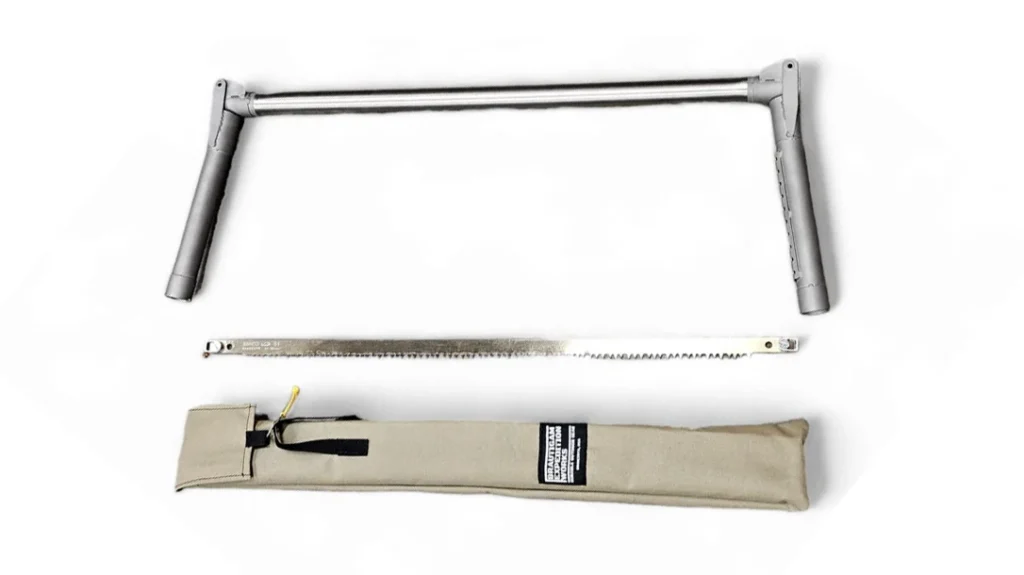
The BEW Titanium Folding Camp Saw features a 21-inch blade, designed for hikers and bikepackers (yes, it’s a thing). Weighing in at under a pound with the dry wood cutting blade, this size packs serious cutting capacity without the bulk. They also accommodate optional bone and meat blades, making them ideal for hunting big game.
Advertisement — Continue Reading Below
The Titanium Edge
Titanium is stronger than steel, much lighter, and resistant to rust, salt, and UV exposure. Plus, it’s a poor heat conductor, so your fingers won’t freeze in winter. The design features round tubing to reduce hand fatigue and blade binding, and the tension system is as simple as stringing a longbow.
Blade changes are tool-free, and the blade stores safely inside the dishwasher-safe frame. Each saw comes in a durable Cordura case, with smaller sizes featuring a minimalist cord tie and larger ones using a rugged titanium G-hook.
Advertisement — Continue Reading Below
The BEW Titanium Folding Saw easily outshines competitors like the Agawa, Bob Dustrude Quick Buck Saw, and Sven-Saw. It’s a perfect blend of durability and style. While many saws are heavy and rust-prone due to aluminum or steel, the BEW stands out with its lightweight, corrosion-resistant titanium. Plus, it’s warm to the touch—perfect for those chilly, damp days in the great outdoors or in your backyard.
Nessmuk Knife
The Nessmuk is the centerpiece of the classic trio. Identifying it is easy, and many production and custom knife makers often emulate it. The original Nessmuk knife was a small, thin, fixed-blade knife about 4–5 inches long, with a deep belly and slight upsweep. It had a subtle hump on the spine for precise slicing and skinning.
Advertisement — Continue Reading Below
Made from lightweight carbon steel and fitted with a comfortable wood or bone handle. It excelled at camp chores such as food preparation and carving. Nessmuk designed it for finesse, leaving heavy chopping to his hatchet, and created a tool that embodied his “go light” philosophy. Carry only what you need, but make sure it works beautifully.
The Nuge Cub-Muk
Tom Nugent, known as Nuge, is the creative force behind Knives By Nuge. With a background as an Eagle Scout, retired police officer, EMT, and lifelong outdoorsman, Tom infuses his decades of experience into every knife.
Driven by purpose, his knives aren’t just engaging. Heck no, they’re designed for real performance, skinning game, or tackling wilderness tasks. From his New Jersey workshop, he crafts American-made tools that reflect his passion for adventure and gear you can trust for generations.
Advertisement — Continue Reading Below
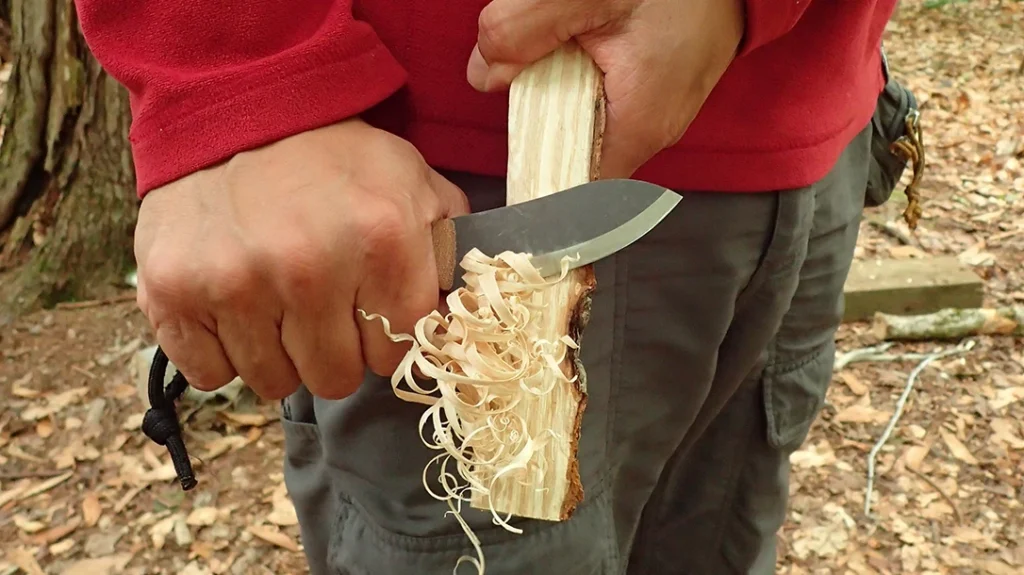
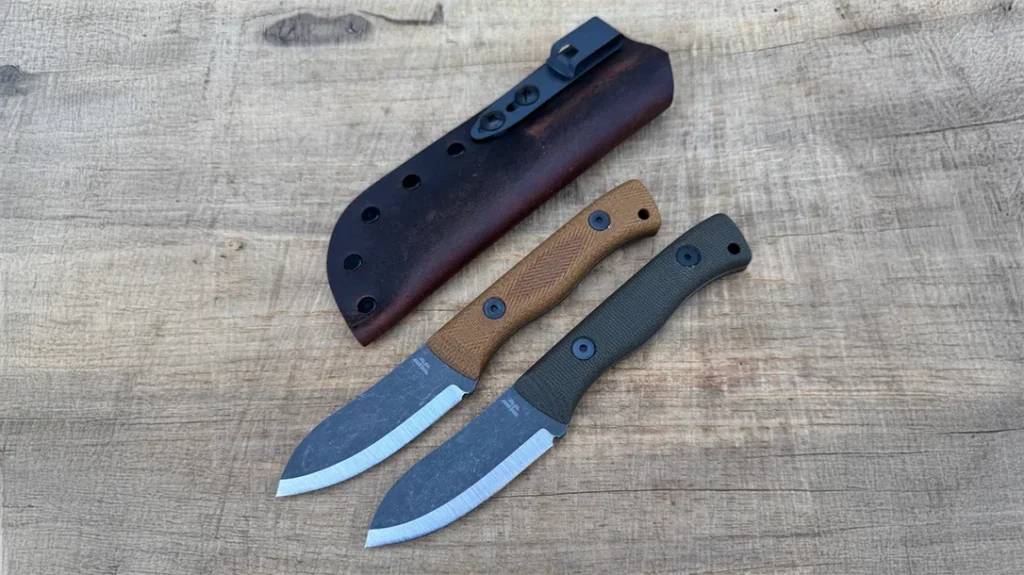
Not only was Nuge on the Adirondacks floatplane trip, but it was his idea. I agreed not to take a fixed-blade on the trip, since he had some new knives he wanted to share. While they were all solid choices, I gravitated towards the Nessmuk-looking blade shape, the Cub-Muk.
It had a Scandi grind and sharp 90-degree spine, along with micarta scales. These were three features that differed from the original flat ground blade with antler scales. The steel was AEB-L stainless, and Nessmuk may have chosen this material if it were available back in his day. The blackened tumbled finish was as rustic as the essence of the Nessmuk namesake!
Carving, Slicing, and Dicing
In true Nessmuk style, I didn’t baton or pry with the Cub-Muk. It was strictly a knife, and it sliced ham, plastic packages, and birch bark for various tasks. During my five days in the woods, I didn’t use a knife for fun— it was necessary. Some people don’t understand how often a small knife gets used in a working camp.
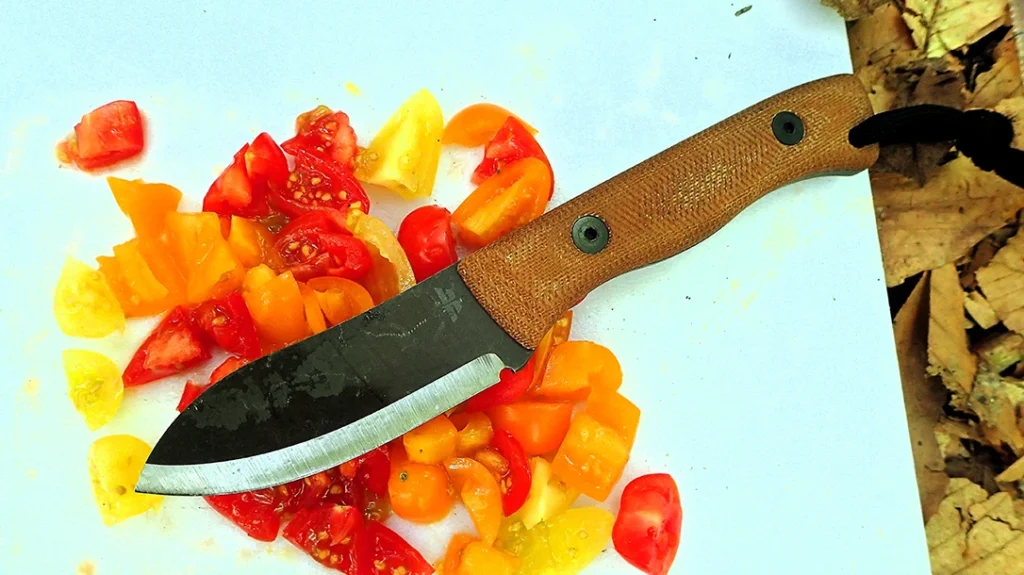
The spine scraped grit from fallen fish as well as scooped food to eat off the back hump shaped spine. The AEB-L steel never stopped slicing after cutting cordage and several green sticks for projects.
One of many tasks in camp was making pot holders, tarp stakes, and camp tools. I used a combination of green and dead wood, and the knife did amazingly well, making notches and chisel points. I don’t bother making perfectly sharp points on ends that I’ll drive into the ground. A chisel or wedge end goes into hard and soft ground alike. I used a stout stick to lightly baton stop cuts for notches. This is not the same as batoning to split wood.
Fire Prep with the Nessmuk Knife
Back in the 1800s, Nessmuk used matches or flint and steel. Kindling was most likely dry, thin twigs and small splits made with his hatchet. A match or a fiery tinder bundle easily ignites this type of kindling.
In the day of the common Ferro rod and a sharpened 90-degree spine, fire ignition has another option. I carved feather sticks with the scandi blade and used an Uberleben Ferro rod. After a few swipes with the spine, the feathers ignited.
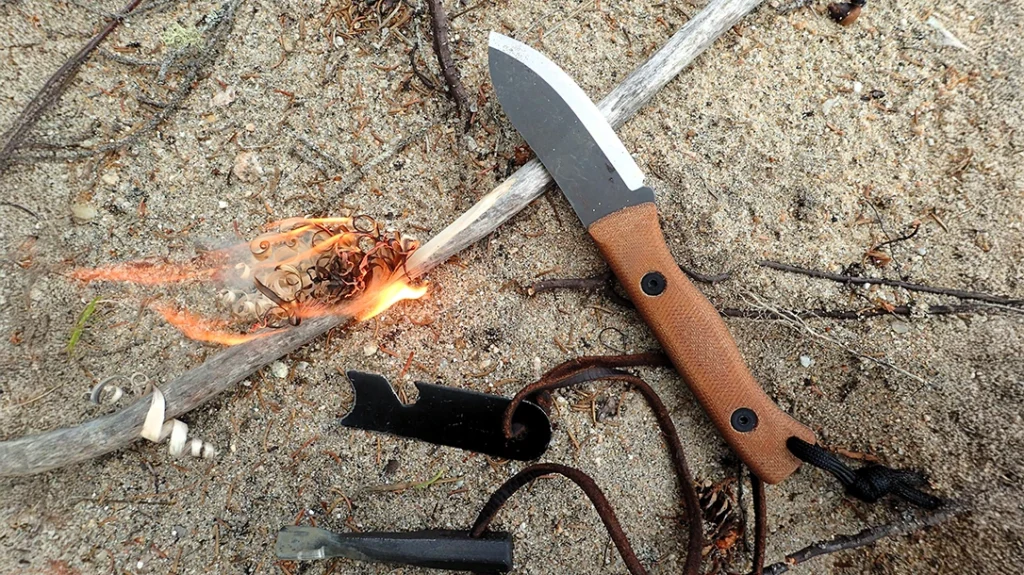
This is a technique most likely not practiced in the days of Nessmuk. The KBK Cub-Muk made this possible with the benefits of its modern materials and design attributes!
Hoffman Blacksmithing
Yes, the original Nessmuk hatchet was small and had a double bit. However, we’re changing it up, hence the Modern Nessmuk Trio. Besides, Nessmuk sought out the best he could find in his day. This hatchet is just about the best around today!
At just 19, Liam Hoffman shot to fame on the History Channel’s Forged in Fire, outshining ABS Master Bladesmith Josh Smith with his impressive Kora sword. This win not only made him the youngest champion in the show’s history but also put Hoffman Blacksmithing on the map, attracting a worldwide fanbase eager for his creations.
Liam’s journey from a tinkerer at 13 to a master bladesmith is a tale of Appalachian grit. He launched Hoffman Blacksmithing in Roan Mountain, Tennessee, right after high school. There, he forges axes that blend historic charm with modern efficiency, using classic early 1900s power hammers and durable chromium molybdenum alloys, all paired with hickory handles and custom leather sheaths.
Trapper’s Hatchet
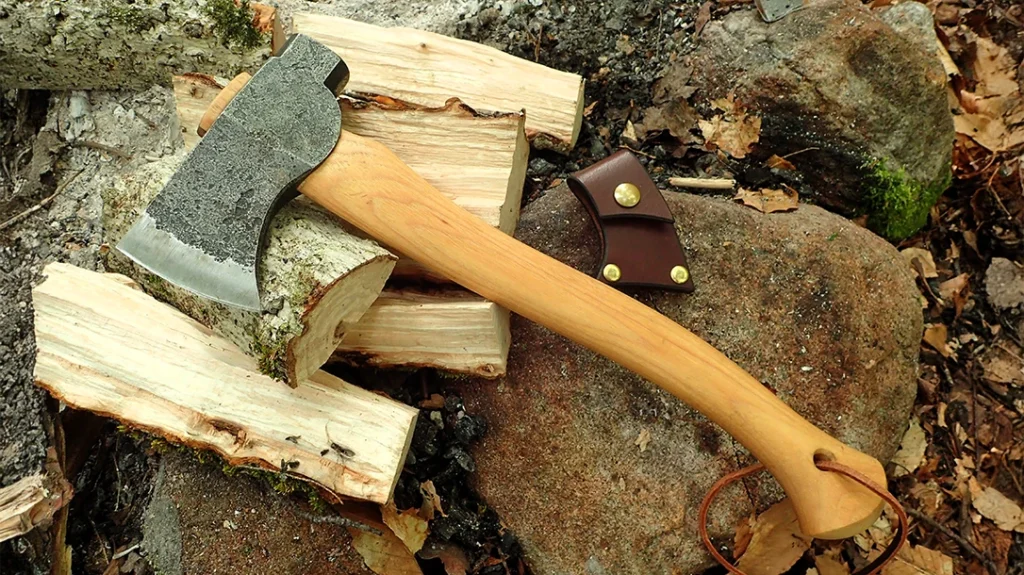
The Hoffman Blacksmithing Trapper’s Hatchet, with a 15-inch oval handle and a bulb end, is crafted for serious use while flaunting a classic look. Made from high-performance chromium molybdenum alloy steel, its 1.5-pound head offers a sharp bite but remains lightweight for easy carry.
The bulb-ended handle ensures a solid grip, giving you control in any weather. The crowning feature is a hardened hammerhead poll for driving tent stakes or nails without a hitch.
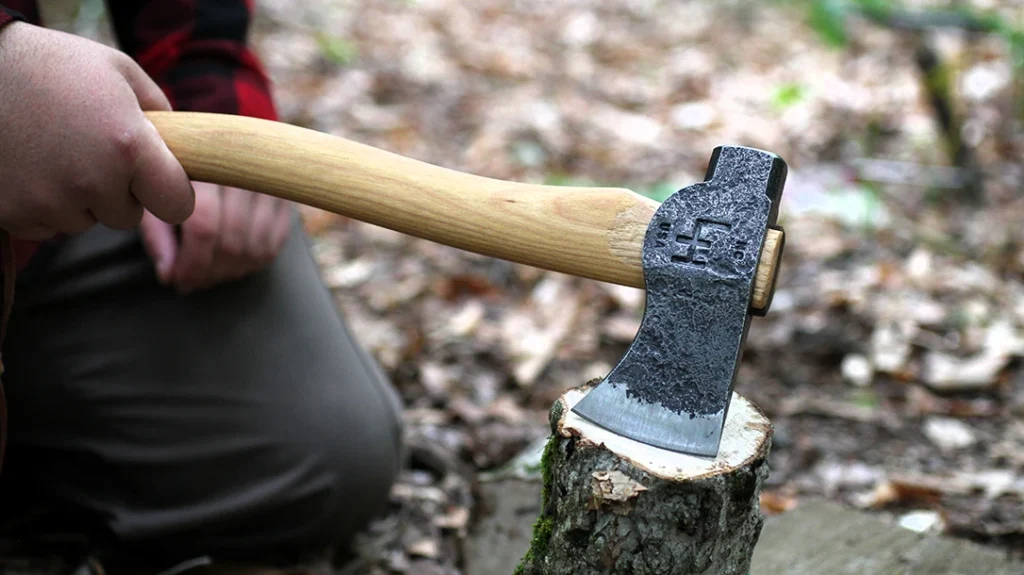
Delivering heirloom quality, the Hoffman axe is a compact hatchet that offers portability and durability. Perfect for clearing brush or prepping kindling, it’s more than just a tool—it’s a legacy in steel!
Chop, Split, Hammer
We were on a firewood mission to brace for damp days and keep our meals hot. Nuge and I grabbed a Brautigam Expedition Works saw and a trusty hatchet, ready to tackle some dead-standing trees. One promising candidate caught our eye—perfect for satisfying our ax-swinging ambitions.
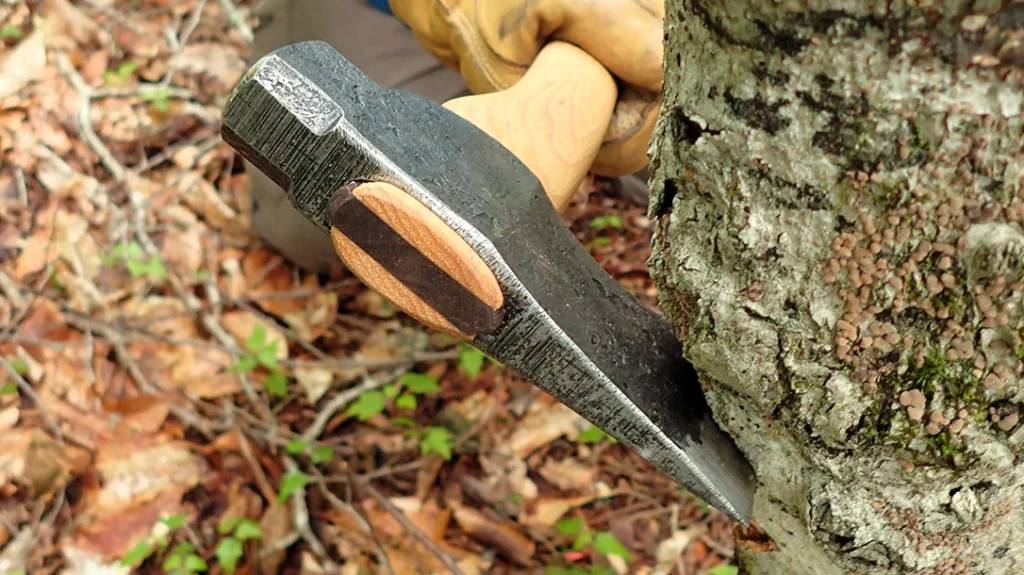
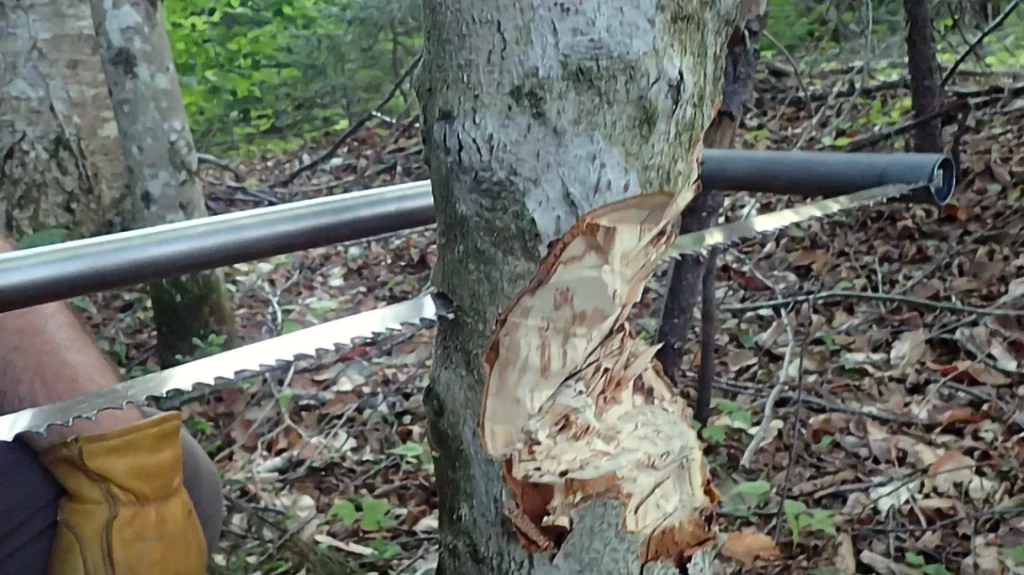
Felling a tree takes finesse, not flailing, so we charted its fall with care. A front kerf with the Hoffman Blacksmithing Trapper’s Hatchet kicked things off, followed by the saw—and down it came spectacularly.
We took turns sawing and chopping. Upright chopping and contact splitting worked beautifully. However, the gnarled wood occasionally was a nuisance and sometimes required flipping the wood and splitting from the crown down. This strains the hatchet’s handle, but the Hoffman held strong, and we were glad to have it!