
There are days when being an adult feels like running a mental marathon before you have even left the driveway. You wake up, and the decision counter starts climbing like a slot machine stuck on fast forward. Twenty-seven work decisions waiting in your inbox. Eighteen dad decisions lined up before breakfast. And at least forty-two parenting choices still ahead, most of them some version of “should we be healthy or should we be fun tonight,” which is really just code for “are we cooking vegetables or are we emotionally bribing ourselves with takeout.”
By 10 AM, you have made so many decisions that your brain feels like a phone stuck at two percent battery. Not dead, but absolutely not reliable.

Advertisement — Continue Reading Below
The Decision Diet
And the wild part is that none of these decisions are dramatic. They are not life-altering. They are small. Ordinary. Constant. Which is exactly why they exhaust us. It is not the big choices that drain momentum. It is the nonstop stream of tiny ones that nibble at your energy until you are worn down and wondering why you are tired, even though technically nothing happened.
This is the hidden tax of modern life. Choice overload. So many inputs. Too many tabs open. Too many decisions crammed into days that were never designed to hold this much noise.
And it sneaks up on you. You do not notice it happening in real time. You only realize the cost when you finally sit down at the end of the day and wonder how you are exhausted, even though nothing dramatic actually happened.
Advertisement — Continue Reading Below
But here is the good news. You can focus on what I call a decision diet. Fewer inputs. Cleaner days. Better outcomes. When you reduce the number of choices you face, you reduce the friction that steals your momentum. And momentum is everything. It is the difference between feeling overwhelmed and feeling capable.
Most people do not need more motivation. They need fewer decisions.
Why Too Many Choices Kill Momentum
The human brain is a remarkable machine, but it has limits. Every decision you make, no matter how small, costs something. Time. Attention. Energy. Focus. And when you multiply the cost across dozens or hundreds of choices each day, you end up mentally bloated with the equivalent of decision junk food.
Advertisement — Continue Reading Below
It is the same cycle every adult recognizes. You start the day sharp and optimistic. Then the first wave hits. What to respond to first. What to prioritize. Which meetings actually need prep, and which could have been an email sent into the void? Then you shift into dad mode. Who needs to be picked up, who forgot something important, and who is melting down because their sock feels “weird.”
By the time you get to the end of the workday, the dinner conversation becomes a game of culinary roulette. Every option feels complicated. Every choice takes effort you no longer have. You are not indecisive. You are simply depleted.
Choice overload steals clarity. It slows execution. It creates anxiety where none needs to exist. And worst of all, it makes easy things feel hard.
Advertisement — Continue Reading Below
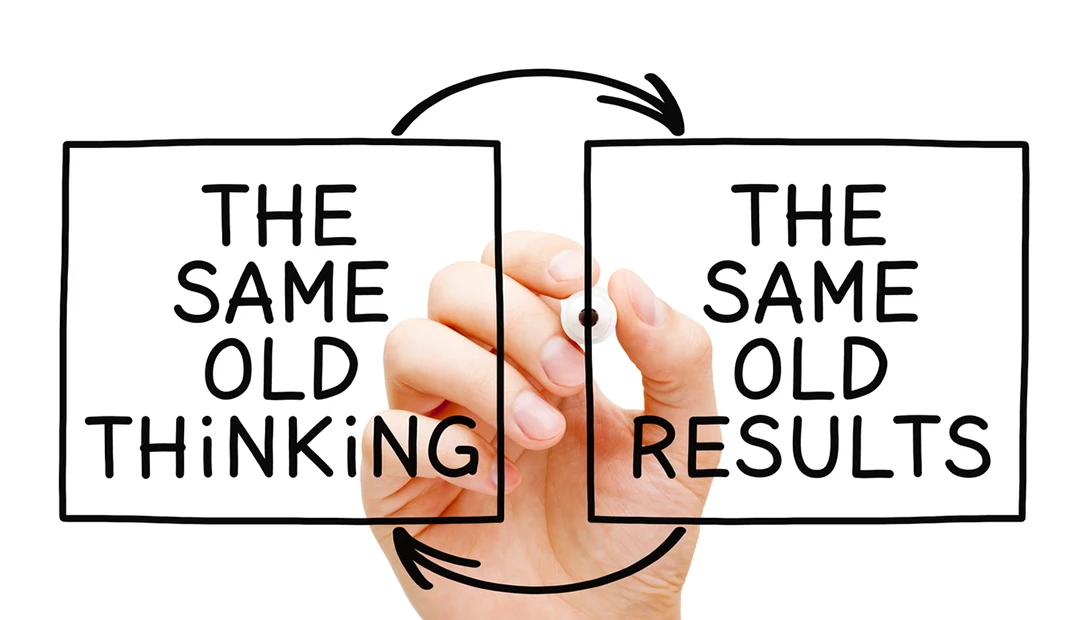
This is why people who simplify their decision landscape often seem to have discovered a cheat code. It is not that they are not smarter. They are not more disciplined. They are simply operating with less friction.
A decision diet is not about limiting your life. It is about liberating your brain.
Advertisement — Continue Reading Below
Fewer Inputs. Cleaner Days. Better Outcomes.
The secret to sustainable momentum is not willpower. It is an intentional constraint. When you curate what gets access to your attention, your days immediately get easier. And lighter. And more productive.
It works for one simple reason. Your mind performs best when it has fewer things to juggle.
Imagine carrying five items at a time versus thirty. One makes you feel competent. The other makes you drop things on your foot and swear under your breath.
Advertisement — Continue Reading Below
Momentum thrives in low-friction environments. And the easiest way to reduce friction is to reduce the number of decisions. Which is where the decision diet comes in.
A decision diet is built on four pillars. Eliminate. Automate. Timebox. Ritualize. Think of them as filters. Everything in your life passes through them. Whatever survives the filter is worth your energy.
Let’s break them down.
Advertisement — Continue Reading Below
1. Eliminate
Most of us think we are overwhelmed because life is full. But the truth is, life is often cluttered. And clutter makes everything harder.
Elimination is the first and most important filter. Remove what does not matter and what does not move you toward anything meaningful. If something causes confusion, drains your energy, or adds chaos, it probably does not deserve space in your decision-making.
Eliminate:
Advertisement — Continue Reading Below
Obligations you said yes to out of guilt
Apps that hijack your attention
Routines that do not serve you
Decisions that repeat unnecessarily
Low-value meetings
Anything that requires emotional effort without emotional return
When you cut noise, clarity appears. When clarity appears, momentum follows.
2. Automate
Automation is the cheat code of adulthood. Anything you can decide once and let run on autopilot is a gift to your future self.
Automate:
Bills
Grocery basics
Weekly rhythms
Family routines
Workflows that repeat
Recurring reminders
Anything predictable
When you automate the obvious, you protect your energy for the meaningful. The brain loves consistency. And automation is consistency with a user manual.
3. Timebox
Unbounded decisions expand until they swallow your day. But when you put them inside containers, they shrink to a manageable size.
Timeboxing is the practice of giving decisions specific windows. Instead of deciding all day, you decide during protected micro periods. You choose when you will choose.
Examples:
Answer messages during a single block
Make work decisions in a narrow window
Pick meals for the week once, not nightly
Plan family logistics on Sundays
Timeboxing eliminates reactive living. It creates order where chaos once lived. It gives decisions a home so they stop wandering around your brain.
4. Ritualize
Rituals are not restrictive. They are protective. They act like guardrails for your day, preventing small decisions from derailing your focus.
Ritualize:
Mornings
Evenings
Pre-work startup
Daily reset
Weekly reset
Anything you do often but inconsistently
Rituals reduce cognitive load. They give shape to your days. They turn chaos into cadence. And when cadence shows up, momentum thrives.

Momentum Is Not a Mystery
Most people think momentum is a feeling. It is not. In fact, it is the byproduct of structure. It is the natural outcome of fewer decisions, clearer constraints, and intentional rhythms.
Reducing decisions, in turn, sharpens your brain. When your brain becomes sharper, your actions become easier. When your actions become easier, your life becomes lighter.
The world will always give you too many choices. That is not going away. But you can choose how many choices you actually allow into your day.
Fewer inputs. Cleaner days. Better outcomes.
What surprises most people is how quickly life shifts once unnecessary choices are removed. Your days feel smoother. Your mind feels quieter. You start noticing a sense of control that had been buried under constant decision clutter.
And the next time you look at your day and feel the weight of fifty tiny choices pressing down on you, remember this. You do not need to do more. You need to choose less. When you choose less, you discover more room to be the person you actually want to be. That is the quiet power of a decision diet.