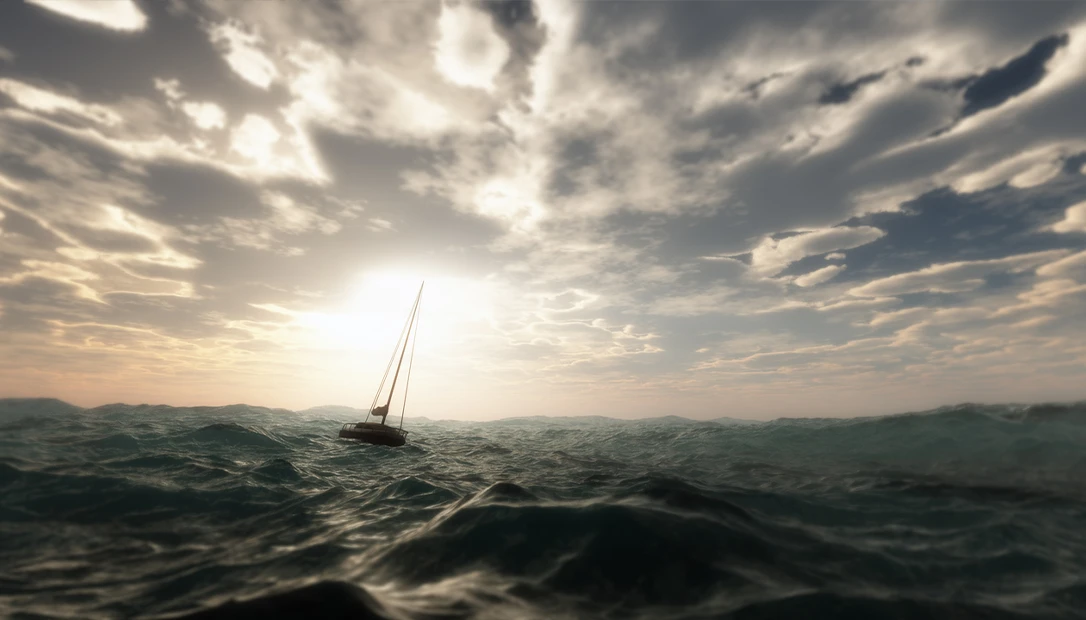
Alright, pull up a chair, grab a strong coffee, and let’s talk about the part of the Pacific Ocean that sounds less like a real location and more like the setting of a successful lost Pacific Rim sequel.
Forget the Bermuda Triangle for a second.
Japan’s Dragon’s Triangle, also called the Devil’s Sea, feels like the ocean’s “do not disturb” zone. It’s a region so violent, unpredictable, and steeped in legend that for centuries sailors genuinely believed something alive was waiting beneath the waves.
Advertisement — Continue Reading Below
And honestly? When you look at what happens out there, you kind of understand why.
Japan’s “Devil’s Sea” vs. the Bermuda Triangle
Located south of Tokyo near Miyake Island, the Devil’s Sea sits directly on the Pacific Ring of Fire, one of the most geologically unstable places on Earth. Underwater volcanoes erupt without warning. Earthquakes shake the sea floor. Massive storms appear out of nowhere. Entire islands have literally formed and disappeared in the region. It’s the closest thing Earth has to a Kaiju spawning zone.
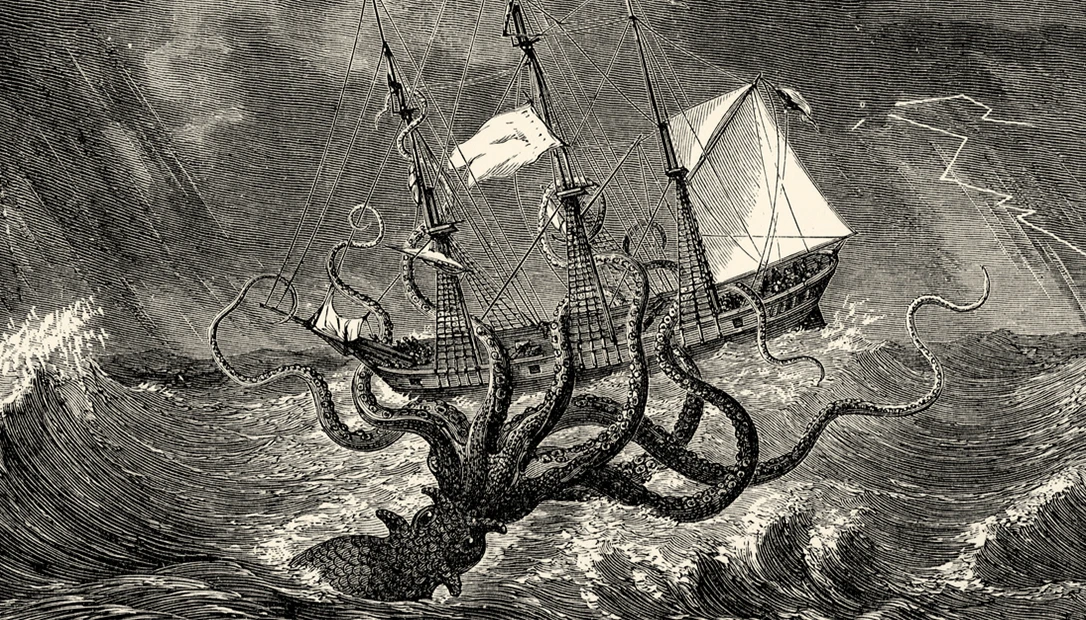
Long before modern geology explained tectonic plates and volcanic activity, sailors called the region Ma-no Umi “The Devil’s Sea.” Chinese and Japanese legends spoke of dragons beneath the water, dragging ships into the abyss. Not metaphorically. Literally.
Advertisement — Continue Reading Below
And unlike the Bermuda Triangle, which became famous mostly through 20th-century books and television specials, the Devil’s Sea has been feared for over 2,000 years. That ancient fear gives it a completely different atmosphere.
The Bermuda Triangle
The Bermuda Triangle feels like a mystery. The Devil’s Sea feels cursed.
Advertisement — Continue Reading Below
Where the Ocean Turns Hostile. If Bermuda is the ocean acting strange, the Devil’s Sea is the ocean actively throwing punches.
The region sits in a collision zone where tectonic plates grind together beneath the Pacific. Imagine Earth’s crust constantly cracking, shifting, and releasing pressure under miles of water. That pressure creates underwater volcanoes, violent seismic activity, magnetic disturbances, and sudden changes in the ocean itself. Basically, the sea floor out there is never fully stable.
One moment, the water is calm. The next moment you’ve got:
Advertisement — Continue Reading Below
● Rogue waves
● Whirlpool-like currents
● Thick volcanic fog
Advertisement — Continue Reading Below
● Sudden storms
● Compass failures
● Sea-floor eruptions
Advertisement — Continue Reading Below
The Pacific doesn’t just look dangerous there. It behaves unpredictably. That unpredictability is exactly why ancient sailors filled the region with monsters.
Because when the ocean suddenly swallows ships without explanation, “dragon” starts sounding like a perfectly reasonable answer.
The Ship That Made the Legend Worse
In 1952, Japan decided to investigate the strange activity in the region scientifically. The government sent a research vessel, Kaiyō Maru No. 5, into the Devil’s Sea to study increased volcanic activity.
Which already sounds like the beginning of a disaster movie. The crew discovered a massive submarine volcano actively erupting beneath the water. Then the ship vanished during the expedition along with all 31 crew members.
No sea monster. No alien portal. Just the Pacific Ring of Fire reminding humanity that nature absolutely does not care how advanced we think we are.
After that incident, public fascination with the Dragon’s Triangle exploded. Stories spread that the area was supernatural, cursed, or somehow outside normal reality.
And honestly, when an entire research ship disappears while investigating underwater volcanic activity in a place literally called the Devil’s Sea… people are going to start connecting dots.
The Devil’s Sea
The Bermuda Triangle gets all the documentaries, but the Devil’s Sea has the stronger aesthetic.
Bermuda gives you: Sunny skies, Tourist cruises, Compass stories, and Missing aircraft.
The Devil’s Sea gives you: Ancient dragon legends, Underwater volcanoes, Typhoons, Seismic chaos, vanishing ships, and “Abandon all hope” energy.
One feels like a mystery channel special. The other feels like humanity accidentally built cities too close to a sleeping Kaiju.
Some people even claim the two regions are connected as antipodal points on Earth, meaning they sit opposite each other across the globe. Scientists don’t support the supernatural side of that theory, but it absolutely sounds like something Idris Elba would explain while staring at holographic maps in a command center.
Nature Doesn’t Need Monsters
Here’s the wild part: the real explanations are almost scarier than the myths. The Devil’s Sea doesn’t need supernatural forces to be dangerous.
The Pacific Ring of Fire alone can explain most of the region’s so-called “marine anomalies.”
Underwater volcanic eruptions can violently displace water and destabilize ships. Methane gas trapped beneath the ocean floor may suddenly release upward, reducing water density enough to affect buoyancy. Magnetic irregularities can interfere with navigation systems. Rogue waves can appear with almost no warning and tower so high that they can cripple large vessels.
And then there are typhoons.
In the 13th century, Kublai Khan launched two enormous fleets to invade Japan. Both invasions were destroyed by massive storms later called the kamikaze, or “divine winds.”
Imagine surviving medieval naval warfare only for the Pacific Ocean itself to decide you’re not welcome.
At some point, you stop blaming bad luck and start wondering if the sea has territory issues.
The Ocean Is Still the Apex Predator
Here’s the part that doesn’t make great clickbait headlines: Statistically, the Devil’s Sea is not significantly more dangerous than other heavily traveled ocean regions.
But statistics don’t erase the atmosphere. Even today, the region feels ominous because it represents something modern humans hate admitting: we are still not fully in control of nature. With over 700 deaths noted between 1952 and 1954, that’s a feeling of “unsettled” you can’t just walk away from.
We have satellites, sonar, GPS, radar, and advanced forecasting systems, yet the ocean can still produce conditions powerful enough to humble ships, disrupt navigation, and kill experienced crews.
That’s what makes the Devil’s Sea fascinating. It lives in the uncomfortable space between science and mythology.
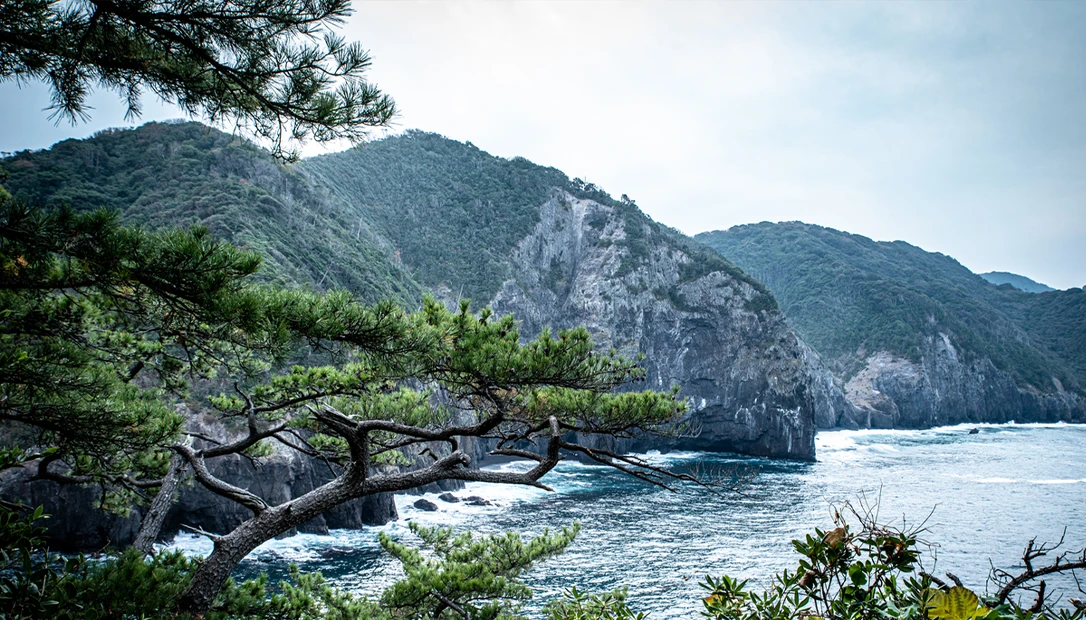
We know why the region is dangerous. But emotionally? It still feels like the kind of place where something enormous could rise from the depths at any moment.
Final Thoughts: Respect the Pacific
At the end of the day, the Dragon’s Triangle isn’t really about sea monsters. It’s about humanity confronting an environment so massive and unpredictable that our brains instinctively turn it into legend.
Ancient sailors called the dangers dragons. Modern scientists call them tectonic instability and marine anomalies. Either way, the result is the same: The Pacific Ocean remains one of the most powerful forces on Earth.
And maybe that’s why the Devil’s Sea continues to capture people’s imagination.
Because somewhere between the volcanic eruptions, rogue waves, magnetic disturbances, and centuries-old legends… There’s still enough mystery left to make us glance at the horizon and wonder what’s moving beneath the surface.
And if a Jaeger ever does rise out of the Pacific one day?
Honestly, the Devil’s Sea would probably be the first place we’d expect it to happen.