As a kid, I loved the magic of Christmas—the music, the decorations, driving through sparkling neighborhoods, and holiday movies (yes, Die Hard counts!). But I always wondered: where do these traditions come from? Were they just passed down through families, or is there a deeper history behind them?
Consider the Christmas tree and the blinking holiday lights. They’re icons of the season, bringing warmth and joy to millions. How did these symbols become so central to our holiday celebrations? My search for answers revealed a fascinating blend of ancient rituals, religious traditions, and technological breakthroughs. Together, they evolved into the cherished customs we enjoy today. Let’s explore their rich history and meaning.
Advertisement — Continue Reading Below
Ancient Origins of Christmas Lights
The Christmas tree, as we know it today, has roots in ancient civilizations that had a thing for evergreen plants. Long before Christmas became a holiday, various cultures associated evergreens with fertility, life, and renewal, especially during the winter solstice.
In ancient Egypt, evergreens, particularly palm branches, were brought into homes to celebrate the triumph of life during the coldest, darkest time of the year. Similarly, the Romans decorated their homes with evergreens during Saturnalia, a festival in honor of Saturn, the god of agriculture, to anticipate the return of spring. The Druids, an ancient Celtic order, also used evergreen plants in their winter solstice rituals, believing that evergreens could ward off evil spirits and symbolize eternal life.
These early uses of evergreens laid the foundation for today’s Christmas tree—a symbol of life, hope, and renewal during winter’s darkest days. As the sun sets early, we light our Christmas trees and homes. Maybe, even now, we’re echoing ancient traditions to ward off darkness and lift our spirits.
Advertisement — Continue Reading Below
The First Christmas Trees in Europe
The tradition of the Christmas tree as a holiday decoration began in 16th-century Germany. Devout Christians in Germany were known to bring trees into their homes and decorate them with apples, nuts, and other items symbolizing the harvest. It’s also believed that the Protestant reformer Martin Luther was the first to place candles on a Christmas tree to replicate the sight of stars twinkling through the trees on a winter’s night.
The custom of decorating trees spread throughout Germany and eventually to other parts of Europe. By the 18th century, Christmas trees had become a prominent feature of holiday celebrations in Germany and among the European aristocracy.
One of the most significant milestones in the history of Christmas trees came in the early 19th century when Queen Charlotte, the German wife of King George III, introduced the tradition to the British royal family. Queen Victoria and Prince Albert later popularized the Christmas tree further when an illustration of their family gathered around a tree was published in 1846. This image captured the imagination of the British public, and the Christmas tree quickly became a staple of holiday festivities in Britain and, soon after, in the United States.
Advertisement — Continue Reading Below

Christmas Trees in America
In the early 19th century, German immigrants brought the tradition of Christmas trees to the United States. Although it took some time to catch on, by the mid-1800s, Christmas trees had gained widespread popularity. An illustration of a Christmas tree in a Philadelphia publication in 1823 marked one of the earliest public mentions of the practice in America.
However, it wasn’t until the latter half of the 19th century that the Christmas tree became a fixture in American homes, thanks in part to the publication of the same illustration of Queen Victoria and her family that had taken Britain by storm. Christmas trees soon appeared in households across the country, and the tradition of decorating them with ornaments, tinsel, and, later, electric lights became an essential part of the holiday experience.
Advertisement — Continue Reading Below
The Advent of Christmas Lights
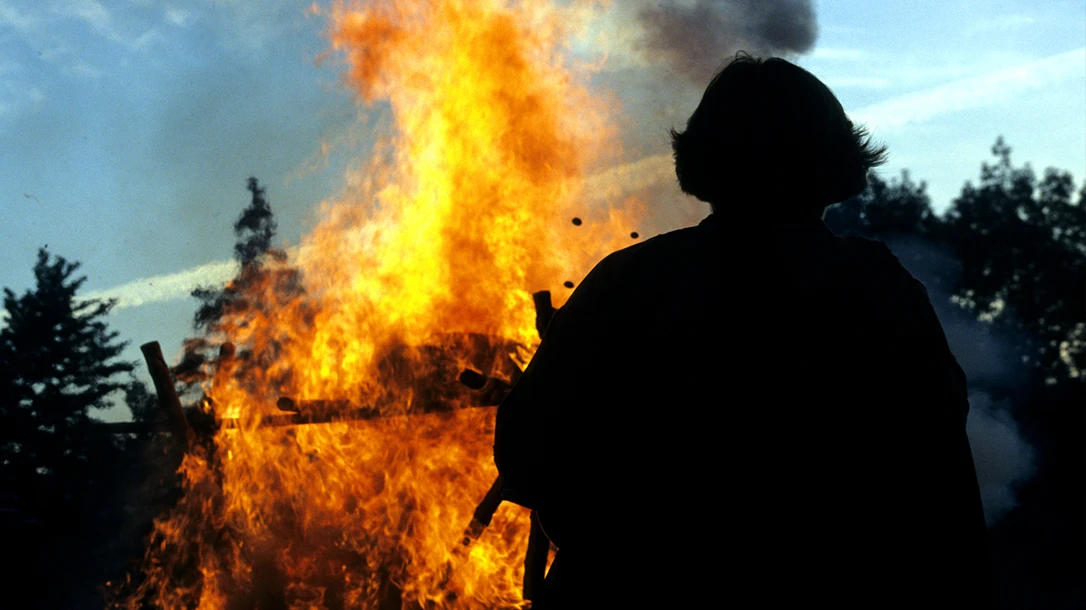
The tradition of lighting Christmas trees began in 16th-century Germany with candles, which symbolized the light of Christ and brought warmth to the dark winter months. While undeniably beautiful, placing open flames on evergreen branches posed an obvious risk—fire. As a result, trees were lit only briefly and under strict supervision. Let’s be real: you can bet countless homes went up in flames thanks to this early festive practice.
Like many great innovations, necessity spurred progress. In this case, the need to stop burning down houses led to a game-changing invention—the electric Christmas light. In 1882, Edward H. Johnson, a close associate of Thomas Edison, debuted the first string of electric Christmas lights on his tree in New York. His tree featured 80 small red, white, and blue bulbs—an impressive innovation for the time. However, these electric lights were expensive and difficult for the average household to afford.
It wasn’t until the early 20th century that Christmas lights became more affordable and widely available. In 1903, General Electric introduced pre-assembled light kits, making it easier and safer for families to light their trees. Over the decades, Christmas lights have evolved into an essential part of holiday décor, offering a vibrant and risk-free alternative to the flickering candles of the past. Although I am sure there are still a decent number of house fires thanks to the sheer number of Christmas lights some people insist on plugging into a single outlet, but that’s a story for another time.
Advertisement — Continue Reading Below
The Evolution of Outdoor Christmas Lights
As electric Christmas lights grew in popularity, it wasn’t long before people began to take the tradition outdoors. The first known instance of outdoor Christmas lights was in 1920, when a string of lights was draped across a community tree in California. This event sparked a new trend, and soon people were decorating not only their Christmas trees but also the exteriors of their homes with colorful lights.
One of the most famous early displays of outdoor Christmas lights was on the house of President Calvin Coolidge, who lit the first National Christmas Tree on the White House lawn in 1923. This event marked the beginning of the long-standing tradition of outdoor Christmas light displays in the U.S.
Throughout the 20th century, the practice of decorating homes with Christmas lights expanded rapidly, with communities organizing contests and neighborhoods coming together to create elaborate holiday displays. These outdoor decorations became a hallmark of the Christmas season, with lights adorning homes, streets, and town squares, creating a festive and magical atmosphere.
Advertisement — Continue Reading Below
Christmas Lights go Mainstream
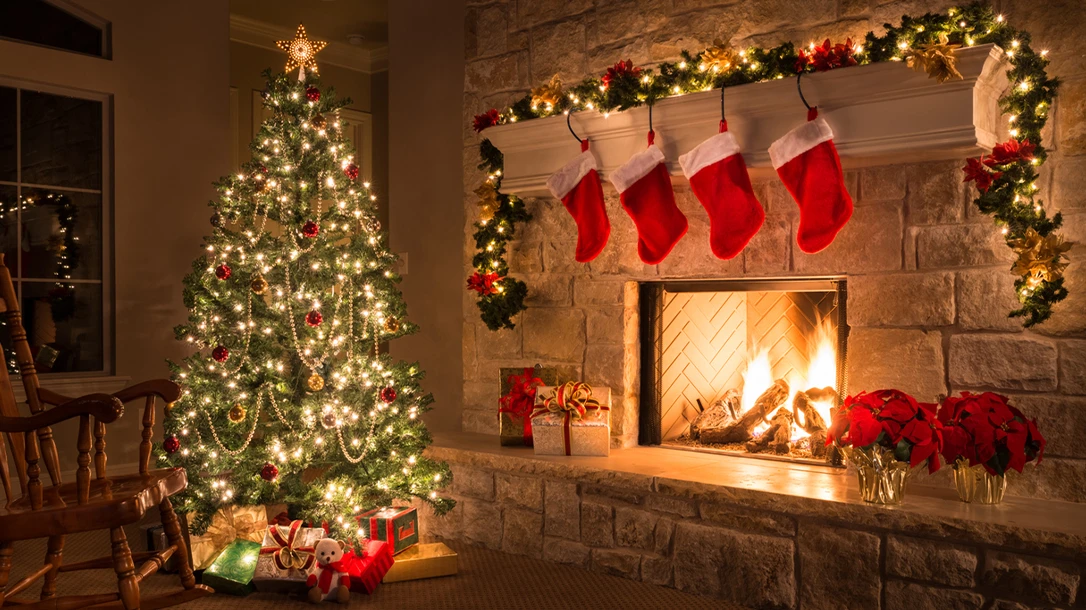
Christmas lights have evolved far beyond simple decorations—they’re now a cornerstone of holiday culture. From cozy family displays to extravagant community-wide events, the tradition of lighting up for the holidays has taken on a life of its own. Iconic spots like Dyker Heights in Brooklyn, New York, or the breathtaking displays at the Mission Inn in Riverside, California, have become global tourist attractions, drawing crowds eager to experience the magic firsthand.
These lights have also become a canvas for artistic expression. Cities and towns host annual light parades and festivals, while synchronized light shows set to music have grown increasingly popular, blending creativity with community spirit. What once was a simple act of lighting a tree or home has transformed into a dazzling celebration of the season. Think back to your own hometown—you can probably picture that one house or street that went all out every year, becoming a must-see destination during the holidays.
Advertisement — Continue Reading Below
Cultural Evolution
The history of Christmas trees and lights is a tale of cultural evolution, technological innovation, and enduring tradition. What began as ancient rituals honoring life during the winter solstice has transformed into a cherished part of modern holiday celebrations. The Christmas tree, rooted in age-old customs, and the twinkling lights that adorn it now symbolize hope, warmth, and joy during the festive season.
As these traditions continue to evolve, they serve as a testament to the greatness of shared rituals, reminding us of the magic that the holiday season brings. Whether it’s a simple string of lights on a tree or an elaborate display illuminating an entire house, these beloved icons continue to brighten our homes year after year.
Now, armed with a bit of knowledge, you’re ready to pass these traditions along to future generations. Just remember—keep the fire extinguisher nearby! Yippee-ki-yay!
Advertisement — Continue Reading Below