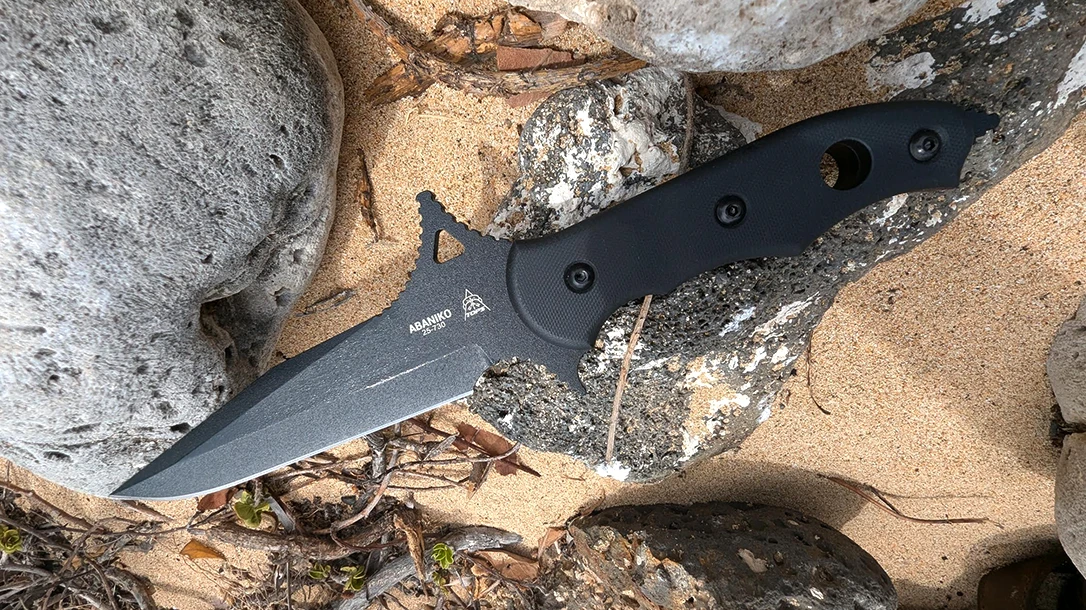
“Datu” Bram Frank, nor his patented Bramp design, requires any type of introduction to either the knife or martial community. Both the man and his blade have established legendary and iconic status across all bladed spectrums. TOPS Knives has capitalized on this iconic design by working with Frank to release the Abaniko.
The TOPS Knives Abaniko
For over forty years, Frank has been considered a global pioneer in the Filipino martial arts (FMA). He has spread a wealth of knowledge as an edged weapons instructor in the fighting arts, ranging from traditional FMA to progressive tactical and military combative applications. In fact, in December of 2007, Datu Bram Frank was inducted into Black Belt Magazine’s Hall of Fame as “Weapons Instructor of the Year.”
The Abaniko is one of the many fighting knife designs that have come from the martial mind of Bram Frank. It was originally introduced to the world twenty-three years ago through the now-defunct Ontario Knives.
Advertisement — Continue Reading Below
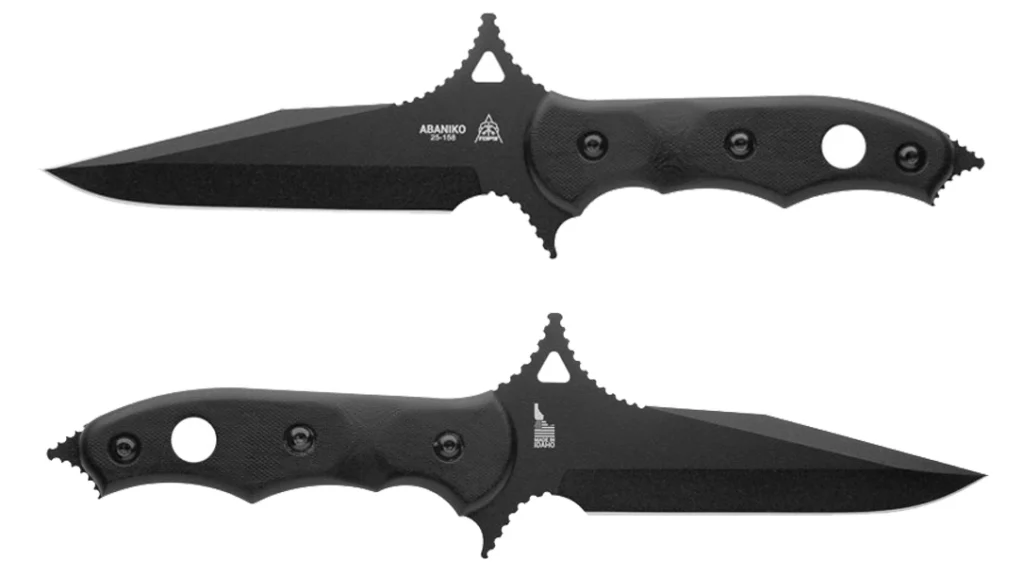
But back in 2002, Ontario couldn’t produce the knife, so it was farmed out to be manufactured by TOPS Knives/Microtool. According to Bram, that is the reason the Abaniko looks like a TOPS Knife and not an Ontario knife design.
TOPS Knives founder and knife industry legend Mike Fuller was a friend of Bram’s and an associate project manager on the original Abaniko project. This long history and relationship are what made Bram feel the importance of bringing the Abaniko GEN2 back to TOPS.
Advertisement — Continue Reading Below
The Abaniko Build
Without question, the Abaniko was designed as and is considered a fighting knife. Made from 1095 high-carbon steel, the Abaniko yields an impressively stab-friendly 6.38-inch blade. The overall length is 11.88 inches. So, at just under 12 inches, it is not a small blade to EDC, but I say EDC it anyway. The cutting edge is 5.5.
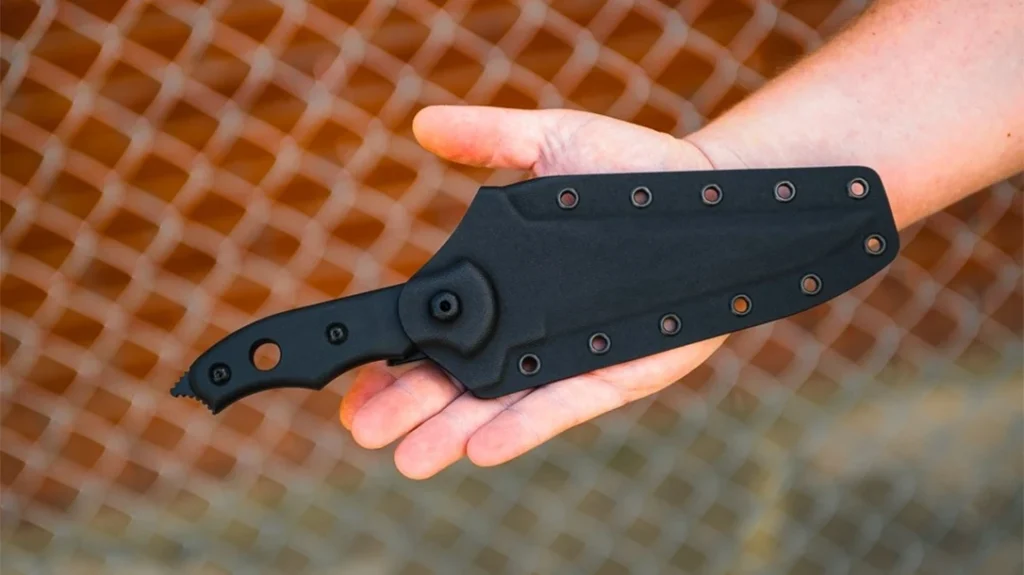
It comes complete with a solid, well-made Kydex sheath. The weight of the blade comes in at 12.30 ounces, so it is substantial, but fast when swinging.
Advertisement — Continue Reading Below
The handle is G-10, and the ergonomics are great, with a good balance. Good enough for me to test my horrible knife-throwing skills. I was able to throw the knife into a tree and make it stick easily, though.
Testing, Testing…1, 2, 3
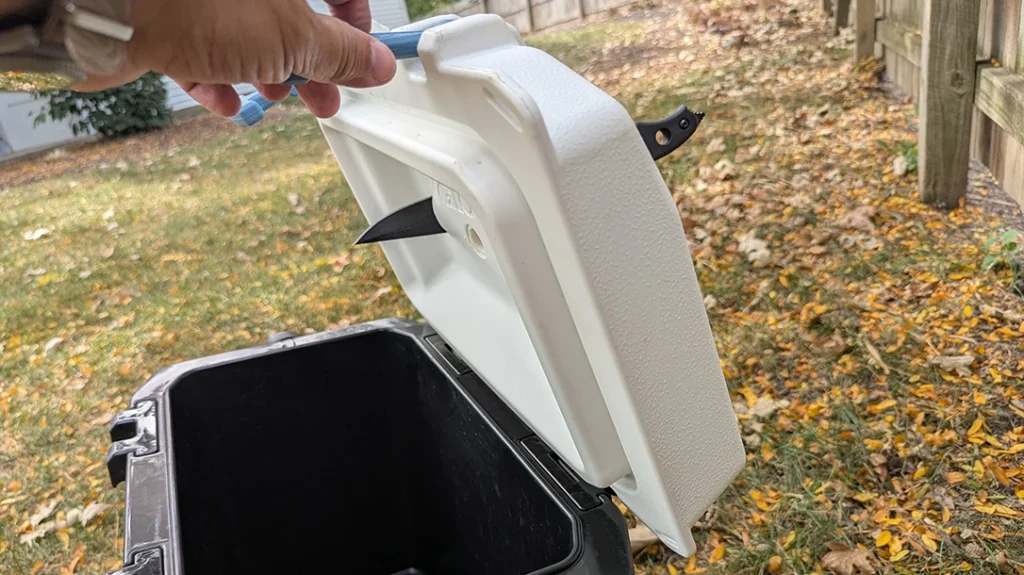
I do like the Bramp and finger guard. I found that on a knife this length, I was more comfortable with it in a reverse grip when it came to stabbing into something solid. Both kept my hand from sliding down onto the blade while stabbing through the top of an igloo cooler.
Advertisement — Continue Reading Below
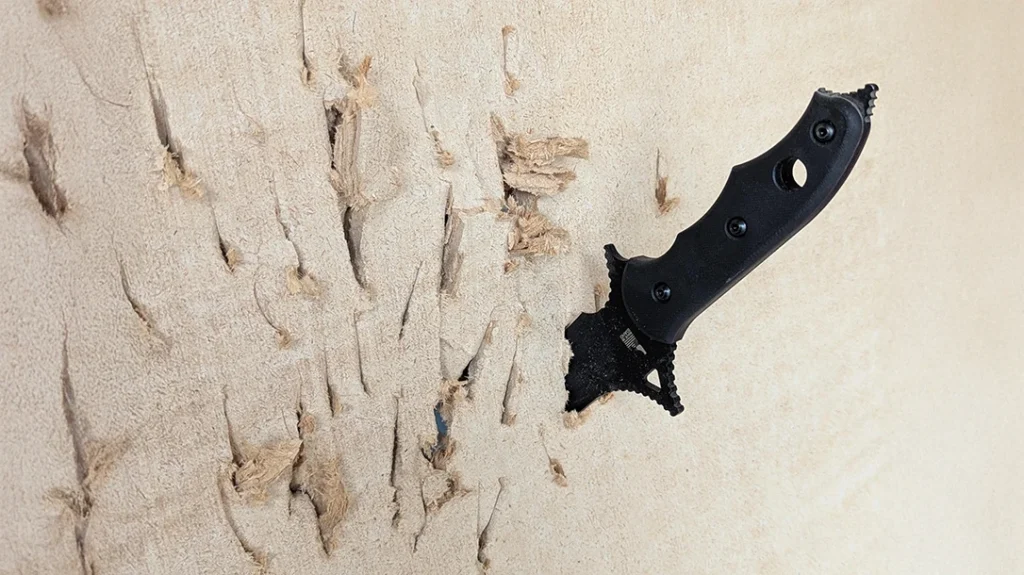
For straight thrusting, I tested it on some thick corkboard, which is thicker than clothing and flesh. The blade felt very comfortable there as well.
The only hesitation I have with the knife is when I think about using it for field work. Again, this is a combat blade, but all knives should be able to function as a tool first.
Advertisement — Continue Reading Below
I did my standard rubber construction cone slicing test. While the knife itself was more than sharp enough to complete the task, I felt that the positioning of the finger guard and the Bramp were a little awkward. For this test, it made it a bit difficult to find the sweet spot on the grip to slide through the cone effortlessly.
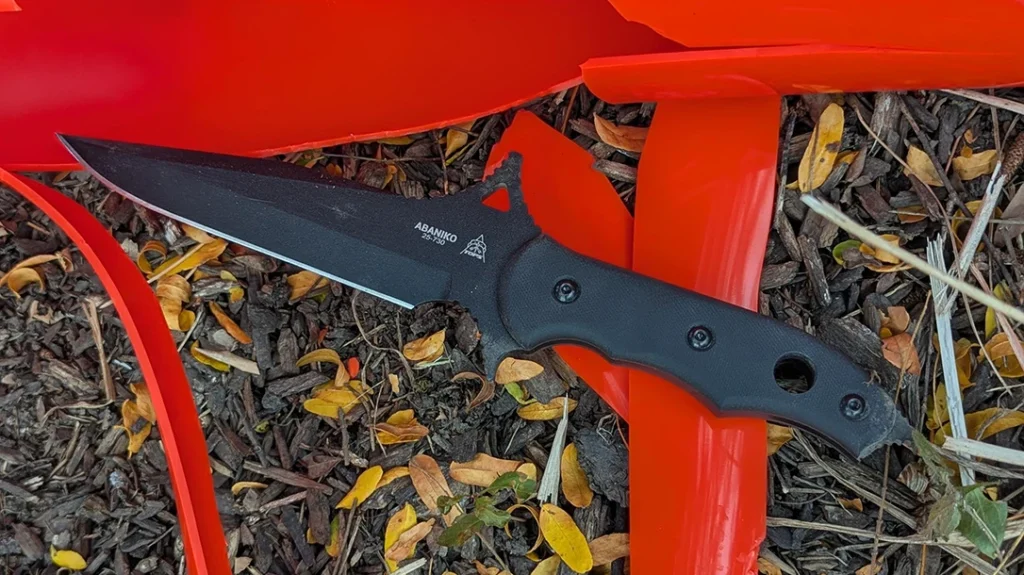
I do understand that this knife is not meant to cut through thick rubber. However, most of us would find ourselves using a knife for utility purposes rather than stabbing a person on any given day.
Advertisement — Continue Reading Below
The Bramp
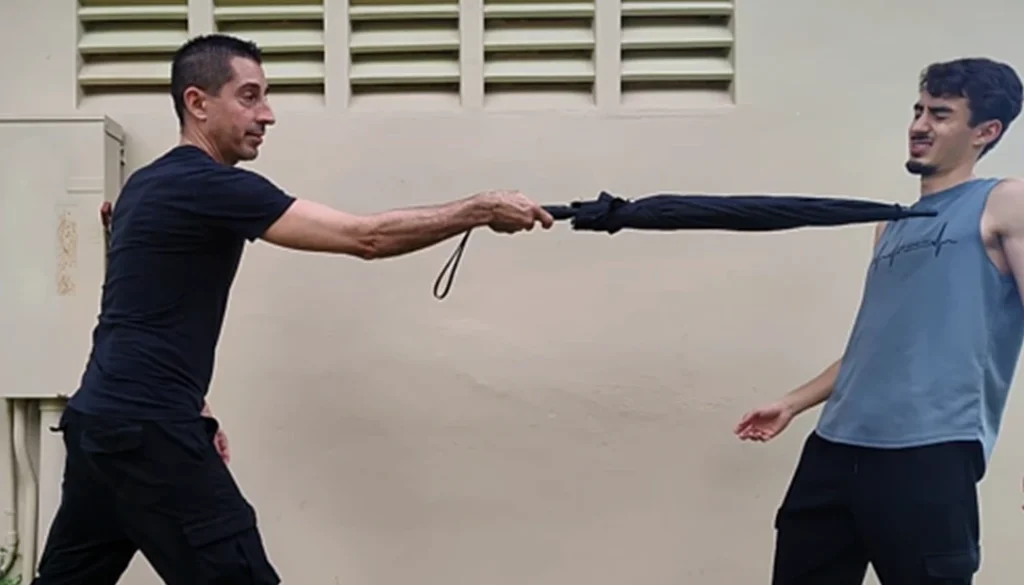
Also, I find that I like the Bramp more on shorter blades, like some of Bram’s folders. Working some tight-spaced CQC scenarios with a FMA buddy of mine, I found that at arm’s reach, it was fast and awesome. However, in close range, I did not find the leverage for controlling my attacker’s wrist and arms with the Bramp as I do with the Bramp shorter folders with sub-4-inch blades.
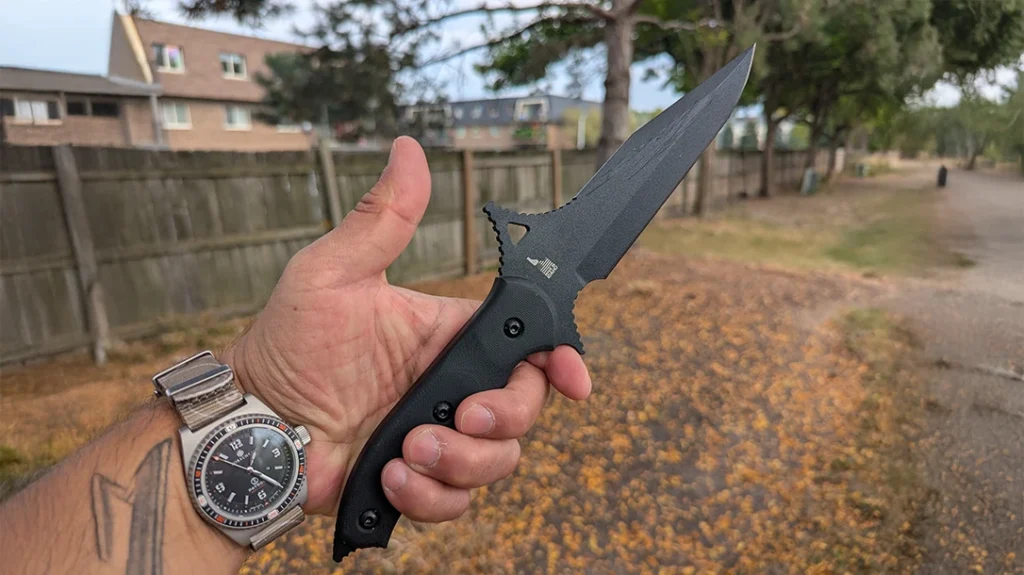
Again, this may be user error. I would be more than happy to meet up with Datu Bram Frank to learn his techniques and have him show me what I may be doing incorrectly. Again, from an outside fighting range, I found the blade to be perfect.
The Abaniko: Made in the USA with Purpose
Make no mistake, I like this knife. A lot. I have reviewed and owned probably close to seventy different TOPS Knives models and liked them all. The Abaniko is no different. It is a super sharp, tough, American-made, purpose-built blade.
I would not say that it is the “go-to everyday carry knife” for those who like compact blades. However, at the same time, it was never meant to be. The Abaniko has held its place in the knife world for more than two decades, and I can see why.
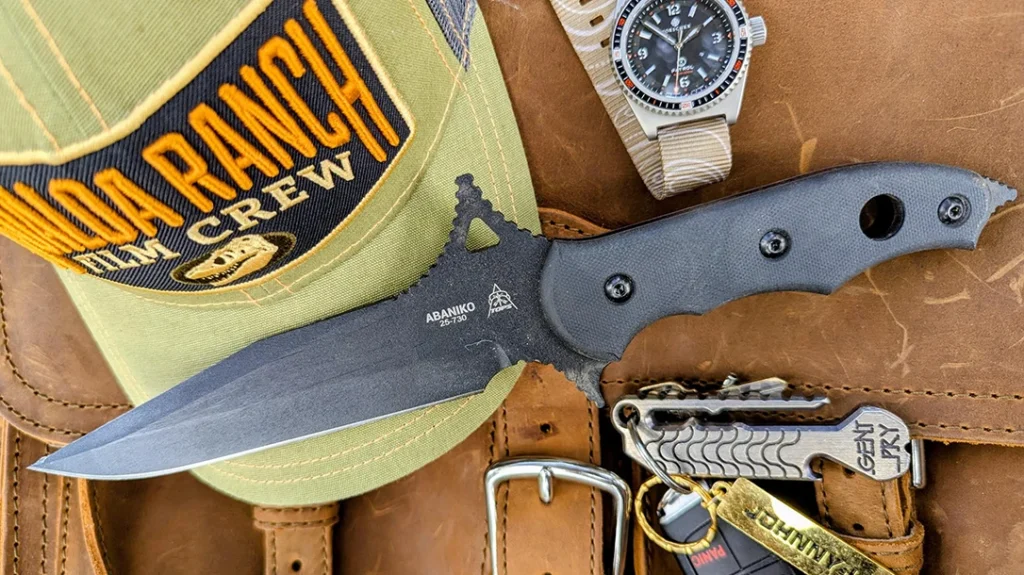
If you are looking for a fighting knife, you can’t go wrong with the Abaniko. I would just study up on how to properly use the Bramp, as I have no doubt that Datu Bram Frank could work magic with it. I say pick one up today and get in touch with Bram, as he has a wealth of knowledge that he is ready and willing to pass on.
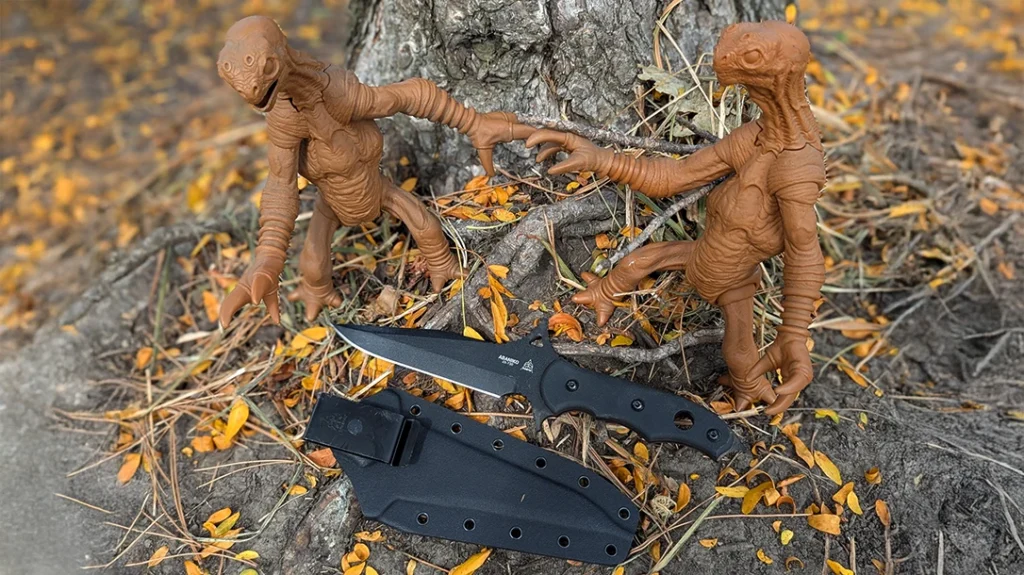
Finally, when not busy being dangerous people, Bram Frank and I share a passion for collecting vintage superhero and sci-fi collectibles. So, I thought it fair to close out with a picture of the Abaniko and a couple of vintage LAZERBLAST Billiken models. Enjoy.
TOPS Knives Abaniko Specs
| Overall Length | 11.88 inches |
| Blade Length | 6.38 inches |
| Cutting Edge | 5.50 inches |
| Blade Thickness | 0.19 inches |
| Blade Material | 1095 |
| Blade Style | Clip Point |
| Finish | Black |
| Handle Length | 5.50 inches |
| Handle Material | G-10 |
| Color | Black |
| Weight | 12.30 ounces |
| Sheath | Kydex |
| Knife Type | Fixed Blade |
| Designer | Bram Frank |
| Country of Origin | USA |
| MSRP | $350.00 |
WHY OUR ARTICLES/REVIEWS DO NOT HAVE AFFILIATE LINKS
Affiliate links create a financial incentive for writers to promote certain products, which can lead to biased recommendations. This blurs the line between genuine advice and marketing, reducing trust in the content.