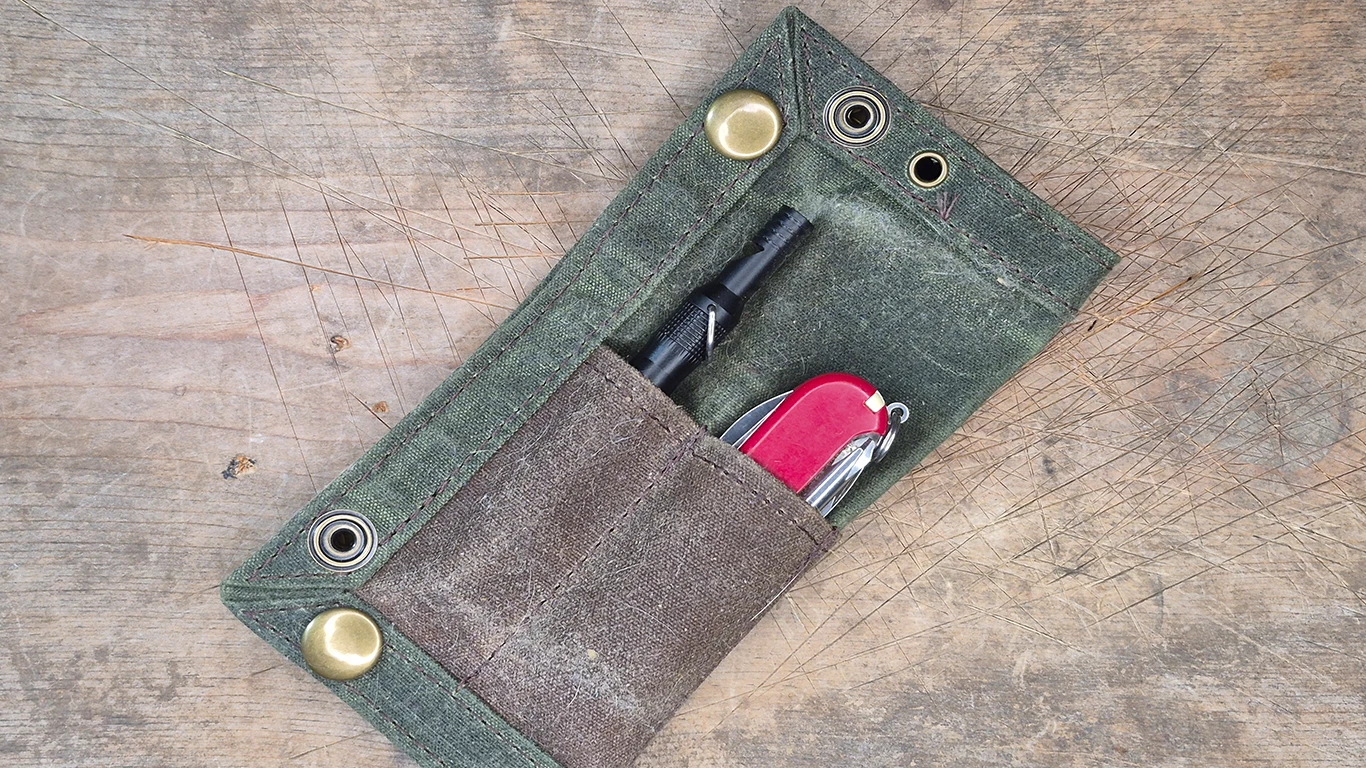
On a press trip to Idaho a couple of years ago, I noticed one of my fellow writers remove a small, waxed canvas pouch from his pocket. Intrigued, I asked him what it was. He told me it was an EDC travel tray. He then showed me how it unfolded and quickly transitioned from a pocket organizer to a little tray that’s perfect for storing loose change and whatnot on a dresser or nightstand.
I was hooked. It was one of those things that you never knew you needed until you saw it. He said it was from a company called PNWBUSHCRAFT. When I got back to my hotel room that night, I looked them up and ordered a travel tray for myself.
Since that initial order, I’ve gotten to know Heather Saulsbury, one of the founders of PNWBUSHCRAFT, a bit. I’ve also purchased a few more of their products. She’s incredibly busy, but I managed to get her to sit down recently to answer a few questions.
Advertisement — Continue Reading Below
PNWBUSHCRAFT is Killing It with Waxed Canvas
JC: My understanding is that PNWBUSHCRAFT began as a hobby of sorts. What was the watershed moment, so to speak, when you realized you could actually do this for a living?
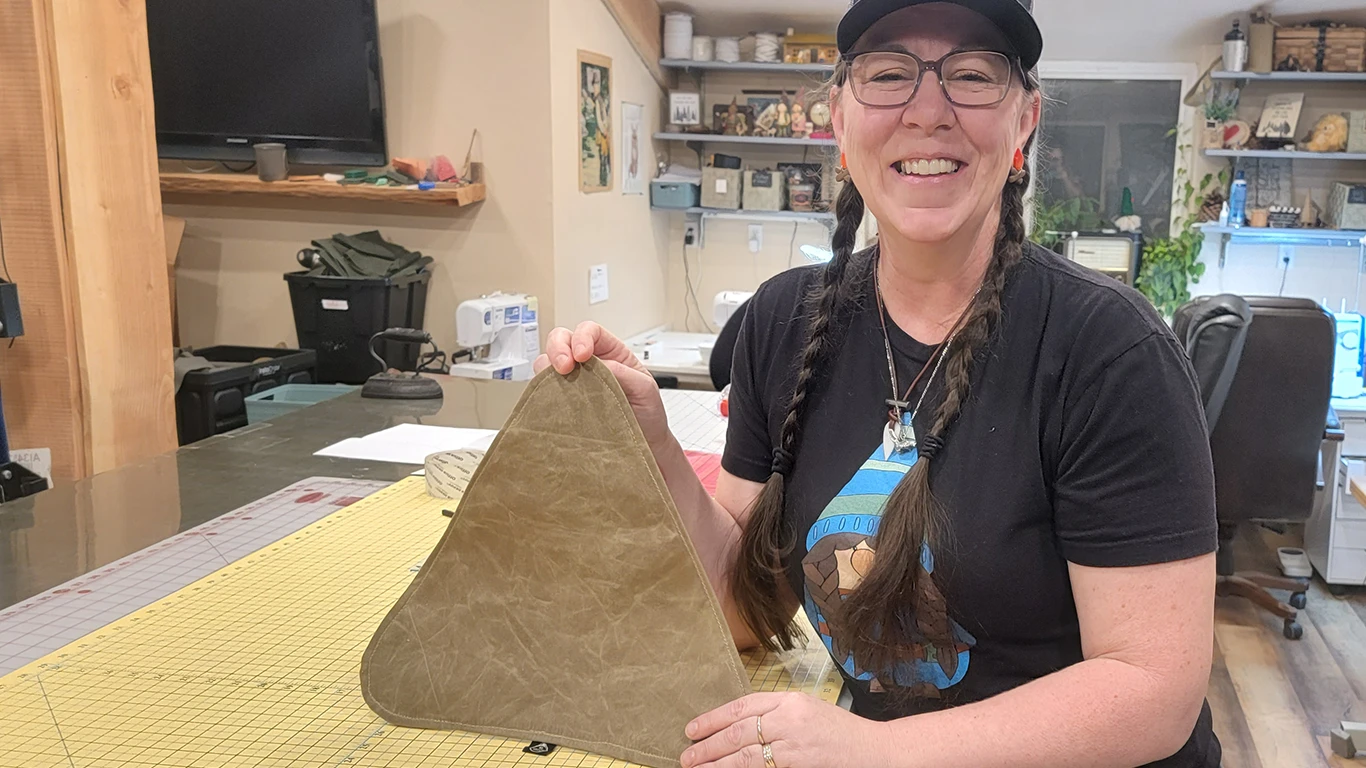
We have had quite a few businesses over the years, and I didn’t really think this one was going to be more than a hobby, so I treated it like a side hustle for a while. The big push came when we received our largest wholesale order, bound for Australia. That order allowed us to renovate the upstairs of our pole building and move out of the shop’s corner.
Advertisement — Continue Reading Below
That was the first time it really felt real. Someone across the world trusted us at that level. It was the moment we stopped thinking like hobbyists and started thinking about building something long-term for our family. If you had told me a dozen years ago that we would be where we are now, I don’t think I would have believed you. But I truly love what we have created. It has grown slowly and intentionally, and we really enjoy what we do.
JC: What are a few of your all-time favorite projects or designs?
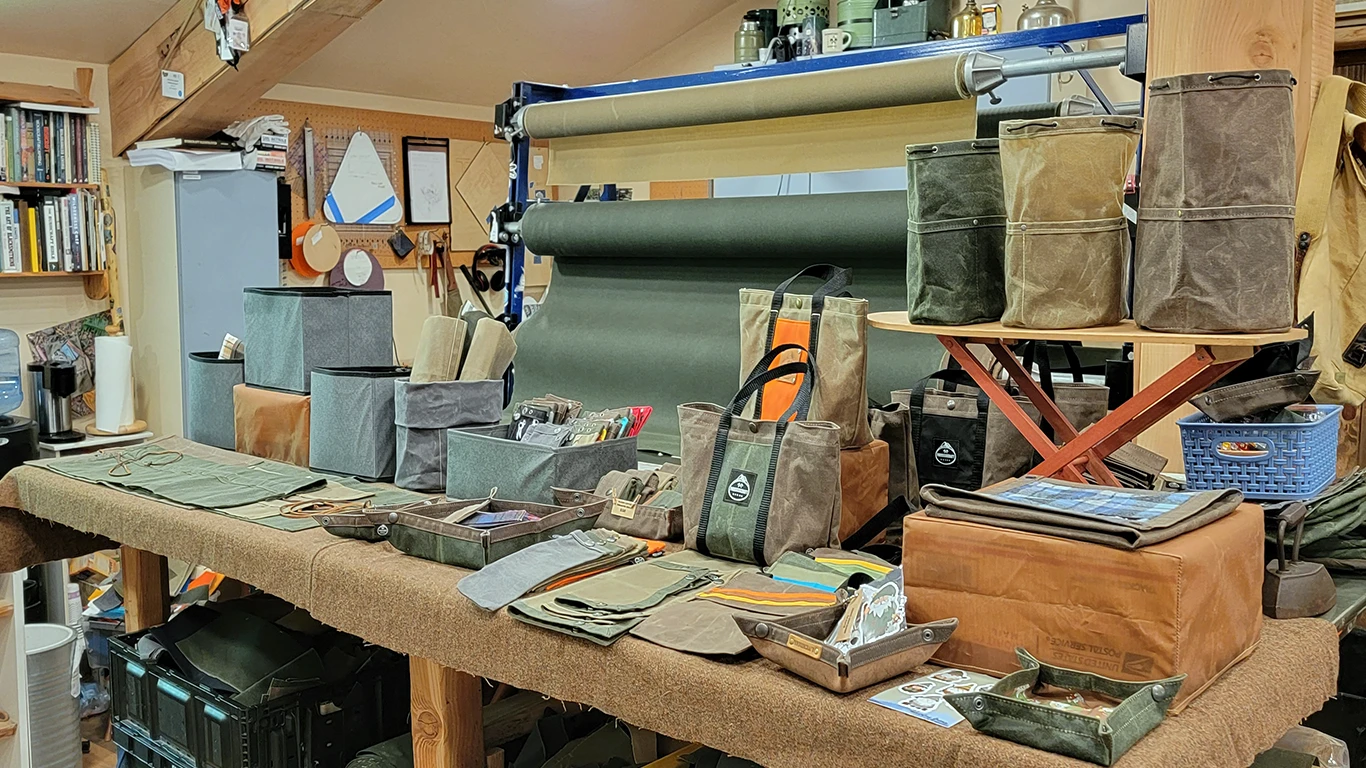
Wow, that is a hard question to answer because I really love making all kinds of different things. One of my favorites is our waxed canvas foraging pouch. My husband had created the original leather-and-waxed canvas version, and I wanted to create one that was all waxed canvas.
To start, I designed it similarly to the leather version, but I didn’t love how it came together. Then, as I was falling asleep one night, I had a moment of clarity on how to improve the design. It worked out so much better to create that way in waxed canvas, and it is one of our most popular items. We don’t rush designs. We live with them until they feel right. That’s something that has always mattered to us.
Advertisement — Continue Reading Below
The second item is our Cedar Bucket Bags, available in various sizes with pockets on the outside. I love the product’s flexibility, as well as the flexibility in its design. I can give them personality with vintage fabrics or really cool patches. Each one feels a little different, and I love that they carry both function and character. People use them for all kinds of things, from camp cooking sets to knitting bags. The possibilities are endless.
JC: I know you’re always on the lookout for uniquely patterned fabrics to use. Where is the most unexpected place you’ve found some great fabric?
Most of the time, I was searching on eBay or at thrift stores, but when I was introduced to the live auction site Whatnot, I found an amazing seller, StefNewmanTextiles, who specializes in vintage textiles. That’s my go-to spot now, and I don’t even have to leave the house because he has spent a lifetime learning about textiles and brings the best pieces to his shows. I love giving old textiles a second life instead of seeing them end up in a landfill. Each vintage piece already has a story, and I get to build the next chapter into something that will be used outdoors for years to come.
Advertisement — Continue Reading Below
JC: For someone who has never used waxed canvas, are there things they should know ahead of time?
Waxed canvas gear has been around for a long time, in part because it is incredibly durable. To get the most life out of your pieces, store them in a cool, dry place when not in use.
Over time, the wax will naturally wear down and need to be reapplied. How often depends on how heavily the piece is used and the climate it’s exposed to. A good rule of thumb is simple: if water no longer beads up and rolls off the surface, it’s time to reapply wax.
With proper care, waxed canvas can last for many years and only gets better with age.
Advertisement — Continue Reading Below
From a maker’s standpoint, waxed canvas is great to work with because you can draw your lines directly on it, and it holds a fold nicely, so you don’t need to iron; you can’t actually iron it at all. It also ages beautifully. Every crease and mark becomes part of its character. The downside is that it will definitely show your needle holes if you try to pin something in place, and it is hard on your sewing machine because it leaves so much wax behind. We clean our machines a lot. But it is worth it for how durable and long-lasting the material is.
JC: Any future plans for PNWBUSHCRAFT that you can mention?
Yes, we are going bigger this year, bigger bags, haversacks, tarps, and more. Lots of vintage textiles. This is also a big year of collaborations for us. We’ve always loved the creative spark that happens when people come together and build something neither one would have made on their own. It keeps things fresh and fun, and it pushes us to try new ideas while still staying rooted in quality and craftsmanship.
Advertisement — Continue Reading Below
I’m also working on creating guides for working with waxed canvas so people can make awesome gear themselves without the steep learning curve we went through. We learned a lot over the years, sometimes the hard way, and I want to shorten that path for others. More than anything, we are focused on continuing to build this as a family business that will be here for the long haul. We care about making gear that lasts, sharing the outdoors, and building something our kids can be proud of.
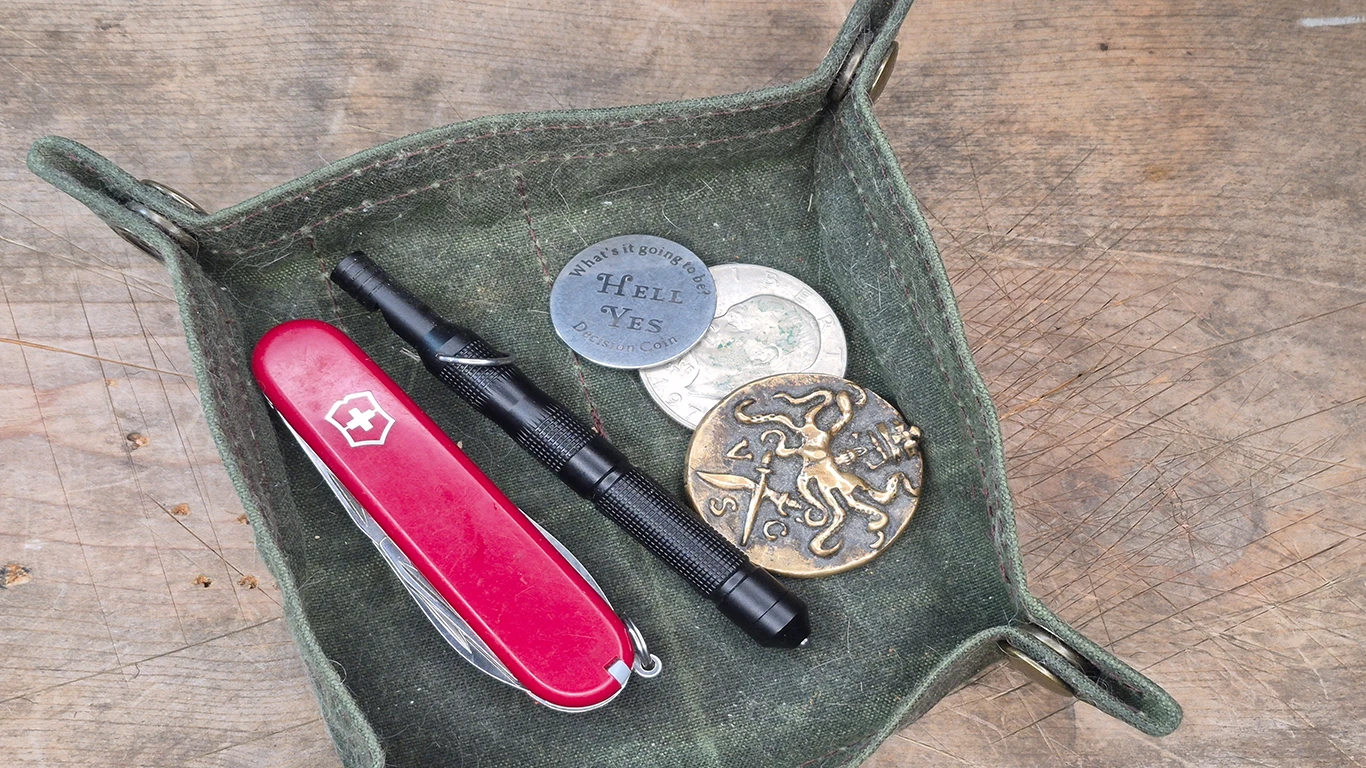
Waxed Canvas EDC Travel Tray 3.0
This is the one that started it all for me. Flat, it’s a square that measures 6.5 inches on a side. At the corners, you’ll find snaps. Put those together, and the square lifts up into a tray. The sides are about an inch tall, give or take.
Advertisement — Continue Reading Below
Undo the snaps and fold the square in half, then snap it together in that format to create a pocket organizer. There are three slot pockets that are about 3.25 inches tall. They vary in width from an inch to 2.5 inches. The largest one sits on one side of the organizer, and the remaining two are on the opposite side. These are great for things like pocket knives, pens, or even small prybars if that’s your thing.
The whole thing is made from 10.1-ounce waxed canvas. PNWBUSHCRAFT offers them in several colors, including brown, green, black, and slate. The Waxed Canvas EDC Travel Tray 3.0 currently runs $45.
Advertisement — Continue Reading Below
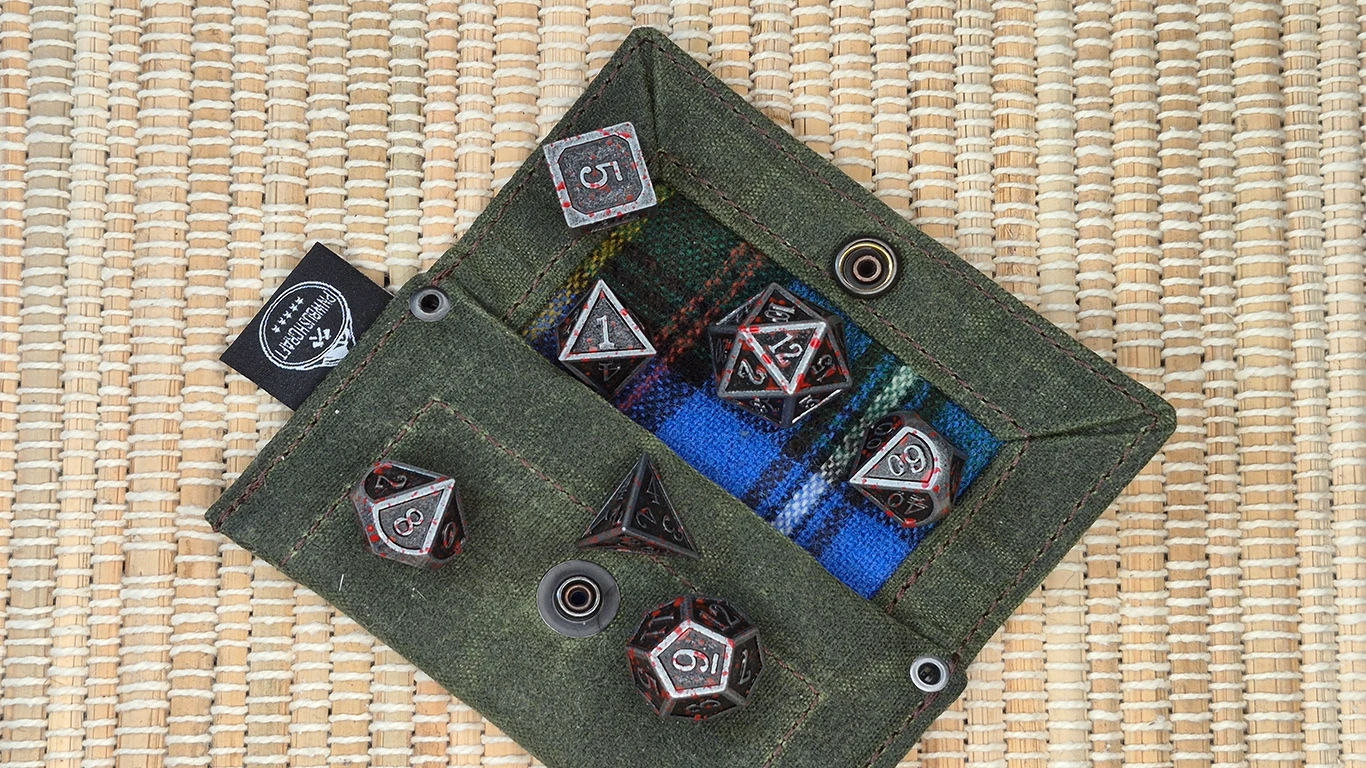
Waxed Canvas Dice Pouch
This is something I ordered on a whim. I mean, I really don’t need a special pouch to carry a set of dice around with me. But when they debuted the product on social media last year, I quickly decided it was something I just had to have. And, I have to admit, it’s pretty cool.
Made from waxed canvas (shocking, I know), it measures 2.25 inches by 4.25 inches. It has a snap closure. It’s simple, just a basic little pouch. It’s perfect for a few different applications. Dice, of course, if that’s your jam. But it also works great as a minimalist wallet, holding just a few cards and a bit of cash. It’s also seen some use as a fire kit, holding a lighter and some tinder.
The Dice Pouch is available in four different colors: green, brown, black, or orange. They run $25 at their website.
WHY OUR ARTICLES/REVIEWS DO NOT HAVE AFFILIATE LINKS
Affiliate links create a financial incentive for writers to promote certain products, which can lead to biased recommendations. This blurs the line between genuine advice and marketing, reducing trust in the content.