If you’ve spent much time in the world of custom knives, you’ve likely heard of WC Knives and William Collins. William runs a one-man shop in Texas, renowned for his unique style. Two good examples of this are the WC Knives WCFK and WCPK field knives. Let’s get into the details.
The WC Knives WCFK and WCPK
I first discovered his work in 2016, when I received a model called the Forest Fatty for a YouTube review. At the time, WC Knives had a somewhat more “mainstream” appearance, though they featured many unique attributes still found in today’s production models.
By 2019, I was working for a popular print magazine when I learned about the introduction of the WCSK. Better known as the William Collins Survival Knife.
Advertisement — Continue Reading Below
To be honest, I was skeptical. The WCSK looked radically different from anything in my collection. I wasn’t sure how effective or useful it would be. Fortunately, William agreed to send me one for testing—and I’ve been hooked on his blades ever since.
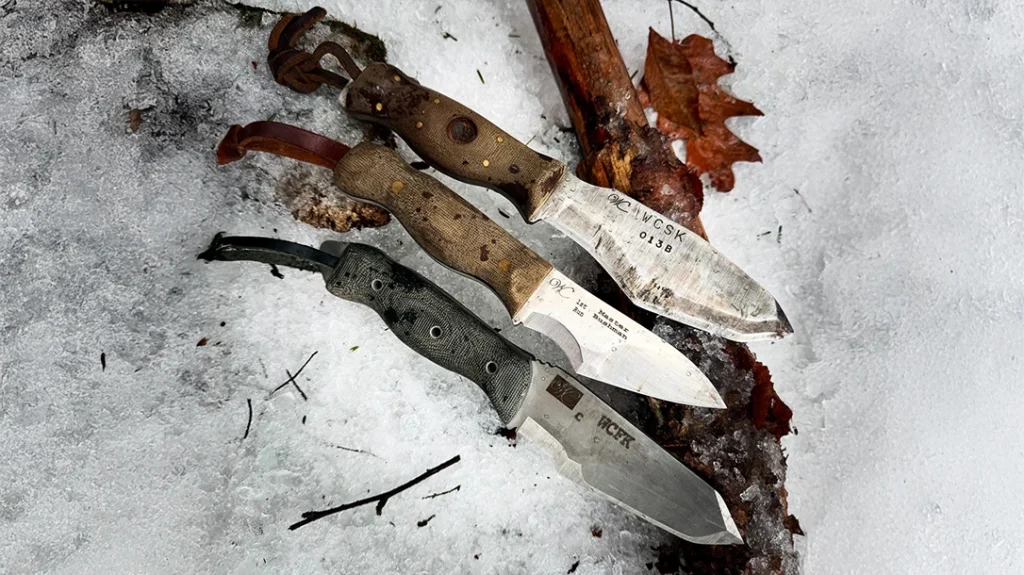
William Collins has a very specific, unique design language. Echoes of past designs appear in various parts of his work. However, his process is distinctly his own, nearly impossible to confuse with any other knifemaker’s. That’s a rare trait in the cutlery world.
Advertisement — Continue Reading Below
WCFK
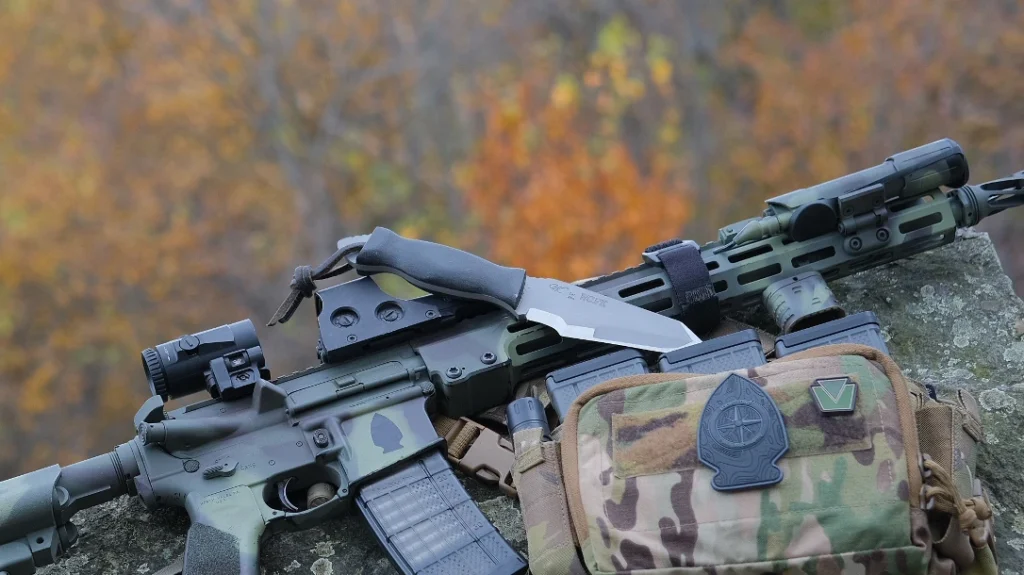
In 2024, I learned about a new addition to the WC Knives lineup: the WCFK. William explained that he wanted to design a blade useful for soldiers in the field. One robust enough for survival tasks, easy to maintain, and versatile for the mundane chores that make up most of a soldier’s knife use. With those parameters in mind, the FK (Field Knife) was born.
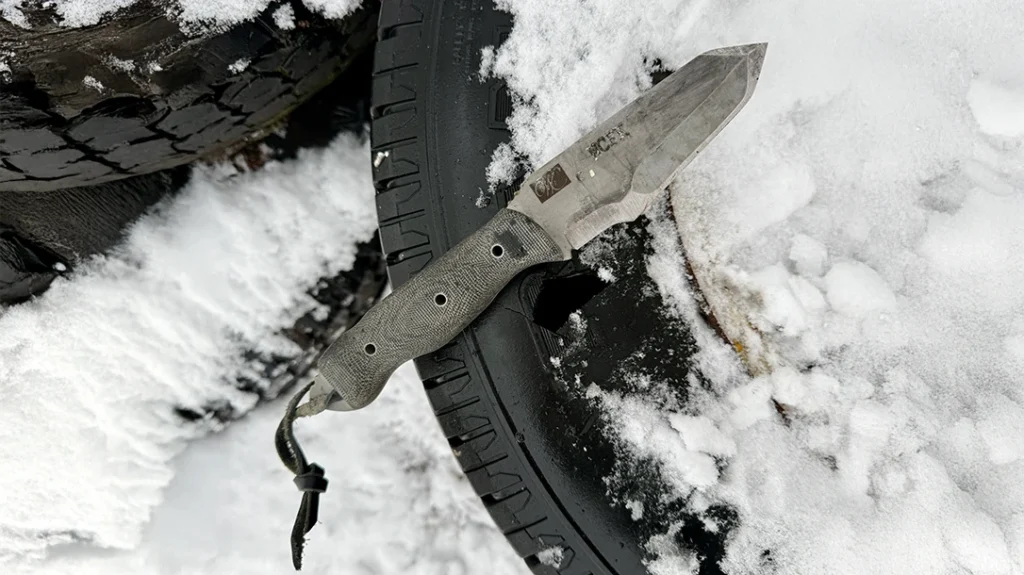
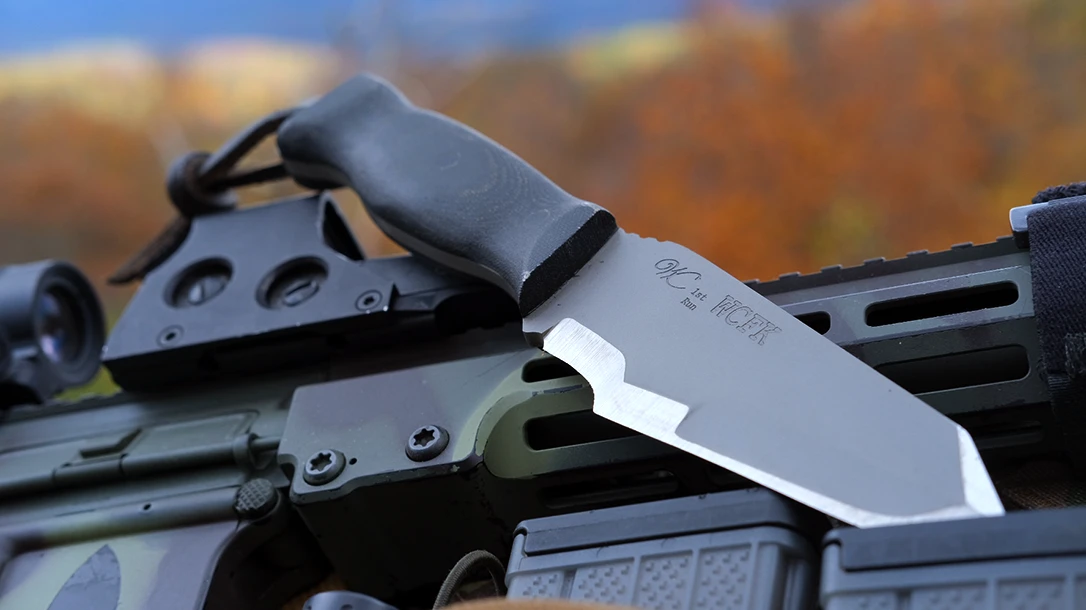
The WCFK features a strong, faceted tip that aligns the point with the handle’s centerline. The upper facet is thinned for better penetration but left unsharpened. This design makes the tip brutally durable, capable of withstanding prying and digging.
Advertisement — Continue Reading Below
The edge grind is a continuous 12.5 degrees from tip to ricasso. Though the blade looks like a sharpening nightmare, it’s actually extremely easy due to this consistent bevel. The edge drops from the tip for about .75 inch, angling back toward the handle.
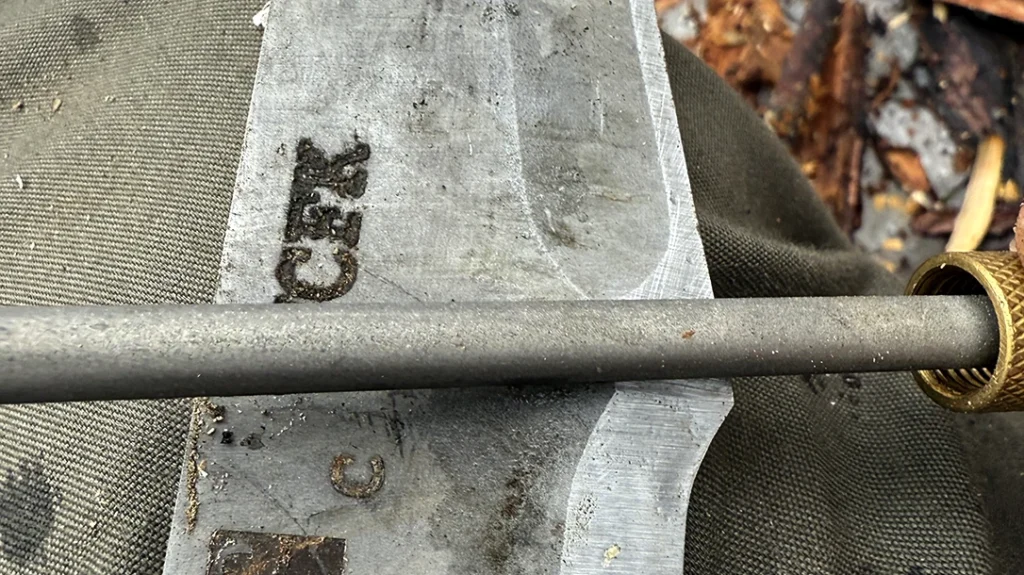
The straight portion spans about 3 inches, with the first 2 inches featuring a thinner primary grind for improved slicing geometry. From there, the primary grind thickens for added strength.
Advertisement — Continue Reading Below
The relationship between the edge and primary grinds up to this point resembles what I’d call a saber grind. The remaining edge grind shifts to what I consider a Scandi style. A transition from the end of that 3-inch straight section sweeps toward the spine and into the ricasso. This forms what William calls a “tooth”—a defining trait in many of his designs.
The WCFK In Hand
The handle measures about .75 inch at its thickest point and is heavily contoured. This is not just for comfort, but to lock the hand in place and prevent slippage. The rear of each handle scale is recessed for a hidden lanyard hole that doesn’t interfere with the grip.
The Micarta slabs are epoxied in place and secured with solid pins. Then, the Micarta is sanded smooth but not polished, creating a grippy surface that’s firm without being abrasive.
Advertisement — Continue Reading Below
The final .75-inch of exposed tang is designed expressly for prying. It’s contoured to a rounded point and tapered to .125 inch at the tip for easier use.
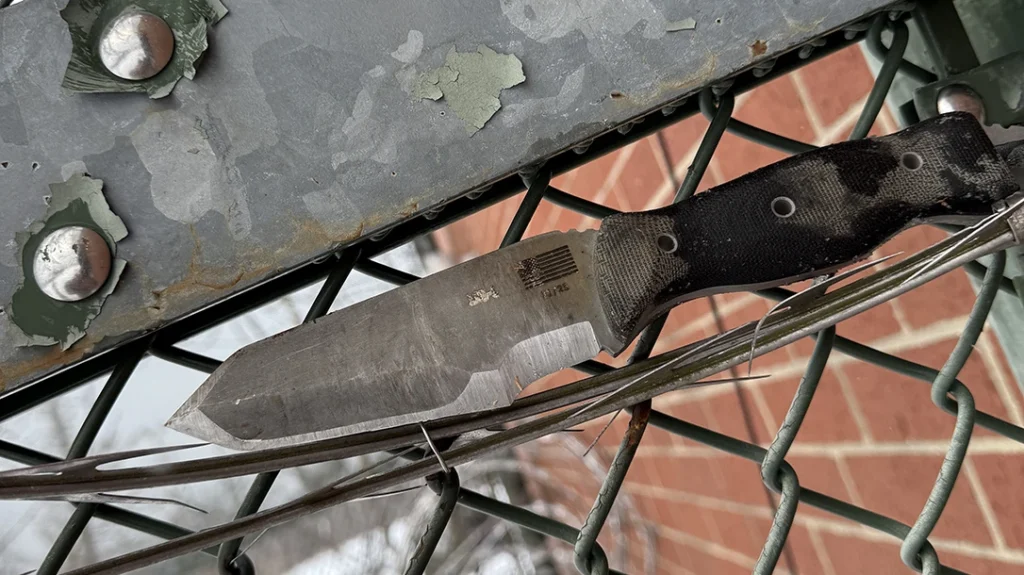
The entire blade is bead-blasted for a non-reflective finish. Correspondingly, the left face is laser-engraved with the manufacture date, an American flag, and the steel type. Likewise, the right face bears William’s maker’s mark, the model name, and the production run.
Advertisement — Continue Reading Below
For the uninitiated, the blade looks complex and intimidating—maybe even gimmicky. I can assure you, nothing could be further from the truth. The continuous edge grind simplifies sharpening, and every design choice prioritizes function over form.
The WCFK In the Field
I received a pre-production prototype in winter 2024 and put it straight to work. As expected, it met—and often exceeded—my expectations.
In February 2025, I co-instructed a winter urban survival class with Lodestone Training and Consulting at a decommissioned prison complex in central Pennsylvania. February weather being what it is, conditions were cold, windy, with plenty of snow and ice. It was the perfect proving ground for the WCFK.
Advertisement — Continue Reading Below
I used it to pry apart pallets for firewood and to demonstrate fire-starting. It harvested saplings for a tripod, cut rope and paracord, prepped food, and handled various other chores throughout the class. From food prep to fire-starting, the WCFK tackled everything I threw at it and stayed sharp by day’s end.
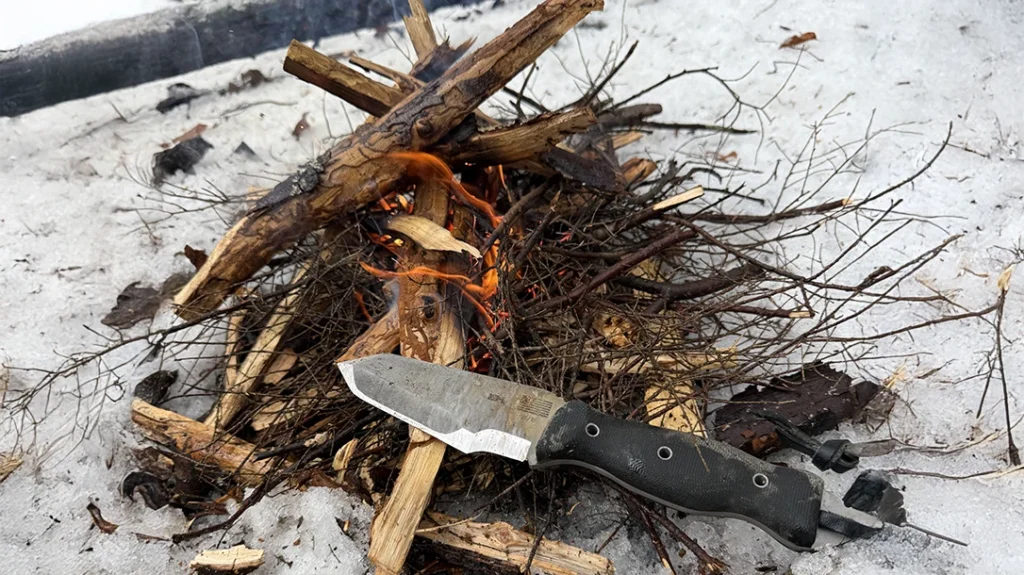
Since then, I’ve taken it on multiple outings, and my opinion hasn’t wavered. This feature-rich, purpose-driven design is easy to maintain with minimal upkeep. It would be a stellar addition to any soldier’s kit.
Advertisement — Continue Reading Below
WCPK Sneak Peak
As I began writing this article, William let me know about an upcoming release: the Patrol Knife. Little brother to the WCFK, it is designed with first responders in mind. We discussed it at length last winter.
He wanted to know what a typical law enforcement officer seeks in a duty knife. I had to laugh—anyone reading this knows the answers to “ideal hunting/survival/bushcraft knife” questions. Ask 20 people, and you’ll get 30 responses.
The WCPK is essentially the WCFK scaled down. Though the dimensions differ, the blade design is strikingly similar.
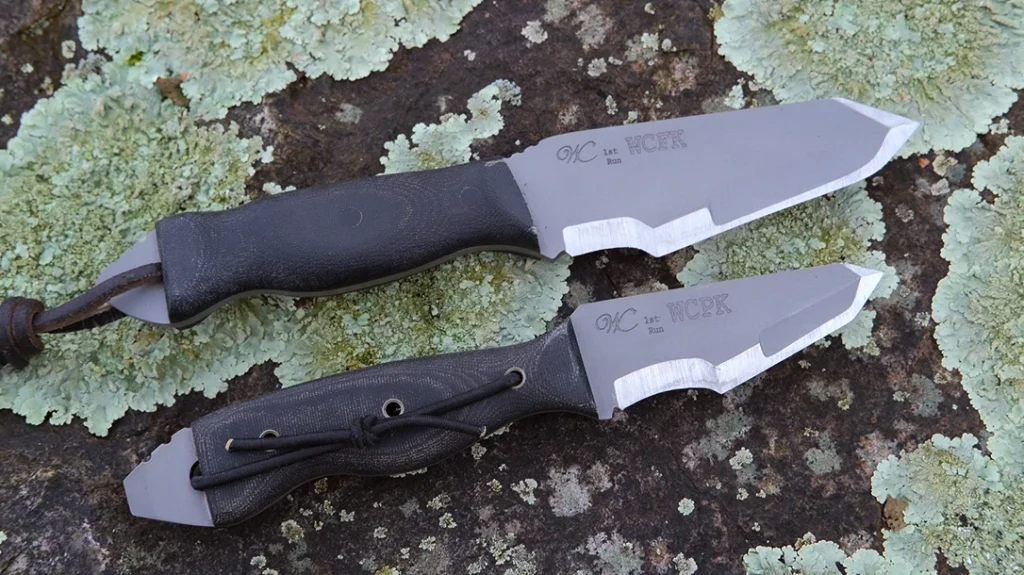
My hands-on time with the Patrol Knife has been limited so far. I usually spend months getting to know a blade before forming opinions, but for this one, I’ll make an exception.
A smaller, nimbler blade paired with a full-size handle is a joy to wield. The compact blade offers better control and manipulation, while the substantial handle ensures a secure interface.
That’s precisely what the WCPK delivers. The blade feels lively and responsive in hand, excelling surprisingly well at carving. Its faceted, reinforced tip handles drilling, digging, and light prying with ease, while piercing effortlessly.
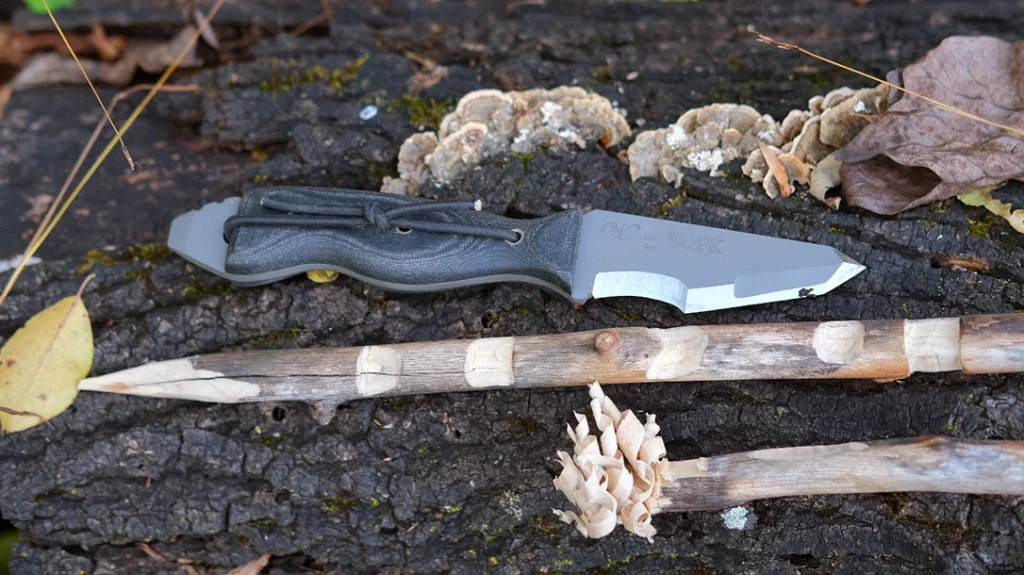
The handle accommodates various grips comfortably, and the exposed tang is tapered for heavier prying. Each WCPK ships with shock cord woven through the hollow handle pins. This allows users to loop their hand under it for retention—even if the grip slips or the user needs to open their grip to perform another task.
We’ll see how it performs as an EDC duty knife, but based on initial use, I suspect it’ll be a winner. I’m already thinking I may need a second WCPK. One for work and one for the woods. I really like this blade!
WC Knives are True Attention Grabbers
Knives from the WC shop are true attention-grabbers. In a sea of blades sharing the same design tropes, William’s stand out. That said, they’re no BudK fantasy pieces. Every knife in the WC lineup is purposefully designed and meticulously handcrafted to meet real user needs.
If you haven’t tried one, I strongly urge you to do so. You won’t be disappointed.
WC Knives WCFK Specs
| Blade Length | 5 inches |
| Handle Length | 4.5 inches |
| Overall Length | 10.5 inches |
| Blade Thickness | .1875 inches |
| Blade Steel | AEB-L |
| Handle Material | Black canvas Micarta |
| Sheath | Black Kydex |
| MSRP | $345.00 |
WC Knives WCPK Specs
| Blade Length | 4 inches |
| Handle Length | 5.875 inches (including exposed tang) |
| Overall Length | 9.875 inches |
| Blade Thickness | .125 inches |
| Blade Steel | AEB-L |
| Handle Material | Black canvas Micarta |
| Sheath | Black Kydex |
| MSRP | TBD |