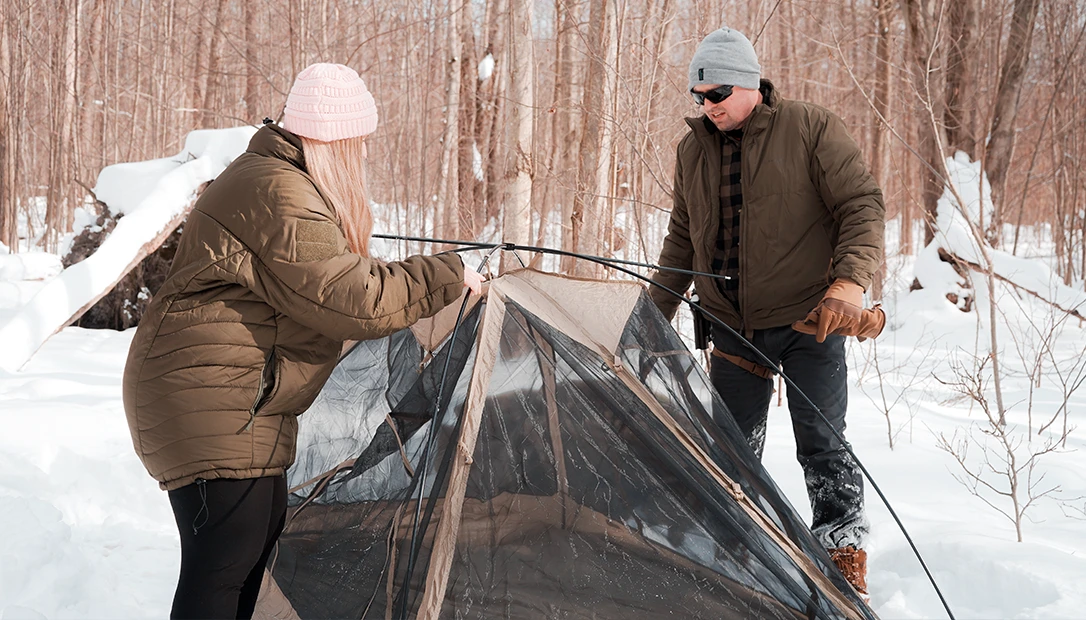
I’ve often wondered if living in the North makes you insane, or if the North is simply a magnetic beacon for those who were already missing a few screws. Having woken up last Saturday to a crisp 5°F morning and immediately thinking, “What a lovely day to go sleep in the dirt,” I can confirm the answer is likely both.
The decision to go winter camping is the easy part. The real challenge is the frantic internal debate over your backpack: what do you pack to avoid transitioning from happy camper to frozen statue halfway to the site? When the temperature drops, the stakes rise, and your gear list becomes less of a suggestion and more of a life insurance policy.
Advertisement — Continue Reading Below
Winter Camping is a Different Animal
If you haven’t had the pleasure of camping in a frozen northern wasteland, consider yourself blessed by the gods of comfort. We are talking about daytime highs that “soar” to 15°F and nights that dive into the negatives.
In this environment, the ground is your primary antagonist. It is a heat-sucking void that will drain the warmth from your body the moment you stop moving. Then there’s the snow—a deceptive substance that either freezes your fingers on contact or melts into a chilling slush that the wind then uses to turn your skin into a frozen slab of meat. Speaking of the wind: it exists solely to blow out your fire, discourage you from adjusting your layers, and sandblast your face with the texture of frozen 40-grit sandpaper.
The “Don’t Die” Checklist
When packing for a 22-hour excursion into the tundra, you have to balance the needs with “the would be nice”. Bag space is a finite resource, especially when you’re trekking through two feet of powder. Below is my curated list for a tactical-style overnight hike.
Advertisement — Continue Reading Below
The Necessities
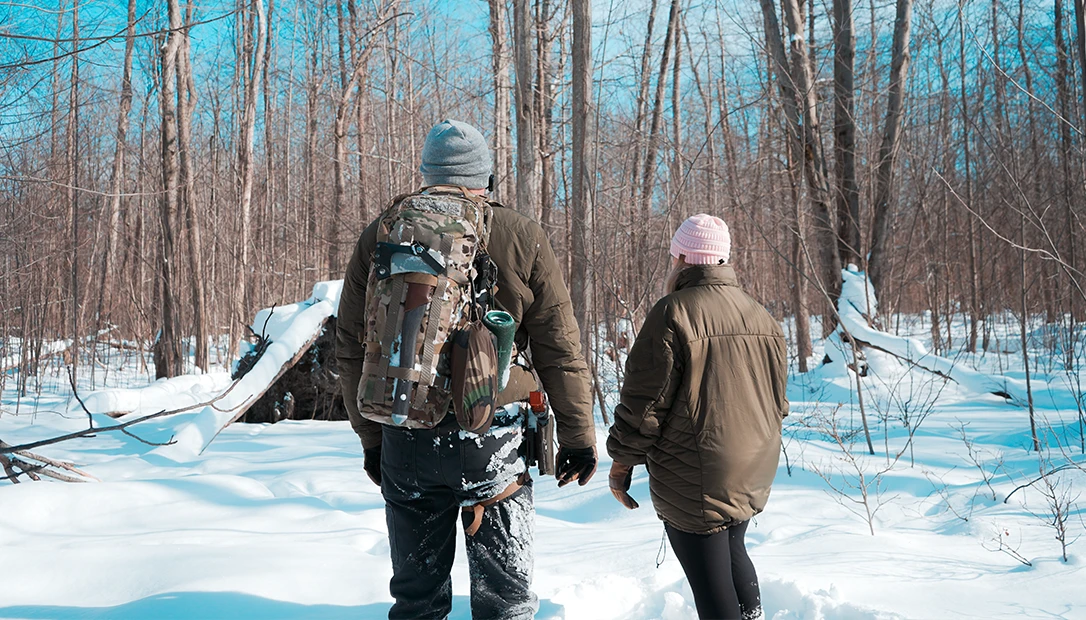
Tasmanian Tiger Combat Pack 24SL
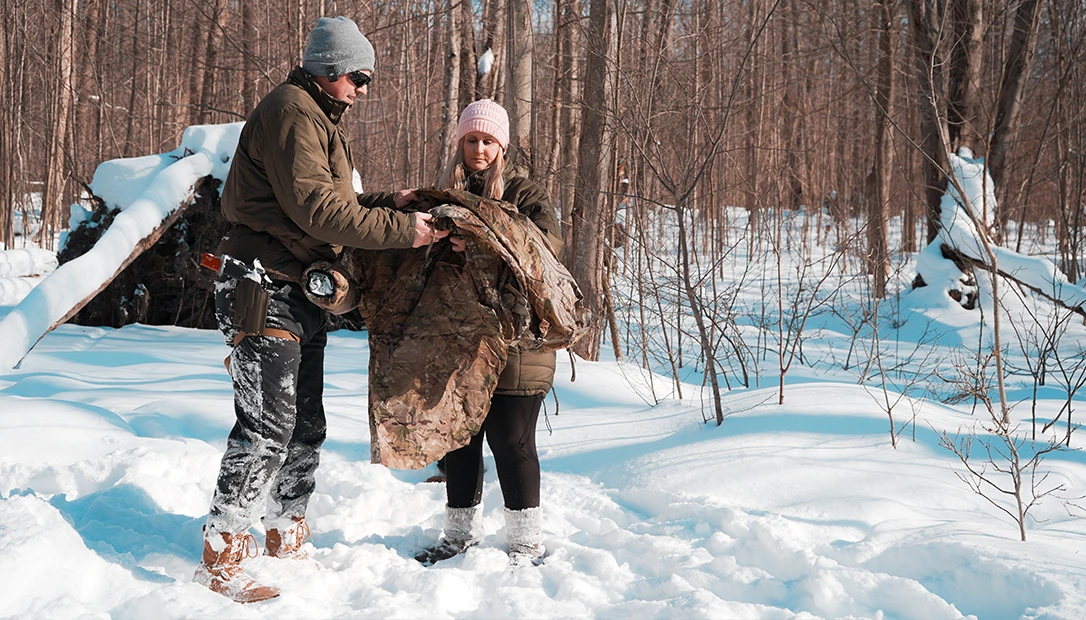
Snugpak Heavy Coat
Advertisement — Continue Reading Below
Lite Fighter Gear Sherpa Gloves
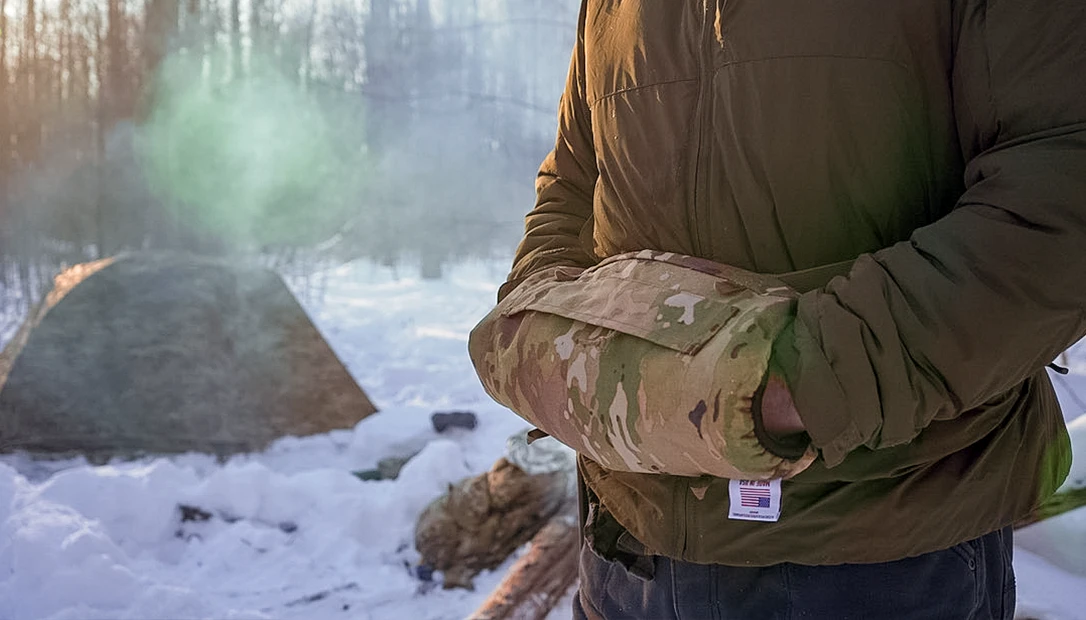
Lite Fighter Gear Hand Haven
Lite Fighter Gear FIDO 2 Tent (with ground tarp)
Advertisement — Continue Reading Below
Multiple pairs of toe socks (trust me on this)
Extra shirt & pants (moisture is the enemy)
Extra thermal base layers
Advertisement — Continue Reading Below
Closed-cell foam sleeping pad
Inflatable sleeping pad (High R-value)
Fire starter kit (and a backup for the backup)
Advertisement — Continue Reading Below
Flashlight / Headlamp
Waterproof boots
Winter beanie hat
Advertisement — Continue Reading Below
Winter fleece face mask
Mountain House freeze-dried meals
Water filter
Advertisement — Continue Reading Below
Axe
Plastic eating utensils
Fire Maple stove & Fuel canister
Energy bars (for immediate morale boosts)
The Luxuries
Inflatable pillow (packs down to the size of a soda can)
Waterproof dry bags
Backup batteries
Backup power source
It’s Not About Comfort, It’s About Thermal Physics
You might notice three different items dedicated to sleeping on the ground. You might also think, “Why not just a thick wool blanket and a dream?” That works in October. In January, that’s a recipe for hypothermia.
The ground saps heat via conduction faster than you can generate it. To survive, you need a stack: a foam mat first, then a high-R-value inflatable mat, and finally your sleeping bag. This creates a literal barrier between you and the permafrost. While a pillow is technically a luxury, elevating your head keeps you from feeling like you’re sleeping on a block of ice, providing just enough civilization to keep the madness at bay.
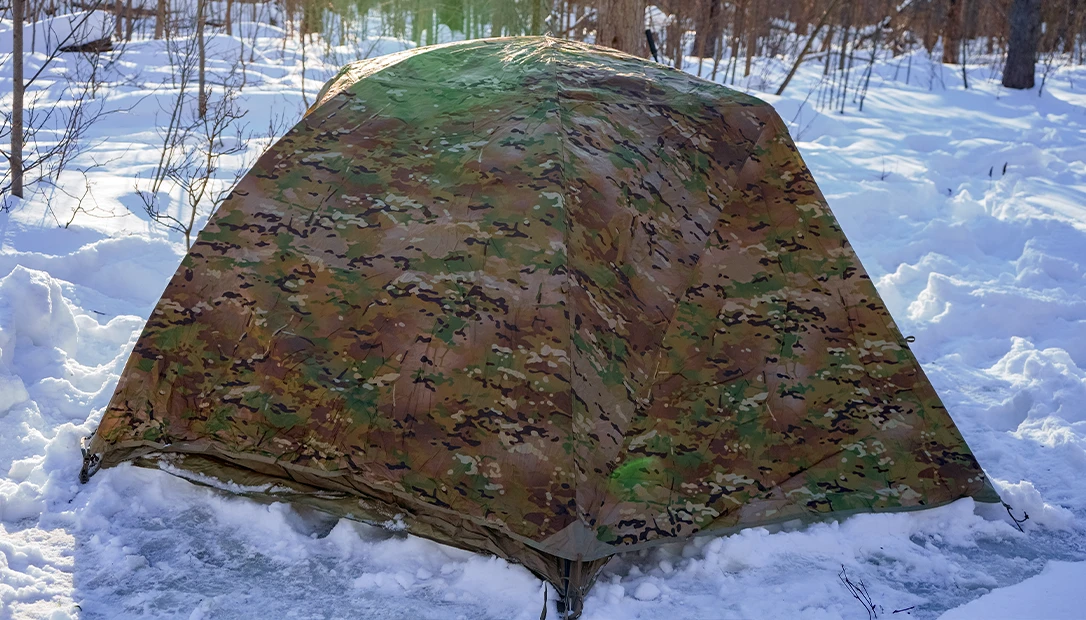
Shelter or Fire: The Ultimate Debate
In sub-zero temperatures, you have to choose your order of operations. Do you pitch the tent or build the fire first?
If you’re losing light, shelter is the priority. Once that fire is roaring, your brain naturally wants to slow down, eat, and relax. However, trying to pitch a tent in the dark with frozen fingers because you spent too much time gathering firewood is a special kind of misery.
Pro-Tip: Eat a hot meal right before bed to stoke your internal furnace. Also, for the love of all things holy, pee before you zip into your sleeping bag. Your body wastes an incredible amount of energy keeping a liter of liquid at 98.6°F. Don’t hold it; let it go. (insert Let it Go song into your head now)
Parting Advice: Look Cool, Stay Alive
The first rule of winter camping is to look cool. The second rule is not to die. Usually, these are mutually exclusive.
Before you head into the deep woods, do a backyard practice run. See if you can actually start a fire while wearing bulky gloves. Practice shedding layers before you start sweating—because sweat turns to ice, and ice turns into a very bad day. Test your gear’s “R-value” when you’re still within sprinting distance of a heated living room.
Learn these lessons in safety so that when you finally head into the wilderness, you can prove to your ancestors that their bloodline hasn’t grown soft.
WHY OUR ARTICLES/REVIEWS DO NOT HAVE AFFILIATE LINKS
Affiliate links create a financial incentive for writers to promote certain products, which can lead to biased recommendations. This blurs the line between genuine advice and marketing, reducing trust in the content.