While cold cases are interesting, they also tell stories of tragedy and loss. That’s why it is extra exciting when cold cases are solved, bringing families closer and giving hope to all, including law enforcement.
On June 12th, 2013, it was a typical hot Summer afternoon in Boise City, Oklahoma. An elderly man named Charles Nieman and his wife were passing through town and decided to make a stop. The couple pulled into a Loaf ‘N Jug gas station to fill up. However, on this particular day, the everyday stop for fuel would become a devastating, life-changing event for the Nieman family.

Advertisement — Continue Reading Below
A Routine Gas Stop Turns Deadly
Later, witnesses to the incident spoke to investigators and told law enforcement they observed a male exit an extended-cab pickup with Louisiana plates, with two other male passengers inside. The male rapidly approached Mr. Nieman, holding a firearm. In an attempt at armed robbery, the male demanded Mr. Nieman’s wallet. Mr. Nieman, however, was known to be hard of hearing and, unfortunately, could not hear what the perpetrator was saying.
He looked to his wife to ask what the man had said and was probably wondering what the man wanted in general. It was there that Mr. Nieman was fatally shot. His wife, Mrs. Nieman, fortunately, was uninjured during the incident. However, there is no way to heal completely from the emotional wounds she suffered that day.
The male was then seen fleeing on foot, and the pickup left the parking lot as quickly as it drove in. Law enforcement was called and began to investigate the scene. They scoured the scene and found one shell casing left behind. This would not be helpful at first, but would later prove to be the key to solving the entire case.
Advertisement — Continue Reading Below
Later that day, a few witnesses stated they saw the truck, the suspect, and his accomplices at convenience stores in Colorado. Not only had the men fled the scene, but they had also quickly fled the state of Oklahoma. According to some witnesses, the men stated they were headed to Denver.
Key Evidence
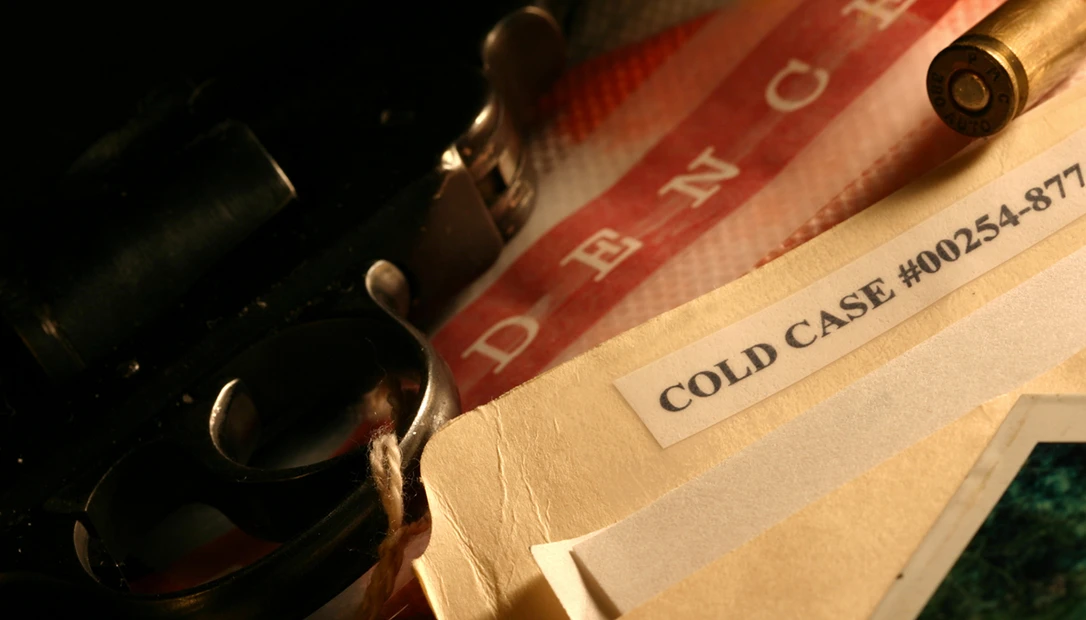
The bullet shell casing that had been found at the scene and collected, and in 2014 it was run through the Integrated Ballistics Identification System (IBIS), but no match was found. The Integrated Ballistics Identification system is a resource law enforcement uses in order to attempt to match a particular shell casing to a particular firearm. Each firearm consists of striations that are within the barrel of the gun. As a bullet is fired, it passes through the barrel, rotating as it travels. This rotation through the barrel makes unique markings known as striations. These markings are as unique as human fingerprints.
Advertisement — Continue Reading Below
Unfortunately, the case would then lie dormant for five years, with all leads going cold. In November of 2018, the Oklahoma State Bureau of Investigation implemented a new Cold Case Unit to review cases that had been backlogged and had grown cold. This unit was designed to reinvestigate cold cases dating back to 1950. The goal of the newly formed Cold Case Unit was to revisit older cases in the hope of finding new leads or uncovering evidence or information that may have been accidentally overlooked before.
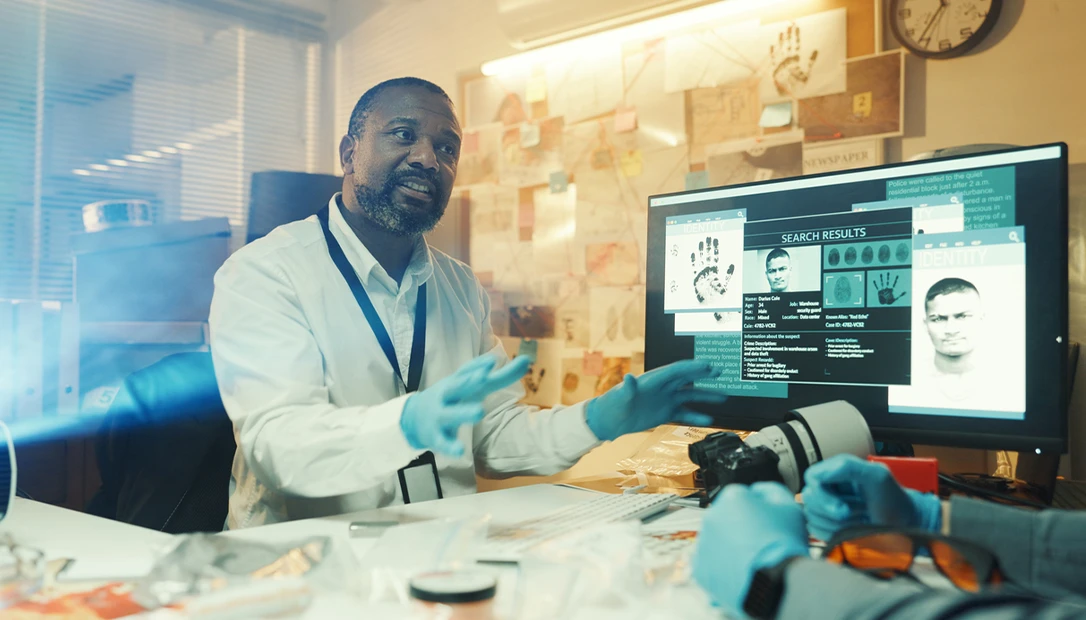
In December of 2018, the Cold Case Unit began investigating Mr. Nieman’s murder, and the unit requested that the shell casing be run through IBIS once again. After all, IBIS is an ever-evolving database, and new information is being added all of the time. This time, however, there was a shell casing match from an investigation in Colorado.
IBIS and the NIBIN Ballistics Database
IBIS is the platform used by the National Integrated Ballistics Information Network (NIBIN), established by the ATF in 1999. As mentioned, IBIS is designed to identify markings on shell casings and fragments in order to identify which firearm fired what rounds. Much like fingerprints, the markings left on shell casings after being fired are unique to the gun they were fired from. How does it work? The system uses 3D images of recovered ballistic evidence and attempts to match it in its database to determine the likelihood of a match.
Advertisement — Continue Reading Below
This system produces a list of potential matches based on images of the breech face, firing pin, and ejector. The system can often find these matches based on the first five photos 97% of the time. That is an extremely high accuracy rate. These potential matches are then evaluated by a firearms expert using microscopes and other tools for a more accurate comparison.
This is because, while systems such as this are extremely effective, they still require a human eye to determine whether the match is true. This allows firearms already entered into the database to be linked to new evidence. It is for this exact reason that many law enforcement agencies will submit firearm information into the system of any firearms they seize for evidentiary purposes.
As of 2018, NIBIN contained over three million pieces of evidence.
Advertisement — Continue Reading Below
New Technology Gives Detectives a Critical Break
On July 24th, 2013, Port Allen, Louisiana Police Chief Esdron Brown reported that his department issued 40. Caliber Glock handgun had been stolen. It had most likely been taken from a vehicle parked outside his home. Denver Police located the stolen gun prior to the report on June 16th, 2013, and it was later returned to Louisiana. Near Chief Brown’s home, a truck matching the description of the one involved in Mr. Nieman’s murder was also stolen within the same time frame.
Using this information and the new lead thanks to IBIS, OSBI was able to trace the three suspects’ crime spree from Mississippi, through Louisiana and Texas, and finally to Colorado. The suspects were identified as 25-year-old Timothy Dees, 29-year-old Zachary Wilson, and 33-year-old Jeremy Scott. All three men were arrested in February of 2019, with Dees and Wilson being apprehended in Alabama, and Scott in Colorado. Wilson and Scott would eventually plead no contest and be sentenced to life in prison, with all but 25 years and 35 years, respectively, being suspended from their sentences. Dees would go on to plead guilty to first-degree murder and be sentenced to life in prison with the possibility of parole.
Advertisement — Continue Reading Below
Modern Tech Solved a Cold Case
It may have taken several years, but thanks to the Oklahoma State Bureau of Investigation, its Cold Case Unit, IBIS, and several other assisting agencies, the wheels of justice continued to turn and finally provided closure for the family of Charles Nieman. This long-standing cold case of cold-blooded murder was finally wrapped up, and justice stood tall in the end.
The availability, meticulousness, and growth of IBIS, combined with the relentlessness of Law Enforcement, thawed a half-decade-old cold case. As time carries on, this technology will continue to improve, and the information in these databases will continue to grow. For this reason, there is much hope in linking firearms to various crimes, and then to the actual perpetrators. For this reason, victims of cold cases should remember that there is hope for justice and closure. Sometimes, it just takes time.