I hate gimmicky nonsense. I’ve been working in the preparedness realm long enough to have grown a distinct hatred for companies whose goal is to just separate people from their money without providing anything of substance in return. Now, I tell you that to tell you this.
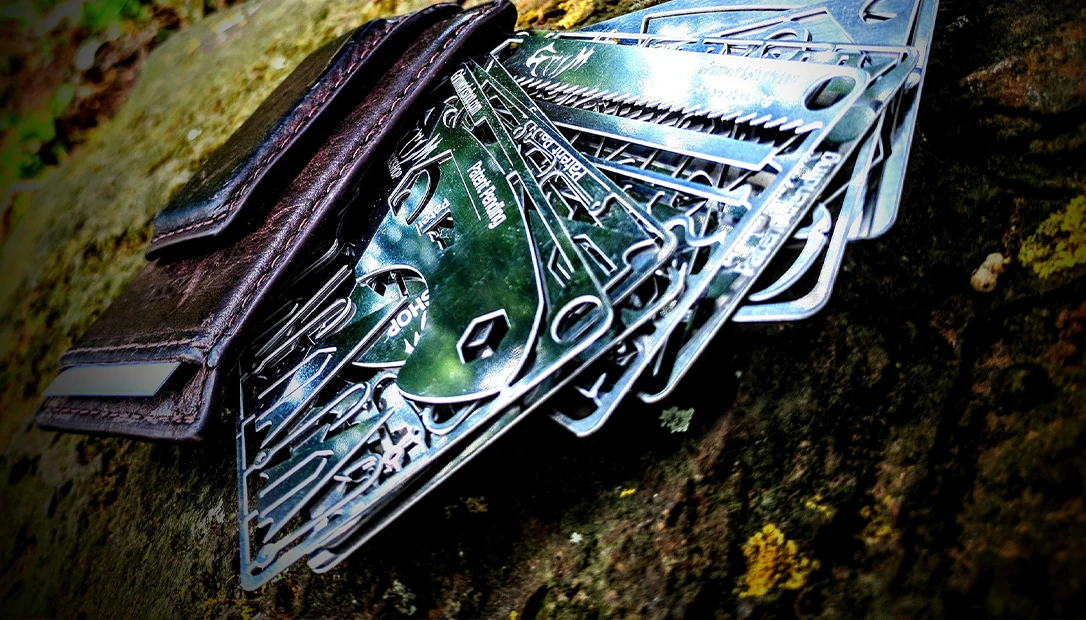
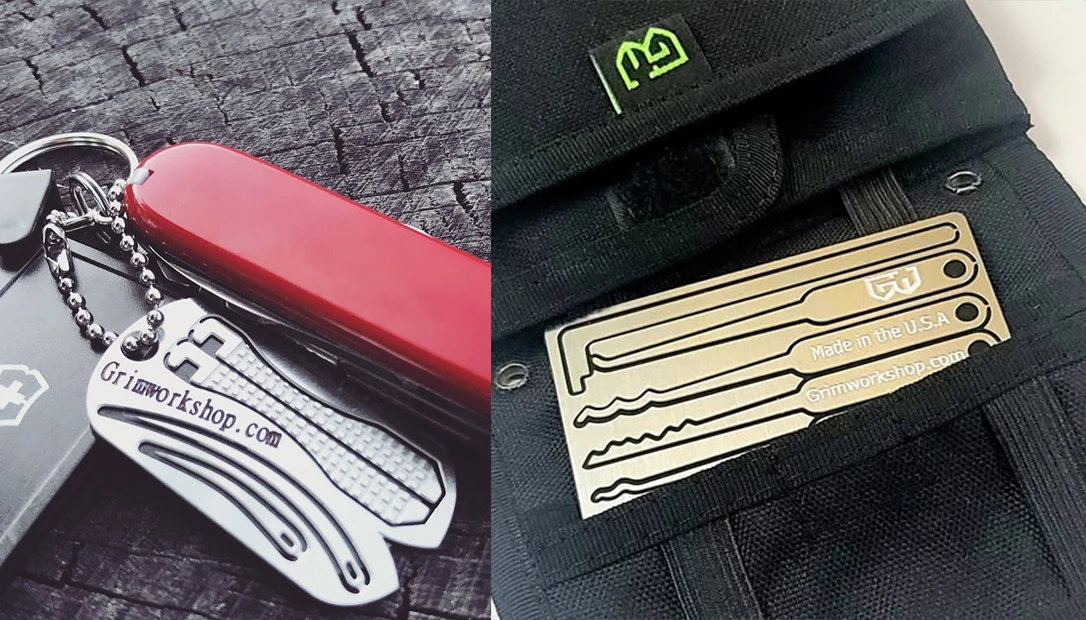
Grim Workshop is about as far from gimmicky nonsense as you can get. They may not have invented the flat-pack tool concept, but they for damn sure refined and perfected it. From a humble start selling their first tool at a farm stand, they now offer hundreds of products that fit in your wallet and could actually save the day in a crisis. They don’t want to empty your wallet. They want to fill it with tools and gear.
I recently had the opportunity to chat with Jordan Grimes, founder of Grim Workshop.
Advertisement — Continue Reading Below
SK: How did Grim Workshop get started?
We grew up on a working farm in Texas. Fifth-generation homestead. At home, we were capable of doing just about anything or getting through just about any emergency; we were completely self-sufficient. We grew our own vegetables, raised our own meat, had acres to raise sheep, and cows. We had a huge 60-foot greenhouse to keep plants growing year-round, an aquaponics system, and all we needed to keep going.
But out on the road? Away from everything? We weren’t prepared at all. A bad accident on a road trip with my then-girlfriend and now-wife made that clear. That was the moment it clicked for me. A tool you don’t carry is the same as a tool you don’t own.
Advertisement — Continue Reading Below
That Christmas, I built emergency car kits for everyone in my family. I spent months researching, putting together what I thought were the best kits imaginable. Looking back, they weren’t great. But at the time, I thought I’d nailed it. My wife drove a small car, and her kit sat visible in the back. I didn’t think much of it until there was a string of break-ins near her work. People were smashing windows and grabbing whatever they could see.
Concealable EDC Tools
What if someone saw that bag and thought it was something valuable? What if she got hurt because of it? I wanted something smaller. Something you could keep in a glovebox. Better yet, something you could carry with you. I wanted a layer of readiness that stays with you.
That’s when I found Altoids tin kits. I got obsessed with the idea. A full emergency kit in your pocket. But like everyone who goes down that road, I hit the same wall. Nothing fit well. Tools weren’t made for that kind of space. And when they were that small, they were usually junk.
Advertisement — Continue Reading Below
I remember finding those cheap Chinese flat wallet tools. A couple of wrench cutouts, a bottle opener, and a terrible saw. They annoyed me. All of them were small, but not in a useful way. They didn’t fit well in a tin. They wasted space. And most of the tools weren’t actually usable. But the idea stuck.
Flat Tools
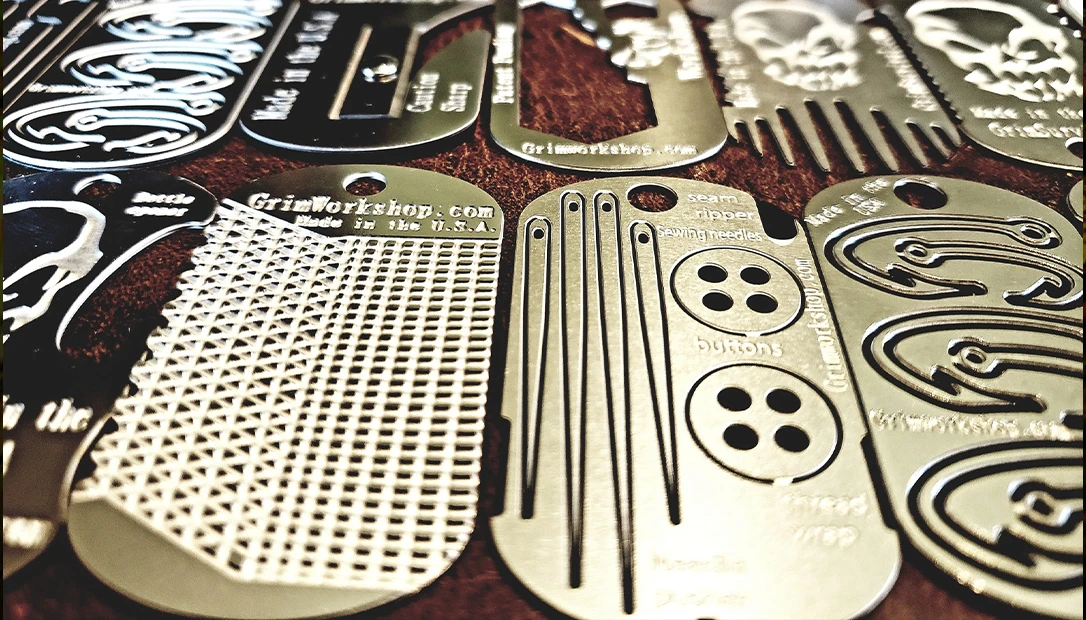
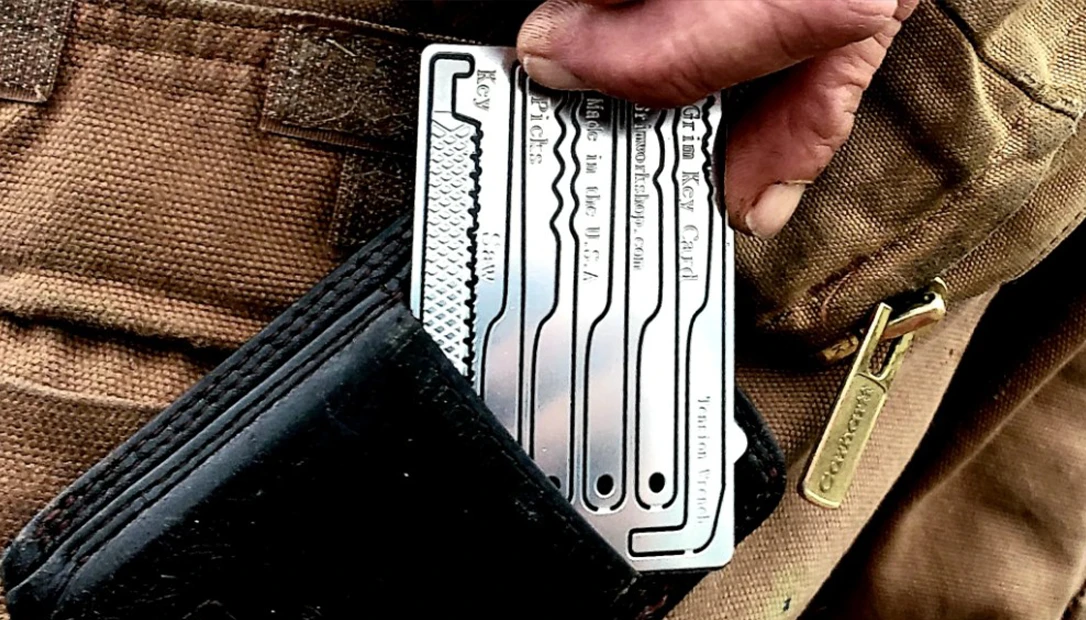
That’s when it really started to make sense. You don’t need more space. You need better use of the space you already have. What if the tools weren’t fixed in place? What if you could remove them? Now you’re not limited to the edges of a card. You could stack tools. Layer them. Suddenly, you could fit dozens, maybe hundreds, of tools into the space of an Altoids tin if they were designed right.
Advertisement — Continue Reading Below
I started sketching. Hundreds of drawings. I thought I had it figured out. Eventually, I found a manufacturer willing to make them. They asked for artwork. “No problem,” I said. “I’ve got drawings.”
Turns out, that’s not what they meant. They needed digital files. Something their machines could use. I had zero experience with that. I downloaded a free program and spent eight months figuring it out. Slowly. Painfully. I finally made one usable file.
Then came the next problem. Minimum order: 100 units. In my head, I thought, “I’ll keep a few, give some to family and friends…” That still left about 70 or 80.
Advertisement — Continue Reading Below
Business Booms
When the tools showed up, I was pumped. I showed everyone. My mom and my now-wife were not impressed. They both asked the same question: “What are you going to do with 70 of these weird things?”
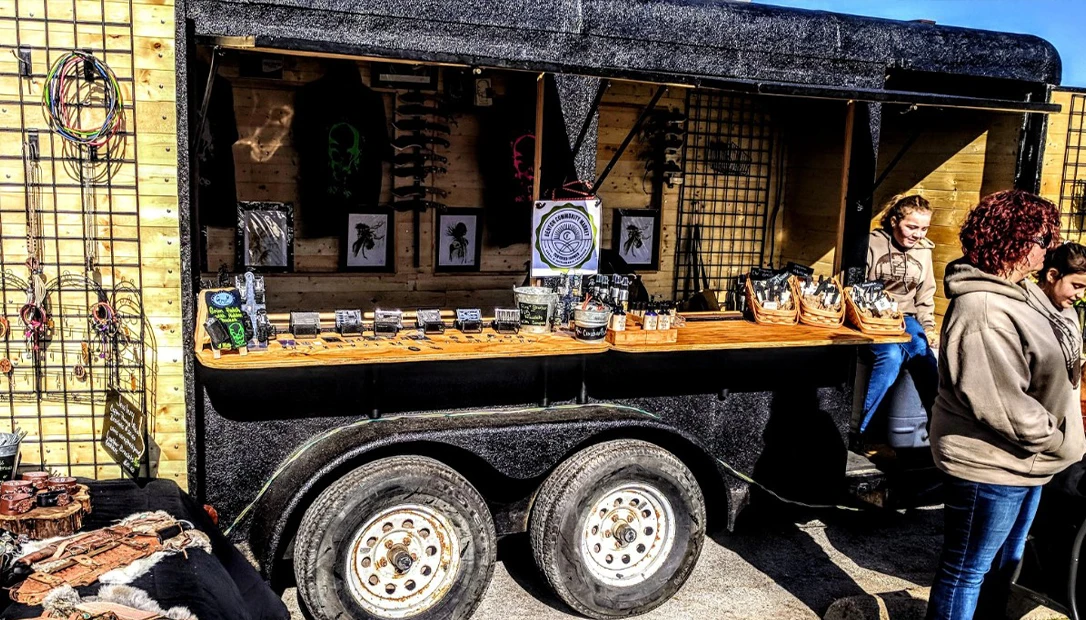
I said, “I’ll sell them at the farmer’s market and make the money back.” They both looked at me like I was an idiot. I set up a small display at our farm stand. Handwritten sign — $15 each or 2 for $25.
Advertisement — Continue Reading Below
I sold out.
At the end of the day, they both looked at me and said, “Maybe we should order more.”
Eventually, Grim Workshop became real. And, as with everything up to that point, my family did it together. No loans, no investors, just taking the money from our last order to pay for our next and building it up brick by brick. Now we have hundreds of different tools we’ve made and thousands of working prototypes ready for production.
SK: What is one of your all-time favorite Grim Workshop products?
Honestly, that’s a tough one to answer. I design the tools; I literally have dozens of stacked notebooks of ideas, and it never turns off in my mind. Whatever I’m working on right now usually ends up being my favorite for the moment. As soon as a tool is born, I usually start working on the next one because, to me, the creating part is the best. There’s always something new I’m trying to solve or improve.
But if I had to pick one that really stands out, it would be the Zachary Fowler Signature Card. That one will always have a place for me. It was our first signature card, and it opened the door to everything that came after. Because of that project, we’ve been able to collaborate with a lot of incredible people who are true experts in their fields, and that’s shaped Grim Workshop in a big way.
SK: Ballpark – How many different designs have you brought to market at this point?
That’s another tough one. If we’re talking just tools, we’re well over 150 at this point. If you include our waterproof tip cards, that brings the total to over 450 designs. But honestly, the most interesting part isn’t what’s released. It’s the prototypes.
We’ve got hundreds of different tools in various stages of development. Some are rough concepts, some are nearly production-ready, and some are ideas that taught us what not to do. That’s where the real fun is for me. It’s where we’re solving new problems, testing limits, and figuring out what actually works in the real world.
SK: How long does it typically take from initial concept to final production?
That’s a fun one, because the answer is all over the place. On the fast end, we’ve taken a product from idea to a working prototype, which we put into production in about 3 weeks. That was kind of a perfect storm, though. Design timing, shipping, communication, production, everything lined up just right.
On the other end of the spectrum, I’ve got projects right now that we’ve been working on for years, with more than 100 prototypes behind them. That’s just part of the process when you’re trying to get something right, especially when it has to work in a very small space, be flat, and still be genuinely useful.
SK: Anything new coming up for Grim workshop that you can discuss?
We quietly launched our Skill Guides, and honestly, it’s one of the biggest things we’ve ever done. The goal was simple. Take someone who’s never used a tool before and walk them through it, all the way to understanding. What it is, how to use it, and even how to improvise it in the field if they had to. Right there on the products page is a list of every tool for that item, and each component leads to a skill guide.
That doesn’t sound huge at first, until you realize we did it for every single item on every single tool we make, and that’s just Stage 1. It’s going to go even further. Everything from something basic like a can opener, all the way up to more complex tools like lock picks. Each one is broken down in a way that someone with zero experience can pick it up, understand what it is, use it, or improvise that item with confidence. That’s the goal, at least.
As for physical products, we’ve always got things in motion. Right now, we’re working on a new line of lock-picking tools that do something I haven’t seen done before that I’m really excited about, and at the same time, we’re developing a set of travel-focused security tools that I’m really excited about.
Grim Workshop offers an enormous range of products, from lockpicks to fishing gear and more. All of it is designed to fit in your wallet or on a lanyard around your neck. Check them out at the Grim Workshop site.