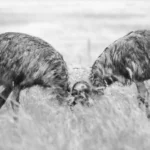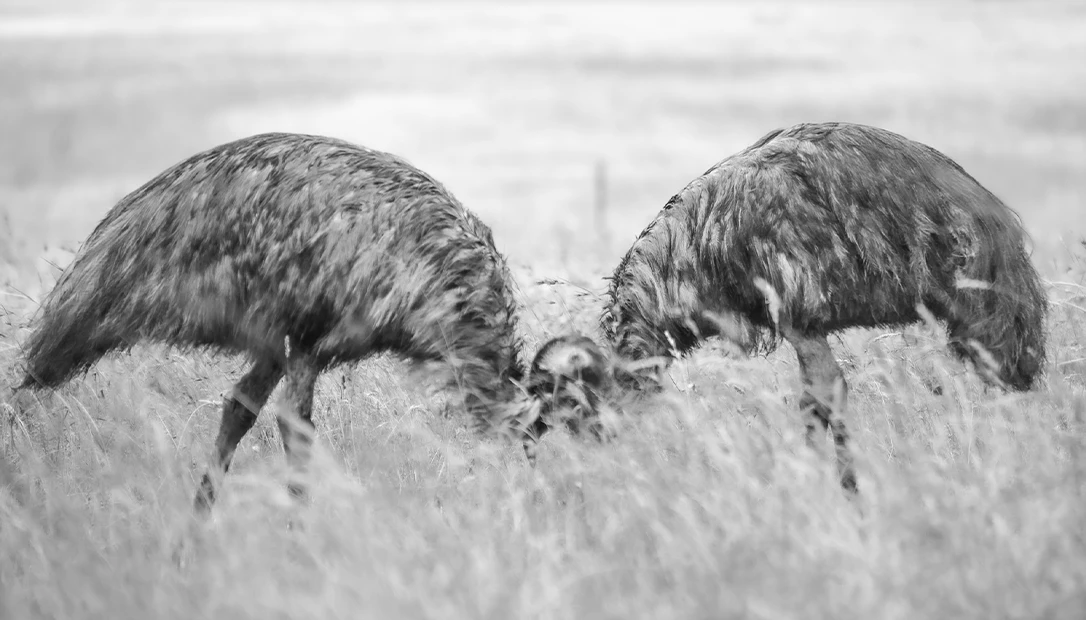
There is no doubt that you have heard of most of the great wars throughout history, but how many of the odd and obscure ones have you heard about? After you have read this article, there is at least one you will have heard about: The Emu War. The Great Emu War took place in 1932 in Australia, and yes, it was against Emus!
At the time, the overpopulation of these birds had become too much, making them a nuisance. At the time, these birds, which cannot fly, were taking over various areas of Australia. There, they spent most of their time running amok, ruining crops, particularly in Western Australia. The situation was difficult. The government tried to reduce the population of Emus without much success. However, this tactic did not work and eventually led to the Royal Australian Artillery deploying armed soldiers to try to stop the infestation. These soldiers were armed with Lewis guns, which were automatic rifles or machine guns. Once soldiers arrived in the area, many Emus were destroyed. However, the overall population of these birds continued to grow, and they continued to destroy farmers’ crops.
Destroying crops in general was bad enough, but this was also during the era of the depression when any crops were extra important. It should be noted that many farmers at the time were soldiers. The infestation of the crops alone and the overpopulation of the birds were concerning enough, but in addition, the government recognized these flightless birds were ruining former soldiers’ livelihoods, which meant the birds had to be stopped from further destruction.
Advertisement — Continue Reading Below
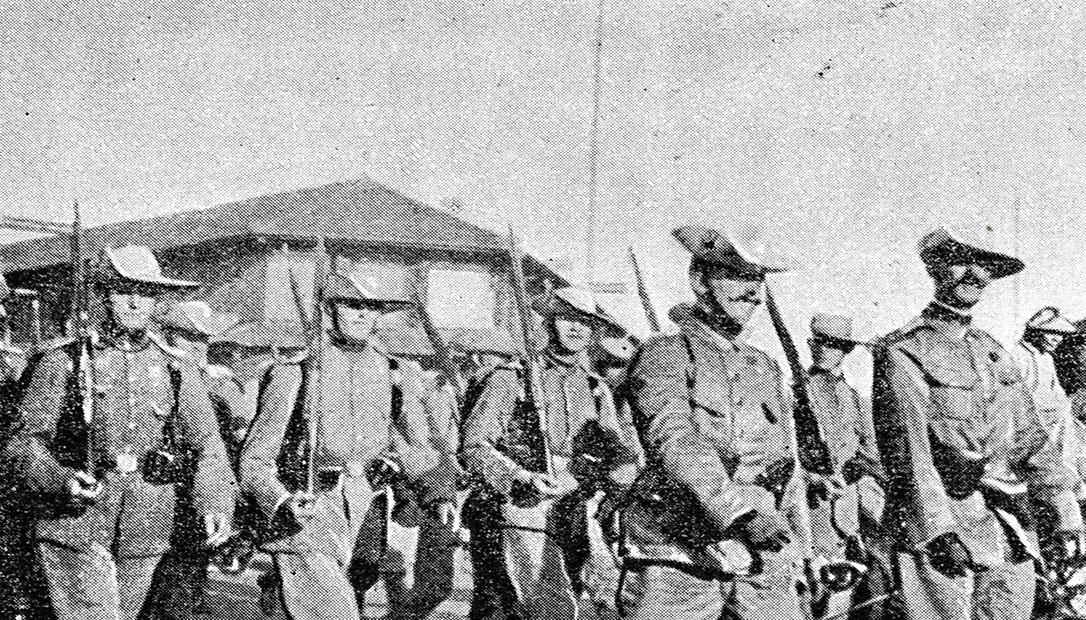
How the War Began
Once World War I was over, many soldiers decided to take up farming since the Australian government decided to give soldiers land. This was also during the time of the Great Depression, so with the war over and being given land, it was a great opportunity for farmers. One of the reasons the Australian government wanted to encourage farming was to increase wheat crops.
As many discharged soldiers focused on making their crops successful, there was some concern about wheat prices falling. Due to this, farmers worked extra hard to get what they could from their crops. However, emus also loved to migrate to this region. The conditions of the wheat fields made an ideal habitat for these flightless birds. It was here the birds would stay throughout their breeding season. There were already about twenty thousand of these birds, and soon there would be more. As the Emus continued to take over areas, they also began destroying crops. The country decided action had to be taken against these invasive birds.
Advertisement — Continue Reading Below
As it turns out, these birds were so resilient that it took at least two attempts to get control of them. In one particular farming region, the infestation of Emus significantly destroyed crops. They not only destroyed crops in this area but also fences, which then led to rabbits invading the area as well, which created more problems.
A Strong Battle Plan
Finally, these former soldiers had enough and met with the Minister of Defense. The soldiers suggested to the Minister of Defense at the time, Sir George Pearce, that they be allowed to use machine guns and asked that they be deployed with the mission of getting rid of the Emu infestation.
Sir George Pearce soon agreed with the former soldiers; however, there were a couple of stipulations. These included that the machine guns were to be used by military personnel only and transportation of the troops was to be financed by the Western Australian government. On top of that, it was the farmers who had to provide food, their own accommodations as well as ammo.
Advertisement — Continue Reading Below
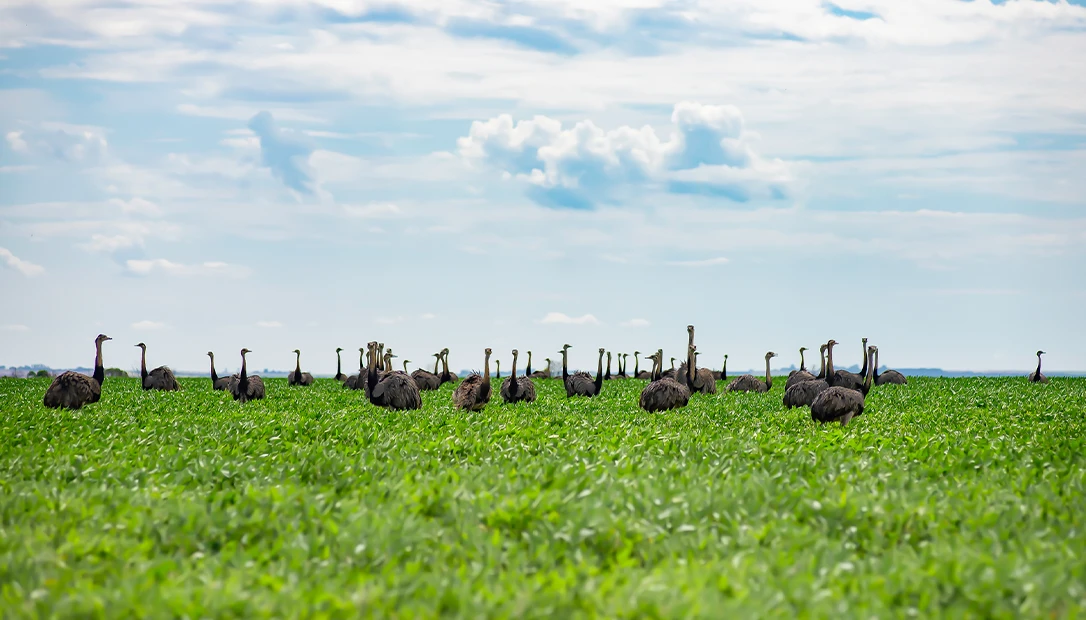
Pierce supported the deployment because the birds would make good target practice. This was partly because some of these birds stood around 6 feet tall! Soon the war on Emus was declared, and the military involvement began around 1932. He chose a few more men with military backgrounds to help with the great Emu War. One of those men was Major Gwynydd Purves Wynne-Aubrey Meredith of the Royal Australian Artillery, along with a few other prominent members of the Australian military. The attempts on the Emu War were delayed a little due to inclement weather. More rain meant many of the flightless birds would scatter out further, making it hard to round them up and get off of them.
First attempt to Control the Emus
In the fall of 1932, several men sighted fifty Emus. However, at this time the flightless birds were out of the range of fire. People who settled there tried to herd the emus, but instead of staying in one large group, they broke up into smaller groups. This made the Emus even more difficult to target.
Advertisement — Continue Reading Below
On 2 November, the men traveled to a particular area where about 50 emus were spotted. As the birds were out of range of the guns, the local settlers attempted to herd the emus into an ambush since they thought this would be an easier way to target them; yet all this did was force the birds to split into small groups and run so that they were difficult to target. Finally,the soldiers were able to get a better range and fatally shot a number of birds. November 4 marks the second important date of the Emu War. This was because over one thousand of the birds were seen headed to a local dam. However, during this attempt, the gun jammed after a dozen of the flightless birds, and because of all of the noise, the remaining 988 Emus scattered and were not seen the rest of the day.
Ongoing Efforts
A few days after this incident, Meredith decided to try a new tactic by moving further south. This was because others had mentioned Emus were more tame in the southern regions of the country. After only six days of trying to get a handle on the Emus, about 2,500 rounds of ammo had been fired. The number of birds fatally wounded was far less than the number of rounds that had been used.
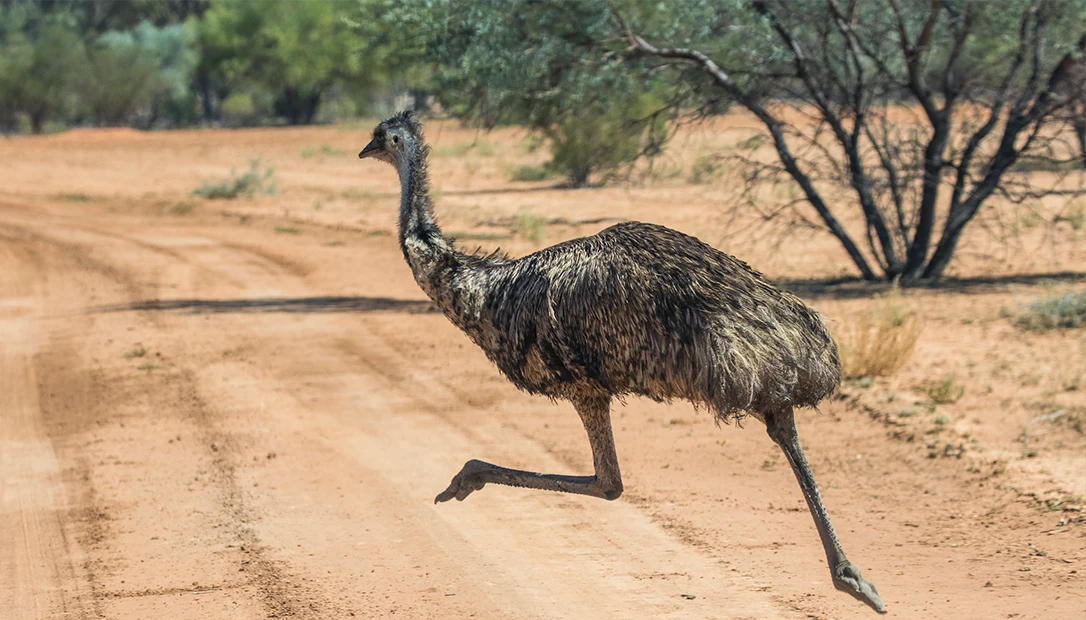
More discussions of operations were taken into consideration until there was more embarrassment than anything else. They had tried everything at this point, including notating an Emu that appeared to be the leader of the pack. This one was over six feet tall, and Meredith even tried to mount a gun on a truck, but this did not pan out well either. The good news is that no soldiers were hurt during the Great Emu War. It was soon recognized that these birds may be flightless, but they did have some sense when it came to survival. Each time rounds were fired, the birds would disperse in numerous directions, making it much more difficult to stop.
Advertisement — Continue Reading Below
Try, Try Again
It finally got to the point it seemed the soldiers would have to give up their crops and maybe some of their land to these birds. While the Emus continued to ruin crops, farmers were still suffering from the damage. More military assistance was recruited, and about three hundred of these flightless birds were killed. The farmers still seemed to be fighting a losing battle. By November 12th, more military was sent to help the farmers battle the Emus. Little by little, they were finally able to get a handle on these large birds, and by the month of December, 100 Emus were being snuffed out each week.
Though later on this war would be scrutinized and even criticized by some, overall it was concluded that at the time it was the only step to take against these invasive birds. After all, it was during a time that was teetering on the brink of the Great Depression too. Civilization needed the crops they could keep. Perhaps the biggest surprise is that later on, bounties were set up for these birds and that by the end of it all, thousands of ammo rounds had been used in an attempt to take back crops from giant birds.
Advertisement — Continue Reading Below