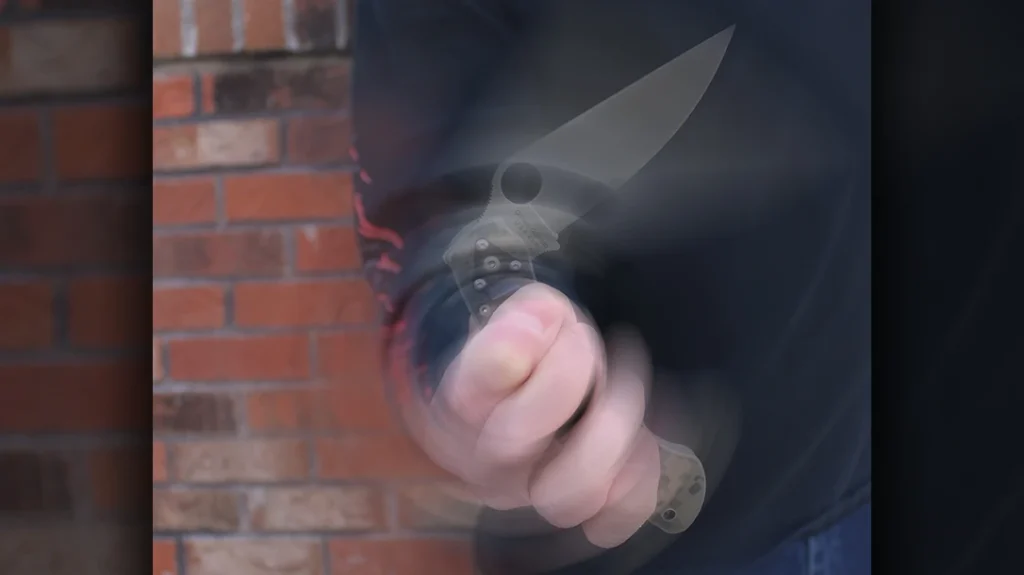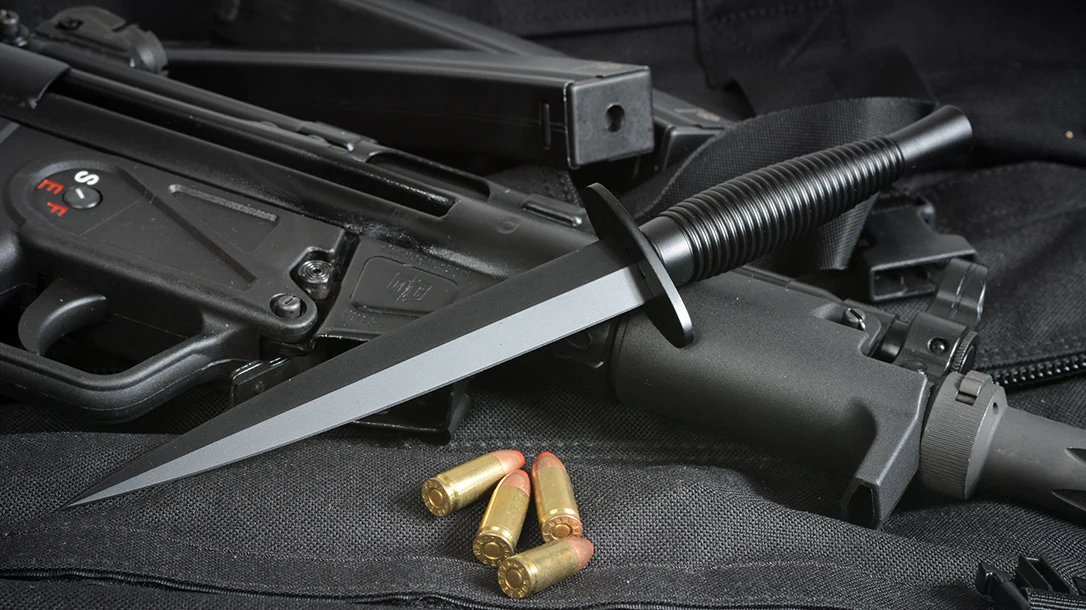
A dagger is a single-purpose item. It doesn’t come with a wire stripper, bottle opener, or a pair of tweezers. It’s not great at opening things in the field, and it makes a particularly lousy pry bar. Those tasks are left to combat knives, and like other special-use items, the dagger goes to special users—hence its added cachet. Let’s take a look at some historic daggers that have set the bar.
Historic Daggers That Changed Everything
Nearly a century after its genesis in the back alleys of Shanghai, the Fairbairn-Sykes remains the great-grandaddy of military daggers. Also known as the Commando dagger, it was first conceived around 1933 as a collaboration between Eric A. Sykes and William E. Fairbairn. Both were members of the Shanghai Municipal Police Department.
Like the knife itself, the story has several variants. However, the synthesized version is that the young-ish Fairbairn, while on patrol in Shanghai’s notoriously violent international settlement, was beaten nearly to death in a back alley by a group of gang members.
Advertisement — Continue Reading Below
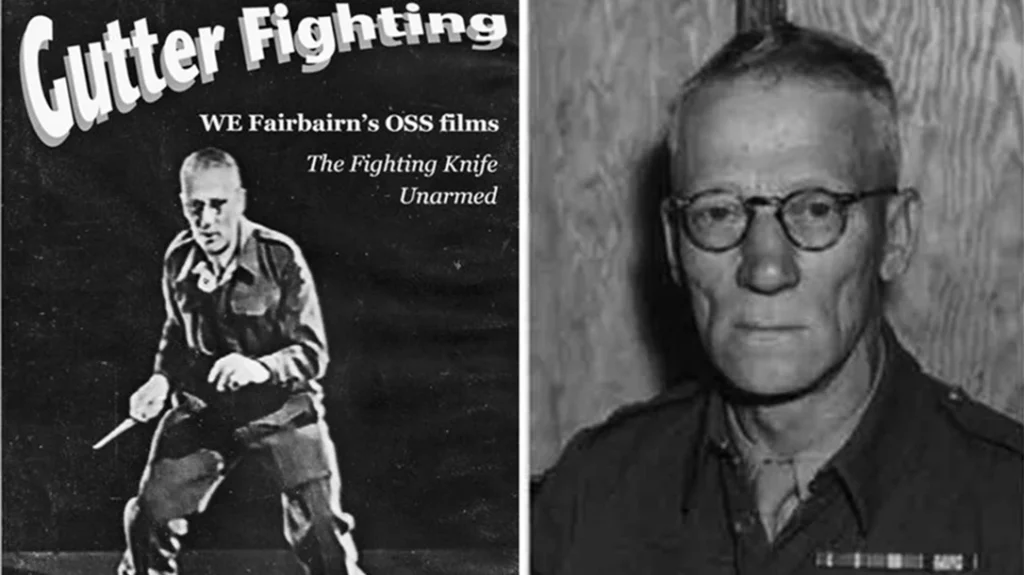
Instead of packing his bags for the UK and a return to Queensbury’s rules of fighting like a decent chap, he devoted himself to mastering personal combat. He earned a second-degree black belt in Judo—the first Anglo to do so. Likewise, he reportedly participated in some two hundred gun and knife fights.
He eventually worked alongside Sykes and other less-known men such as Pat O’Neill and Sam Yeaton of the 4th Marines. At that time, Fairbairn directed the police department armorers in cutting down bayonets to his instructions until they arrived at a wicked double-edged fighting knife.
Advertisement — Continue Reading Below
Fairbairn-Sykes Dagger
That knife returned to the UK with Fairbairn and Sykes when they were called into duty at the beginning of WWII to train first the British Home Guard, then the Special Office Executive (SOE), also known as Churchill’s Ministry of Ungentlemanly Warfare.
There is some dispute, however, about whether or not the Shanghai knife was the direct inspiration. Greg Walker in Battle Blades reports that after being asked to bring a knife for the Brits, the two men were walking through the Tower of London together seeking inspiration and settled upon a long-bladed dagger as the basis of their eponymous knife.
In any event, the resulting Fairbairn-Sykes (F-S) is somewhat elongated compared to the Shanghai knife. It was manufactured by Wilkinson Sword and adopted by the British Commandos.
Advertisement — Continue Reading Below
Thanks to the pair’s work with the American OSS (precursor to the CIA), similar knives were created for the OSS and Marine Raiders, as well as the Devil’s Brigade unit, to which O’Neill was seconded from the OSS.
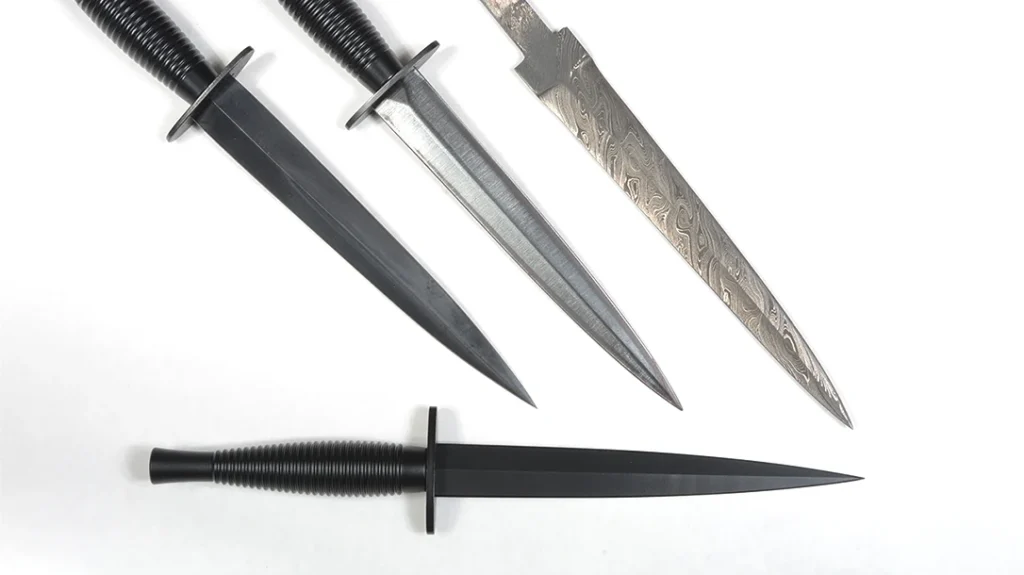
While dozens of variations exist, the three standard versions of the F-S are divided into patterns. The First Pattern has a knurled handle and an S-shaped guard. They were often brightly polished as Fairbairn felt the sudden flash added intimidation value.
Advertisement — Continue Reading Below
Second Pattern knives retain the knurled handle, but with a straight guard and slightly modified blade. They are more often black.
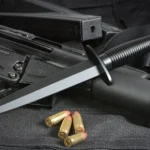
However, the one familiar to most of us is the Third Pattern. It is all black, with a cast, ringed-handled that was quicker to manufacture than the knurled one, which had to be turned on a lathe.
Inglis F-S Dagger
This is the version introduced by Inglis. It was part of a series of historic knives that also includes a MkII dagger and a modern interpretation of the Marine’s beloved Ka-Bar fighting knife.
Advertisement — Continue Reading Below
The MkII forms part of a greater effort by SDS Arms, the parent company for Inglis and Military Armament Corporation (MAC). It wanted to produce affordable versions of famous weapons such as the MP5, Inglis Hi-Power, and some of the more interesting military 1911 variants such as the Marine Corps MEU(SOC) pistol.
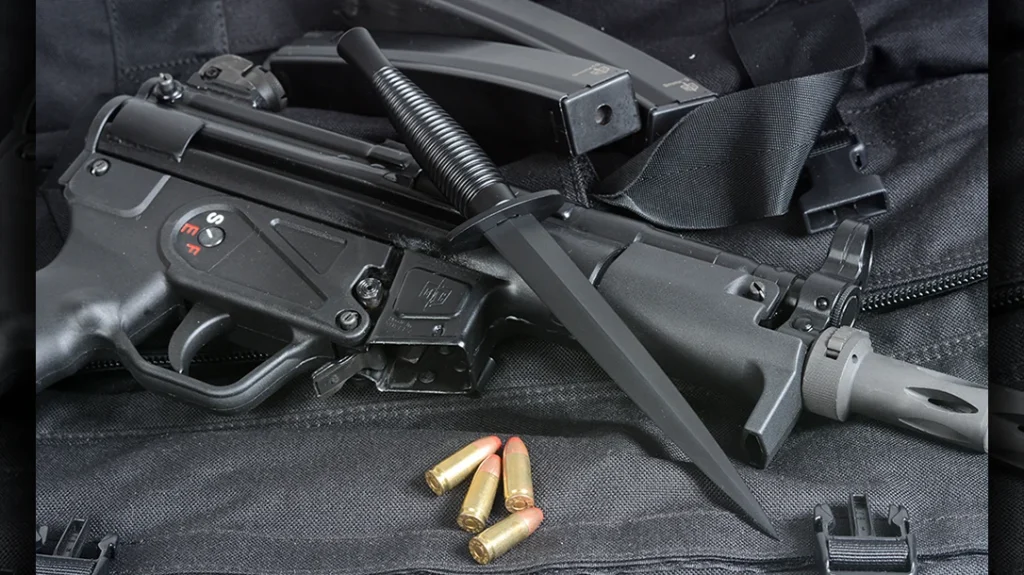
The Inglis F-S follows the classic lines. Likewise, it has a 440A blade finely ground to a sharp tip and cloaked in a black titanium finish. Its Rockwell hardness is in the 55-57 range, the specified hardness for the OSS dagger.
Advertisement — Continue Reading Below
Lightweight at five ounces, it has the expected lively feel in the hand. The blade is 6 ½ inches, which is a bit closer to the OSS dagger’s 6 ¾-inches length than the early F-S, which could be 7 ½ inches.
Since F-S knives were originally hand-ground, the original knives have an expected knife-to-knife variation in length. The OSS knife specified a plus or minus of ½ inch. I’ve had a small handful of F-S knives by William Rodgers, one of the British military contractors. They vary notably in blade length, grind, and finish.
What’s Different?
The only obvious difference between the Inglis and a classic Third Pattern is the handle attachment. It is usually attached via a threaded tang that passes through the handle and is held in place by a nut at the end of the pommel. The tang is often peened over once installed. Some nuts show marks from the pliers or vise used to tighten them. No such nut is present on the Inglis.
Other F-S variants have been made by casting the handle directly onto the blade, as with the Marine Raider stiletto, or by driving the handle onto the tang. However, neither of these seems to be the case with the Inglis.
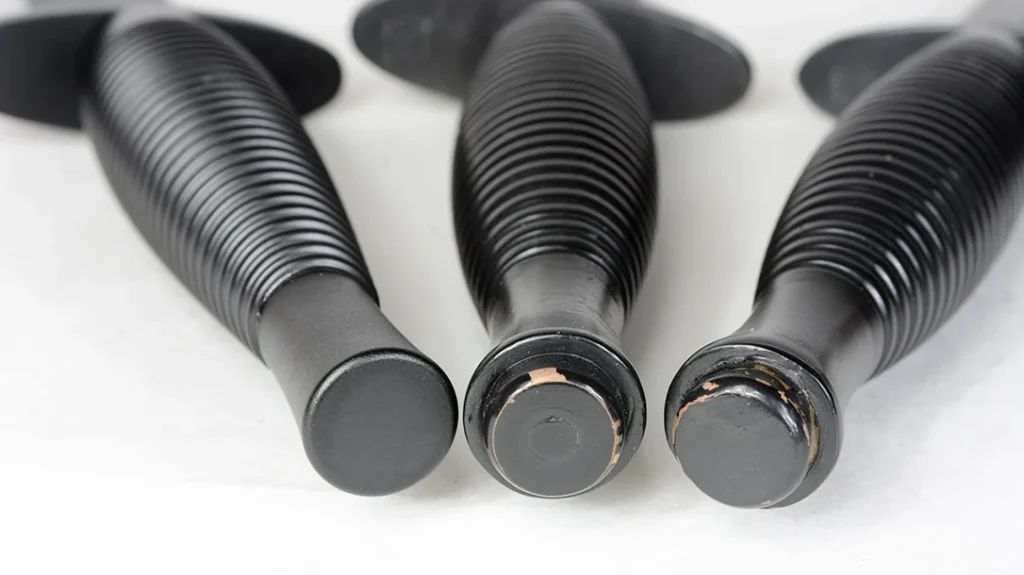
Curious, I X-rayed it and found the expected cavity within the handle. Within that cavity, a shortened crosspin is visible where it passes through the tang just rear of the guard. The tang doesn’t appear to have threads, nor is there a visible slot for the crosspin to lock into. So, my guess is the blade is epoxied into place in the handle, with the crosspin serving as an anchor to keep the tang firmly in place.
The MAC MkII
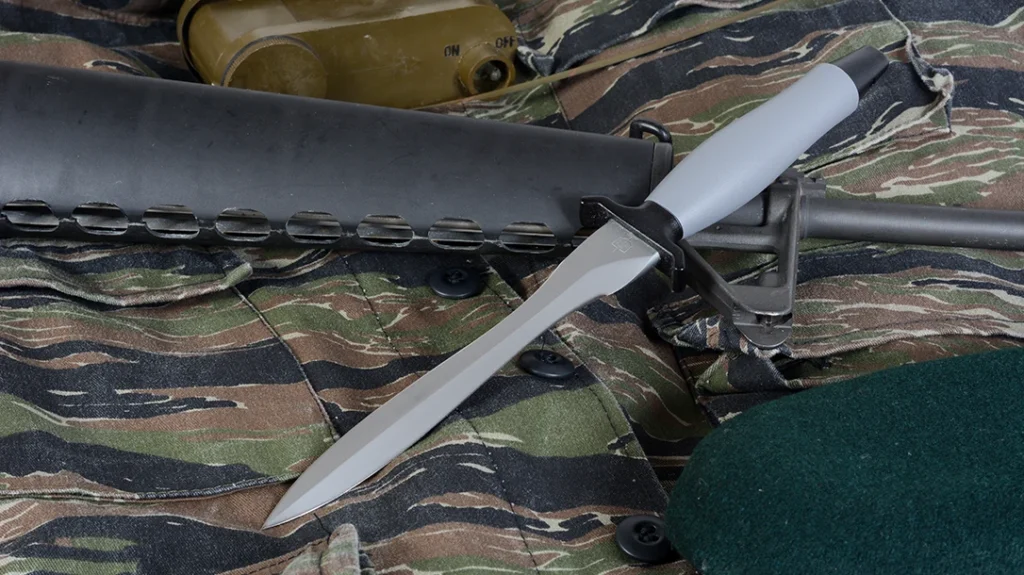
If the F-S is medieval in design, the swoopy MAC MkII is positively elven—and undeniably based on the F-S. In its original form, it was designed by Captain Bud Holzmann. He would have undoubtedly seen the knife during his time with the 101st Airborne Division.
Any questions are immediately removed by his 1966 drawing. It shows a round, knurled handle with a pommel nut and flat cross guard, all straight up Second Pattern F-S. The biggest distinctions, which made their way onto the later, much-changed knife, are the wasp-waisted blade and its five-degree cant. It is designed to make the knife handle lie flat against the body when sheathed. Likewise, it helps increase directional accuracy when thrusting.
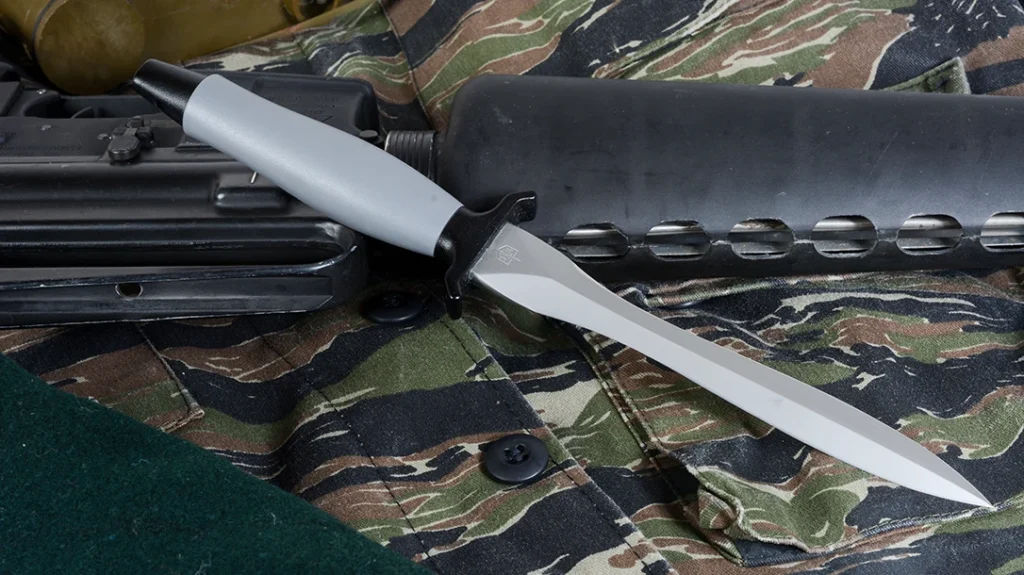
In the refined production version, though, the handle is oval in cross-section. This eliminates the troublesome round handle that made the F-S hard to index in the hand. In its original form, it was covered with a sprayed steel “cat’s tongue” texture to make it grippy.
Gerber introduced the knife in 1967 and made no bones about the reasoning behind the wasp blade. The company advertised that it was designed to “bite deep” on both thrust and recovery. The MkII was quickly absorbed into the various specialized units working in Vietnam and surrounding locales. Likewise, it has a particularly strong association with the Green Berets.
MkII Dagger Opposition
Around 1970, there was a move to remove the MkII from the PX due in part to its manifest lethality. Apparently, it wasn’t playing well in the midst of the protests against the war. Al Mar, then working for Gerber, is credited with suggesting the addition of serrations to either side of the blade to make it a “survival” tool instead of just a weapon.
These serrations were favored by former soldier and pioneering knife fighter Michael Echanis. He was famously photographed wielding a pair of them because they helped with trapping techniques. In fact, when Echanis was consulted during the creation of the famed Warrior knife, the serrations on the blade’s spine were his only contribution to the design. But I digress.
MkII Variants
MkII variants were made with straight blades, both a narrow and a wide wasp blade, and four different serration patterns. That is, if you count the chisel-type serrations on the MkII reintroduced in 2008 after a brief production hiatus.
The cant was eliminated early on. Many end users didn’t get the memo and returned their “bent” knives for repair. The handle shape remained unchanged. However, the colors ranged from the dark grey cat’s tongue finish to lighter grey, black, orange, yellow, and even a few plated gold.
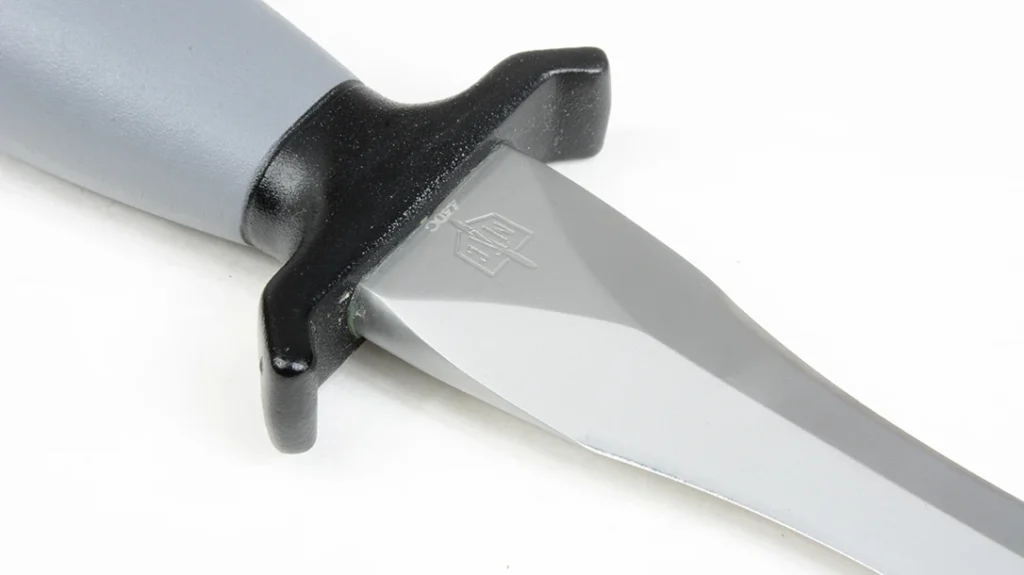
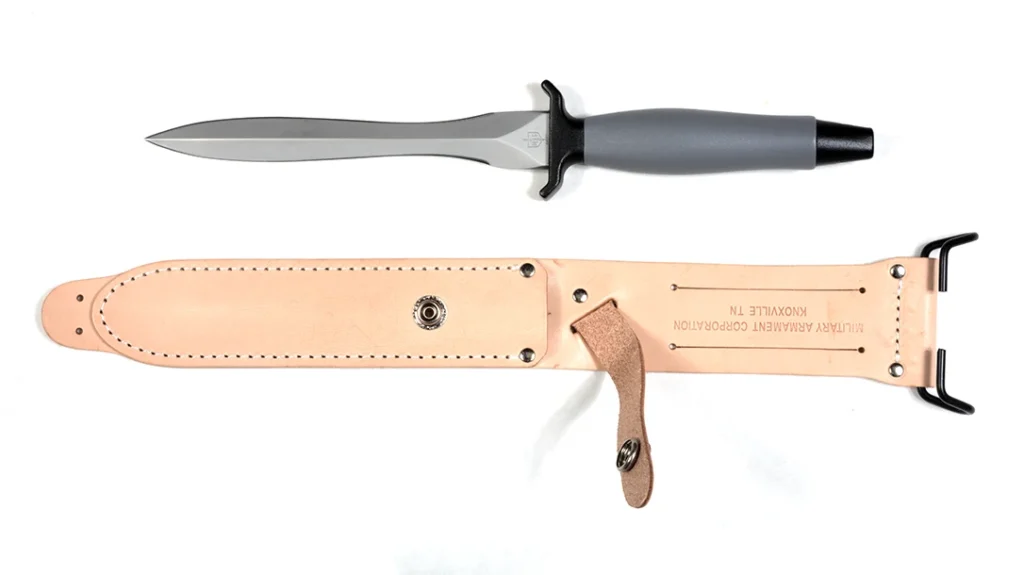
The MAC version follows a variant introduced around 1968-72, with a narrow wasp blade, grey handle, and no blade cant. The 440C blade is .250-inch thick and .940 inch at the unsharpened tang, narrowing to roughly .531 inch before swelling to .729 inch at its widest beveled point. Any closer to the original and you’d probably find yourself standing in a jungle about to cross a border that existed largely on a map.
Special thanks to Michael Janich. In memory of Michael D. Echanis.
WHY OUR ARTICLES/REVIEWS DO NOT HAVE AFFILIATE LINKS
Affiliate links create a financial incentive for writers to promote certain products, which can lead to biased recommendations. This blurs the line between genuine advice and marketing, reducing trust in the content.